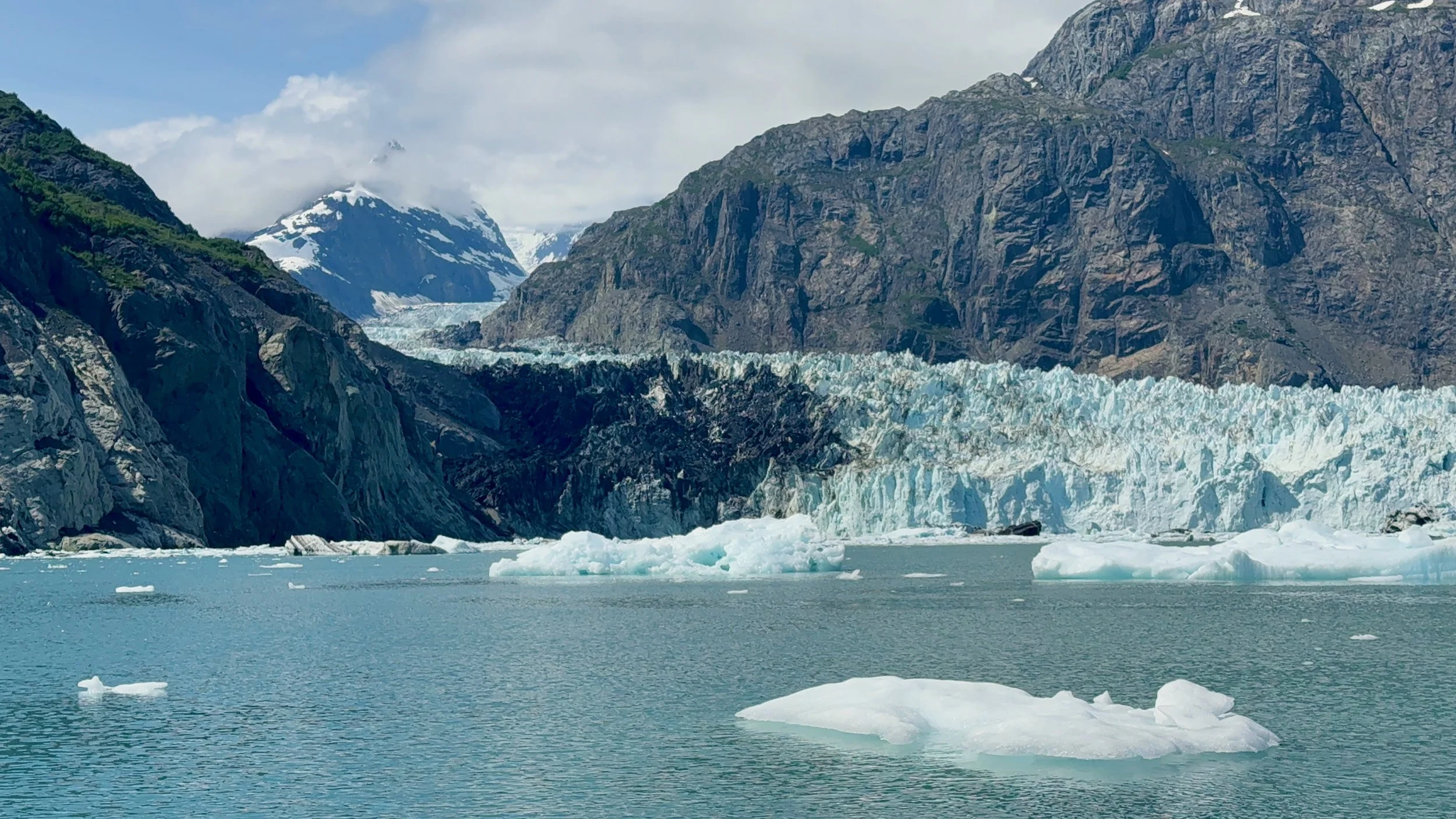
One of the first things people notice about Alaska is its scale. Not only is it hard to describe to people before they get here, it’s something that I believe someone must feel. Mountains rise directly from the water, glaciers fill entire valleys, rivers move through landscapes that seem almost untouched, and wildlife appears again. No matter how many times I try to capture the scale, I never seem to capture the feeling.
The longer I live in Alaska, however, the more I realize that its beauty is only part of what makes the landscape compelling. What appears at first to be dramatic but largely permanent scenery is, in fact, continually changing. Tides alter shorelines within hours. Weather can reveal a mountain and erase it again before lunch. Snow retreats across the landscape through summer, then gradually begins its return. Salmon arrive in enormous numbers and disappear again within a remarkably short period of time. Glaciers move through valleys while simultaneously changing shape at their edges.
Even the places you think you know can feel entirely different from one season to another. Alaska is not simply a collection of beautiful landscapes. It is a place continually becoming something slightly different, and understanding that can change the way you experience it.
The Landscape You Arrive To Is Temporary
Travel naturally encourages us to think of places as fixed. We identify destinations on a map, select photographs of what we hope to see, and construct itineraries around recognizable landmarks. Denali is Denali. A glacier is a glacier. A salmon stream occupies the same location whether you arrive in June or September.
Geographically, of course, this is true. Experientially, it is not. The Alaska you encounter depends heavily on when you arrive, what the weather has been doing, where wildlife is moving, how much snow remains in the mountains, what is happening in the rivers, and even the hour of the day.
A shoreline exposed at low tide can disappear beneath several feet of water later that afternoon. When I first moved to Alaska, I was blown away by how much of a tide swing we would get! It’s nothing to have a tide cycle of 20ft. This means that rock piles that were hidden at high tide are exposed at low tide. A valley hidden beneath clouds in the morning can suddenly open into an enormous mountain landscape once the weather shifts. A quiet stream early in the summer can become a place of intense activity when salmon begin returning. These changes are not incidental to Alaska. They are among the defining characteristics of the place.
Visitors sometimes experience this variability as a complication, particularly when weather or wildlife alters what they expected to see. I think it is more interesting to understand it as part of the experience itself. You are not arriving at a static attraction. You are encountering Alaska at one particular moment in a much longer sequence of change.
A Glacier Is Something Happening
Glaciers may be the clearest example. We often talk about them as though they are landmarks. We visit viewpoints, photograph their immense walls of ice, and identify them by name much as we would a mountain, monument, or building.
Yet a glacier is fundamentally different because it is not simply something that exists. It is something that is happening.
Snow accumulates over time and compresses into ice. Gravity moves that ice gradually through valleys. Crevasses open under pressure. Meltwater travels over, through, and beneath the glacier. Rock is carried and deposited. At the edges, ice melts or calves away while new ice continues its slow movement forward. Whenever I fly over glaciers, the texture and colors bring it to life - knowing that each day, changes are happening.
What appears almost motionless from a distance is part of a continuous physical process. Once you understand that, looking at a glacier becomes different. You are no longer simply looking at an impressive object in the landscape. You are looking at the landscape being shaped in real time, even if much of that shaping occurs too slowly for the human eye to perceive.
The same idea applies throughout Alaska, although the timescale varies enormously. Some changes unfold across centuries, while others take place during the course of an afternoon.
Wildlife Changes the Landscape Too
If you’re reading this, you probably know by now (based on this site and my socials) that I love wildlife. Wildlife adds another layer of movement. An Alaska river in July is not necessarily the same ecological place it will be several weeks later. When salmon return, they bring nutrients from the ocean into freshwater systems and create a period of extraordinary abundance for animals that depend on them.
Bears alter their behavior around that abundance. Eagles gather. Other animals take advantage of what remains. Whales move through Southeast Alaska following food, while birds collect where feeding activity is occurring beneath the surface. Marine mammals appear in areas where conditions happen to support them.
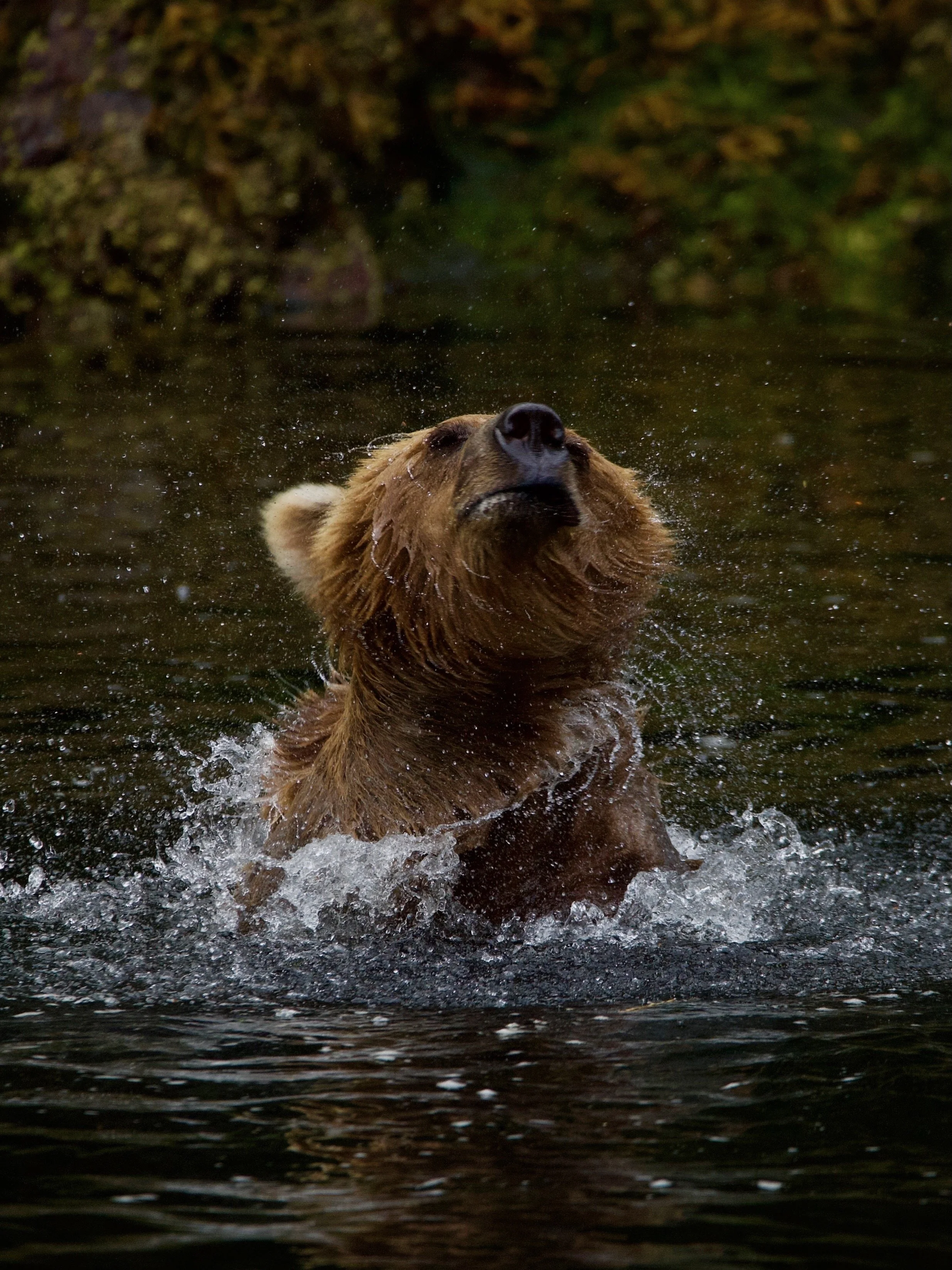
What we describe as a wildlife sighting is often a brief intersection between our plans and a much larger pattern of seasonal movement.
During the salmon runs, the black bears and brown bears will head to the streams to fish. I could spend hours watching them chase salmon. In the springtime, I’ve driven ‘out the road’ (which just means ‘further away from town’ in Juneau speak) and have watched bears chomp on dandelions. The seasons bring changes and the wildlife respond.
This is one of the reasons wildlife becomes more interesting the longer you watch. At first, the animal itself commands your attention. Eventually, you begin noticing the system around it. The stream matters because the salmon are there. The fish matter because they affect the behavior of the animals that feed on them. The tide matters because it changes access and movement. The season matters because abundance in Alaska is often compressed into short and consequential windows.
The animal becomes part of a story considerably larger than the sighting itself.
Weather Does More Than Change the View
Weather is another constant force in Alaska, particularly along the coast. Visitors understandably hope for clear skies. Sunshine reveals mountains, brightens glaciers, and makes outdoor travel considerably easier.
But clouds, rain, fog, and wind are not simply interruptions to an otherwise ideal version of Alaska. They are among the forces creating the landscapes people have traveled to see. Rain feeds forests, rivers, and waterfalls. Snow accumulates in mountains and feeds glaciers. Weather systems move across the Gulf of Alaska and collide with enormous ranges, producing conditions that can change dramatically over surprisingly short distances.
There are days when clouds settle so low around Juneau that mountains seem to disappear altogether. Then the weather shifts, sometimes without much warning, and an entire landscape appears where only gray seemed to exist an hour earlier.
Living here has made me increasingly interested in those transitions because they complicate the idea of a perfect view. Sometimes the most memorable moment is not seeing the landscape under flawless conditions, but watching it gradually reveal itself.
Familiar Places Refuse To Stay Familiar
This may be what I appreciate most about returning to the same places in Alaska. Travel culture tends to place enormous value on novelty. We count destinations, collect new experiences, and often assume that returning somewhere means choosing not to see somewhere else.
Alaska has made me question that instinct. A trail walked in May is not quite the same trail in August. A coastline changes with tides, weather, and migrating wildlife. Mountains appear different under snow, summer vegetation, or late season light. Even the quality of sound can change as birds arrive and leave or as water moves differently through the landscape.
You begin to realize that familiarity does not necessarily diminish a place. Sometimes familiarity gives you enough context to notice what has changed.
The first visit tes you what something looks like. Returning begins to teach you how it behaves.
As an example, the town of Petersburg, Alaska. The first time I was there, I noticed how quaint everything was. There was 1 main road and 1 type of store (ie. hardware store, grocery store, pizza shop) which I found charming. However, the second time I was there, I noticed how accommodating the town was. There was a bin of ice near the harbor for the fishermen/fisherwomen to use free of charge. The town was set up for the commercial anglers to make a quick stop into town, provision and then head back to the water.
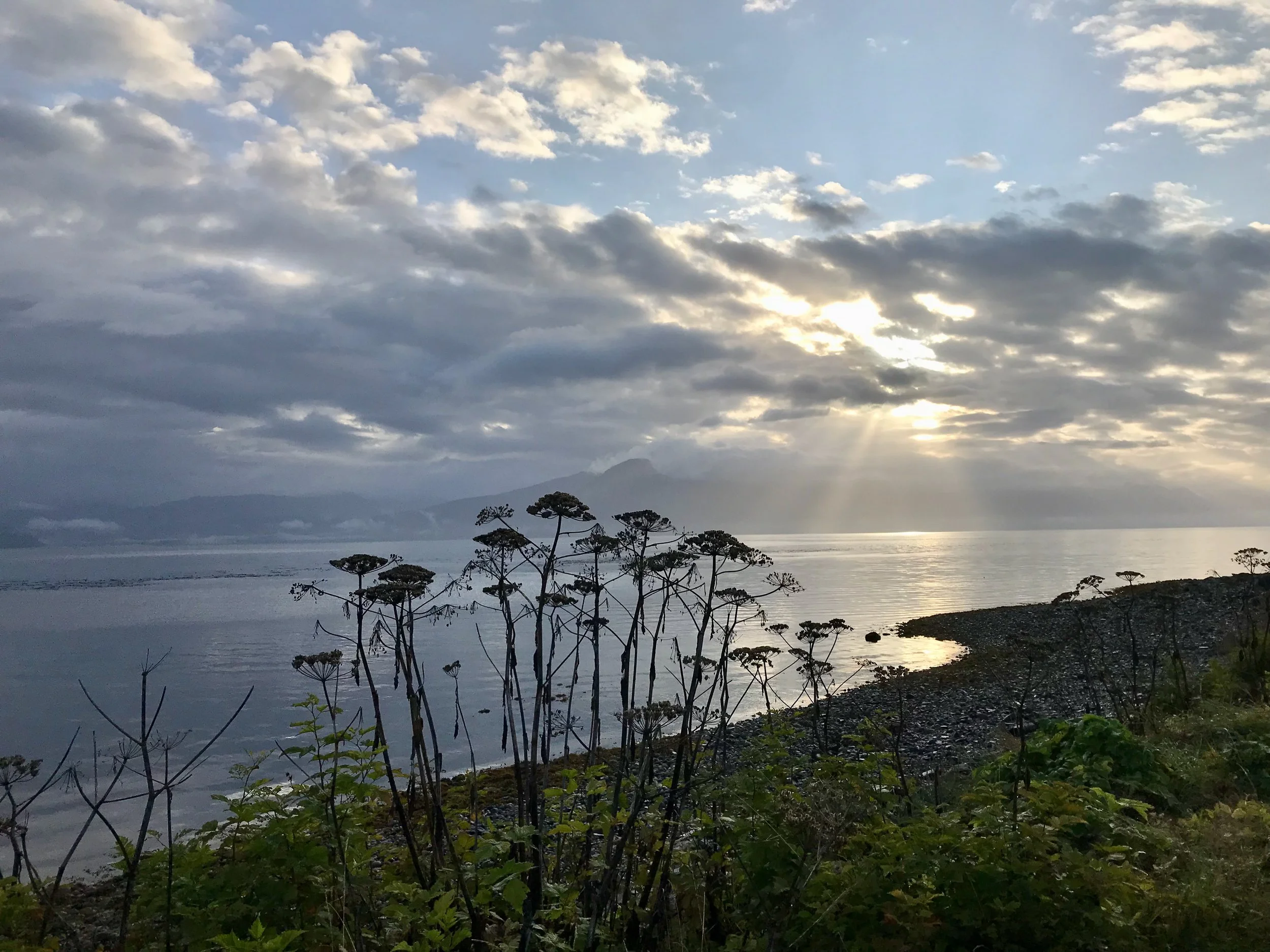
That distinction has become increasingly important to me. The longer you spend with a landscape, the less it behaves like scenery and the more it begins to feel like a living place with patterns, rhythms, and histories of its own.
The Traveler Changes Too
There is another kind of change happening, although it is easier to overlook. Your own perception evolves as you spend more time in Alaska.
On a first trip, the scale can be overwhelming enough that simply seeing the landscape feels sufficient. Mountains are enormous. Whales are astonishing. Glaciers look almost impossible. Those reactions are real, and they should not be dismissed.
Over time, however, attention becomes more refined. You begin noticing smaller things and making connections that were invisible before. You recognize the difference between a mountain disappearing into weather and one that is merely obscured by a passing cloud. You notice birds gathering over water and wonder what is happening below them. You understand why a salmon stream matters before you see the bear standing beside it.
The landscape has not necessarily become more dramatic. Your ability to read it has improved.
This may be one of the more rewarding aspects of spending meaningful time in Alaska. The experience deepens not because the place continuously produces something larger, but because you gradually become capable of noticing more.
What This Means for Planning an Alaska Trip
There is a practical lesson here as well. A good Alaska itinerary should provide enough structure to make the trip possible without becoming so rigid that it prevents you from responding to the place you actually encounter.
Certain decisions deserve to be made early. Experiences that depend on limited transportation, specialized guides, or small capacity should usually be reserved in advance. Distances matter, accommodations matter, and transportation between regions often determines what is realistically possible.
At the same time, an itinerary benefits from leaving some room for the Alaska that actually appears once you arrive. Weather may unexpectedly clear. Wildlife activity may lead you somewhere you did not anticipate. A trail may deserve another hour. You may find yourself beside a river, on a beach, or looking across a mountain landscape and realize that there is no compelling reason to leave simply because the itinerary says you should.
That space is not an absence of planning. It is an acknowledgment that the Alaska you encounter will contain information you did not have when you built the trip months earlier. The best itinerary cannot predict everything, and it should leave enough flexibility for the place itself to influence how the day unfolds.
Photography Has Taught Me To Notice Change
Photography is one of the ways I have learned to see these differences more clearly. A camera encourages you to pay attention to light, movement, distance, and detail. You begin recognizing how quickly the character of a landscape can change, sometimes because the clouds shift or the sun moves, and sometimes because an animal enters a scene that felt completely still moments earlier.
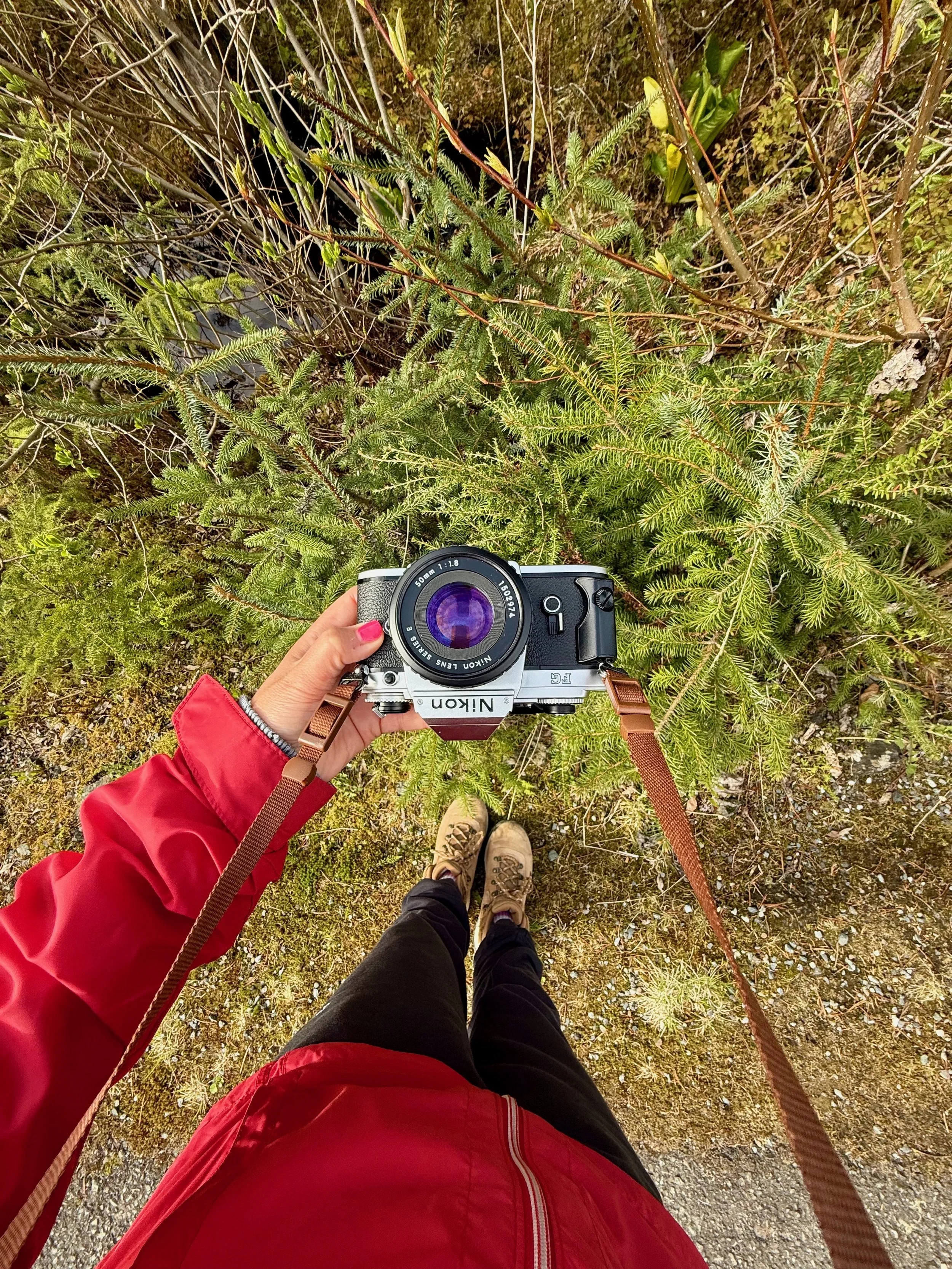
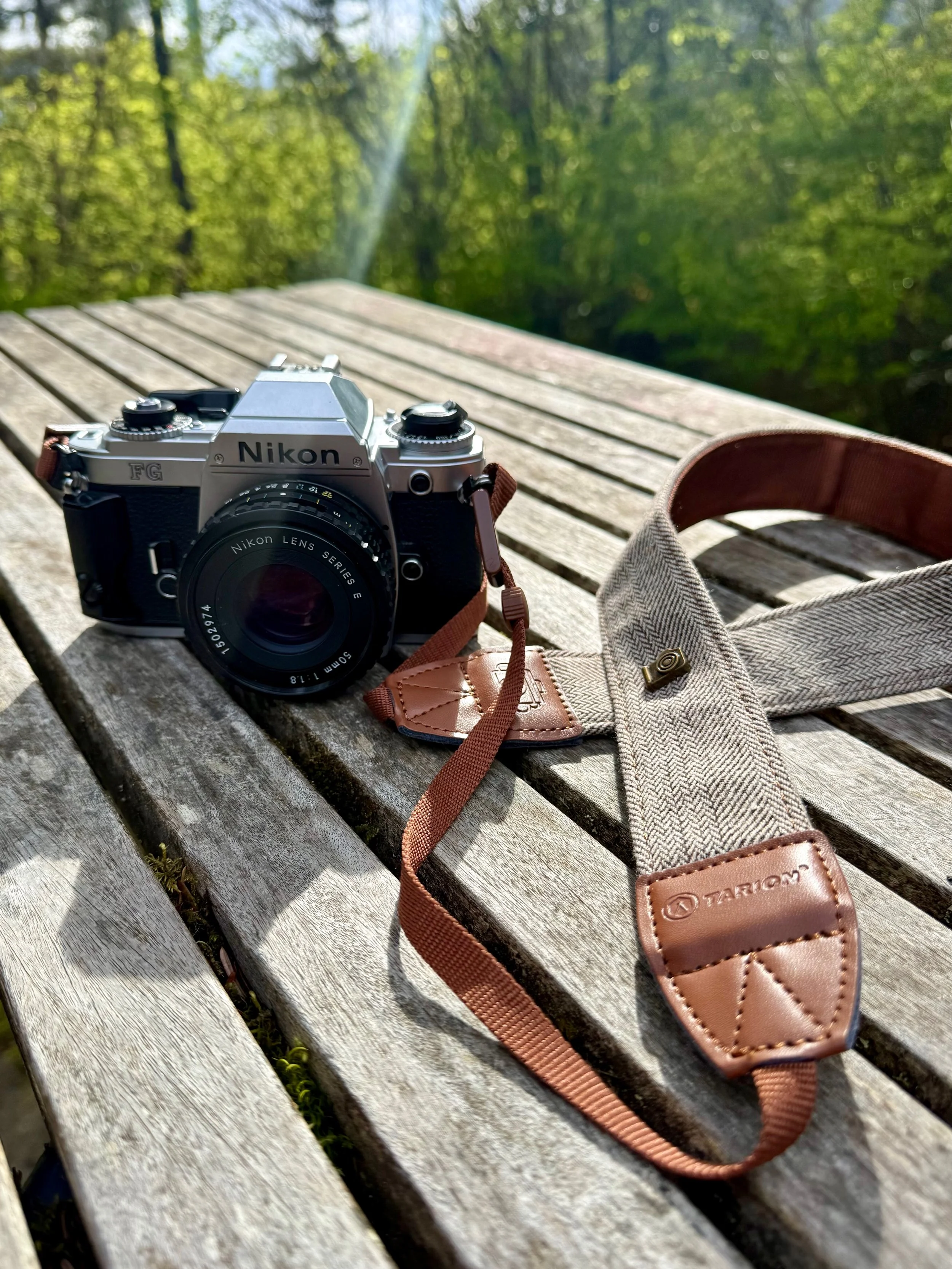
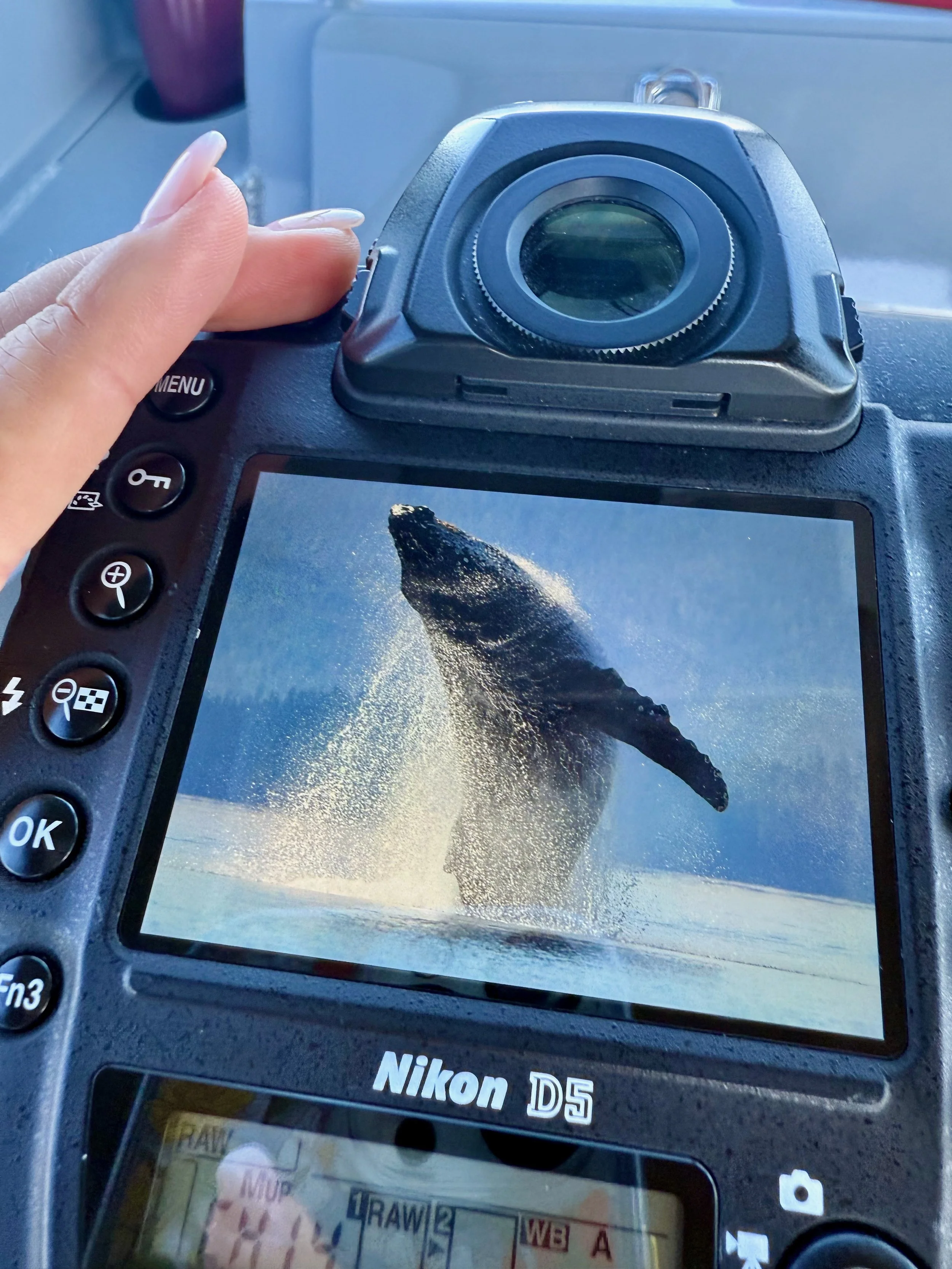
While it may sound ‘old school’, I recently acquired an old film camera. Working to compose a photograph that feels more permanent (v digital) is also a way to notice the details. Switching between a digital camera and a film camera provides a new level of appreciation for photography as an art and photography as a moment capturer. Both are incredible opportunities to share some of Alaska’s beauty with others.
Some of my favorite photographs matter less because they document a particular destination than because they preserve a moment that could not have been recreated exactly. The light was temporary. The wildlife was moving. The weather was changing. The photograph captured one version of a place that continued changing after I lowered the camera.
That is part of what makes those images meaningful to me. They preserve not simply what Alaska looked like, but what it looked like at one particular moment.
There Is No Final Version of Alaska
Perhaps this is why Alaska can remain interesting long after the first sense of spectacle begins to fade. There is no final version of it to see.
A glacier continues moving. A river rises and falls. Salmon return and disappear. Snow retreats and returns. Wildlife follows food, weather, and seasons through landscapes that are themselves changing. Even the same mountain outside your window can look unfamiliar under different light.
Eventually, the idea of completely seeing Alaska begins to feel almost beside the point. You can visit a place, learn it well, and return years later to discover that something has changed. Sometimes the difference is dramatic. More often it is subtle enough that you only recognize it because you remember what was there before.
This is one of the reasons I think Alaska rewards attention more than accumulation. You do not necessarily understand it better because you have visited more places. Sometimes understanding comes from staying with one place long enough to recognize its patterns, notice its changes, and appreciate that what appears permanent is often still evolving.
Perhaps that is one of the most compelling things about Alaska. You are never really seeing a finished landscape. You are encountering one version of it, at one moment in time, while countless processes continue around you.
The privilege of being here is not simply that Alaska gives us extraordinary things to see. It is that, if we pay close enough attention, we begin to understand how much is changing even while the landscape appears still.
Keep Exploring Alaska
If you are interested in understanding Alaska beyond the places that appear on an itinerary, continue with Why There Is No Road to Juneau, part of Alaska Explained, a collection about the geography, systems, history, and natural forces that shape the state.
And if you are beginning to turn that curiosity into a trip, Planning an Alaska Trip in 2027: What to Decide Now and What Can Wait is a useful place to start.