Whale Watching in Alaska: How to Choose the Right Experience
Whale watching is one of the experiences people most associate with a trip to Alaska, but choosing a whale-watching trip is surprisingly complex because there are quite a few options.
There are tours from Juneau, Icy Strait Point, Sitka, Seward and several other coastal communities. Boats range from small six-passenger vessels to larger sightseeing boats. Some trips are built almost entirely around finding whales; others combine wildlife with glaciers or a broader day on the water. Prices vary considerably, and almost every operator has photos of breaching humpbacks on its website.
That can make the options look much more interchangeable than they really are.
I live in Juneau, Alaska and spend a lot of time observing humpback whales and orcas, sometimes on dedicated whale-watching trips, sometimes while fishing or traveling by boat, and sometimes simply watching the water around Juneau. The biggest thing I would tell someone planning an Alaska trip is this:
Don't choose a whale-watching trip based only on the possibility of seeing a whale. Choose based on the kind of experience you want to have while looking for them.
Whales are wild animals. There is not a single operator who controls what a whale or orca will do on a particular afternoon. What you can choose is where you go, how much time you spend on the water, how many people are around you, how the captain approaches wildlife, and whether the trip allows you to actually experience the place rather than simply collect a sighting.
That is where I would start.
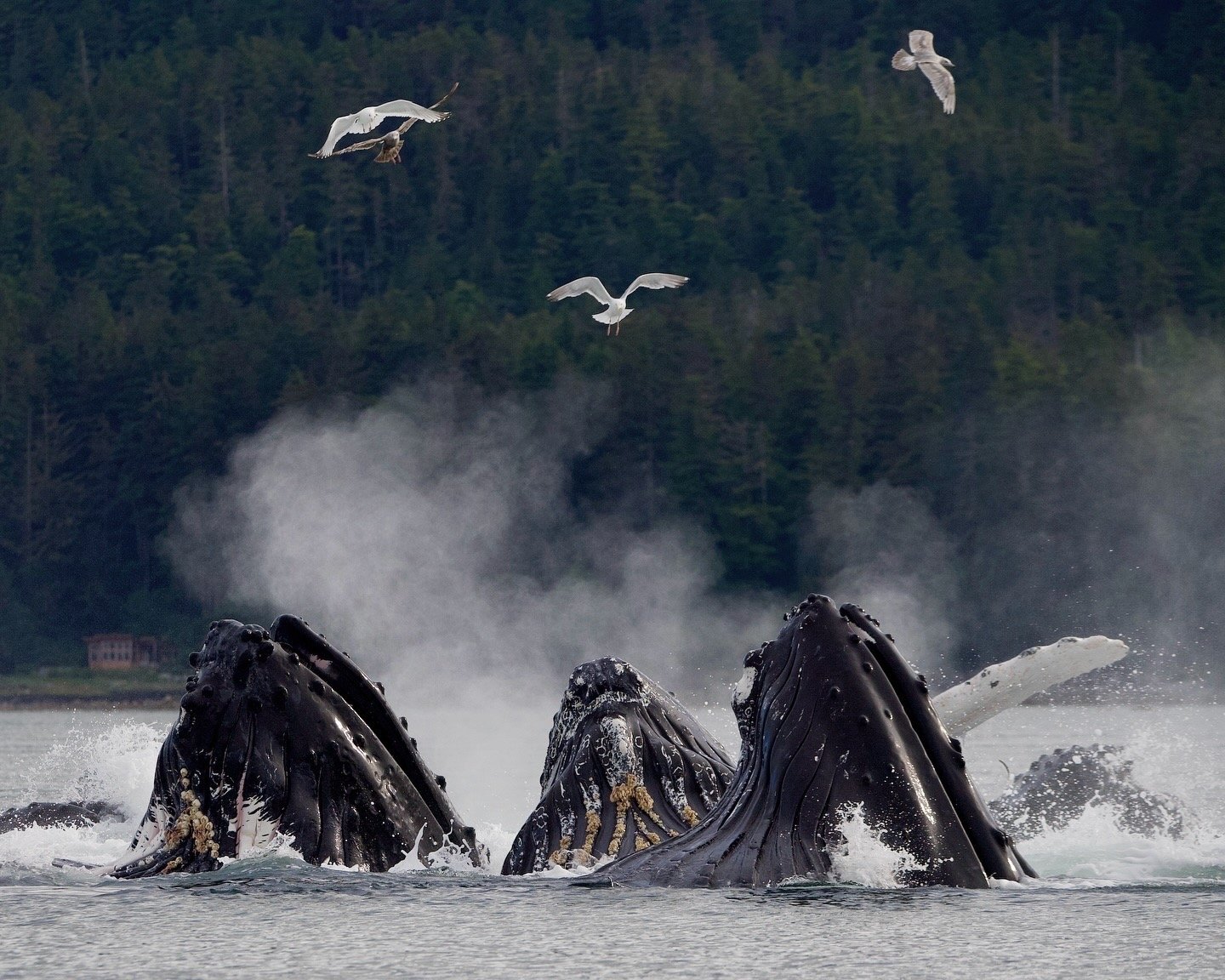
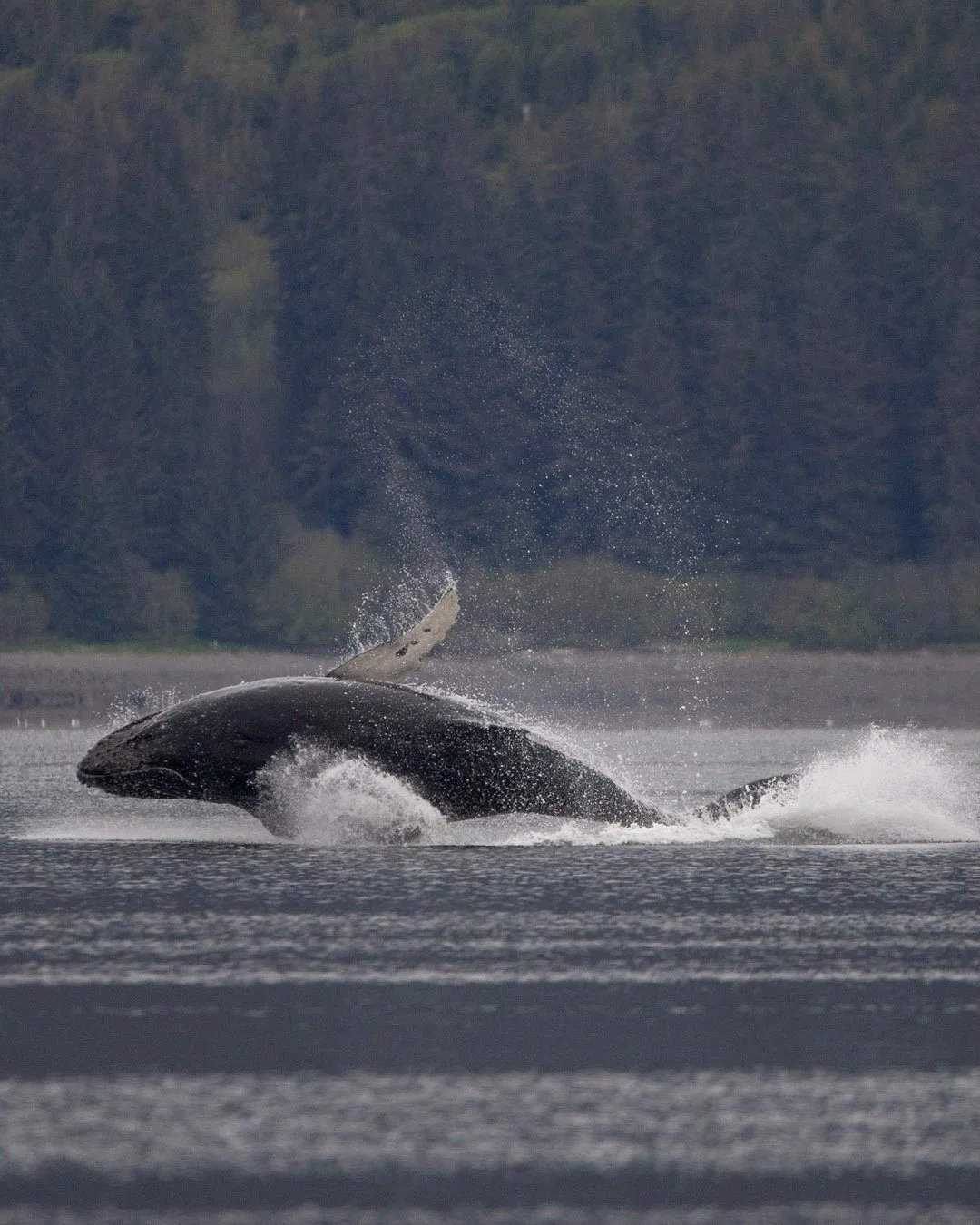
Over the years, I harken back to my first memory of seeing a humpback in real life. We were outside of Petersburg in the Frederick Sound watching a pod of humpback whales bubble-net feed. I was absolutely astonished. The uniformity of the whales, the coordination, their size - I was in complete awe. And then, one of the whales breached! I had captured a photo and could zoom in to see the barnacles on it. This experience was years ago, yet it has stuck with me and has shaped how important whales are to me.
The Short Answer: Where Would I Go Whale Watching in Alaska?
For most first-time Alaska travelers, Juneau is one of the easiest places to build a dedicated whale-watching experience into an itinerary, particularly if Southeast Alaska is already part of the trip (and no, I’m not just saying that because I live here!). The surrounding waterways offer extensive marine habitat, and whale watching is a well-established part of the visitor experience. There are so many whale watching operators in the area so you have a selection to choose from.
But "go whale watching in Juneau" still doesn't answer the more important question: what kind of trip should you book?
If I were choosing, I would care most about the operator, the boat, the amount of actual time on the water and the philosophy of the trip.
A small boat can offer a more intimate experience and often more freedom to move around, photograph and listen. A larger vessel can be more comfortable, provide indoor space and work well for families or travelers who value stability and amenities. Neither is automatically better.
The right choice depends on what you value.
I recommend a medium to larger sized vessel - here’s why:
often larger vessels have a top deck - seeing whales from a higher vantage point is more impressive. It’s also easier to spot whales from above (vs right at ground level).
larger vessels are more sea worthy and there’s less ‘waves’ overall; while the waves around the Juneau whale watching area are usually between 1-3 feet, you can still notice them especially in a smaller boat.
any vessel that has a quieter engine - sound travels underwater and as you probably know, whales use sound to communicate.
you can move around, there are snacks, etc.
while larger vessels are not fuel efficient, they do maximize fuel based on passenger amounts.
First Decide What You Want From the Experience
Most travelers begin by comparing whale watching companies, but I think it helps to start one step earlier by considering what you want the day itself to feel like. If your main goal is simply to spend time watching humpback whales while you are in Alaska, a traditional whale watching excursion may be a wonderful fit. If photography is important to you, details like the size of the boat, the number of passengers, and how easily you can move around become much more meaningful. And if you love being on the water, I would look for a smaller or longer trip where the journey through Southeast Alaska becomes part of the experience too.
It is also worth leaving room for Alaska to surprise you. A breach, bubble net feeding, or an unexpected orca encounter can become an unforgettable part of a trip, but those moments are special precisely because they cannot be guaranteed. For me, a great whale watching trip creates the time and space to observe wildlife respectfully and lets the experience unfold naturally. The whales remain wild, and that is a large part of what makes seeing them here so extraordinary.
Good whale watching captains help you see whales - GREAT whale watching captains help you see whales AND respect the whale distance. You will receive more from your experience if you have a great naturalist onboard who can explain which whale you’re looking at, the whale migration pattern and their habitat. I love hearing some of the captains on the boat radio being gracious with one another and allowing another boat to get a front row view of the whales while they fall behind (since they have already had a front row view).
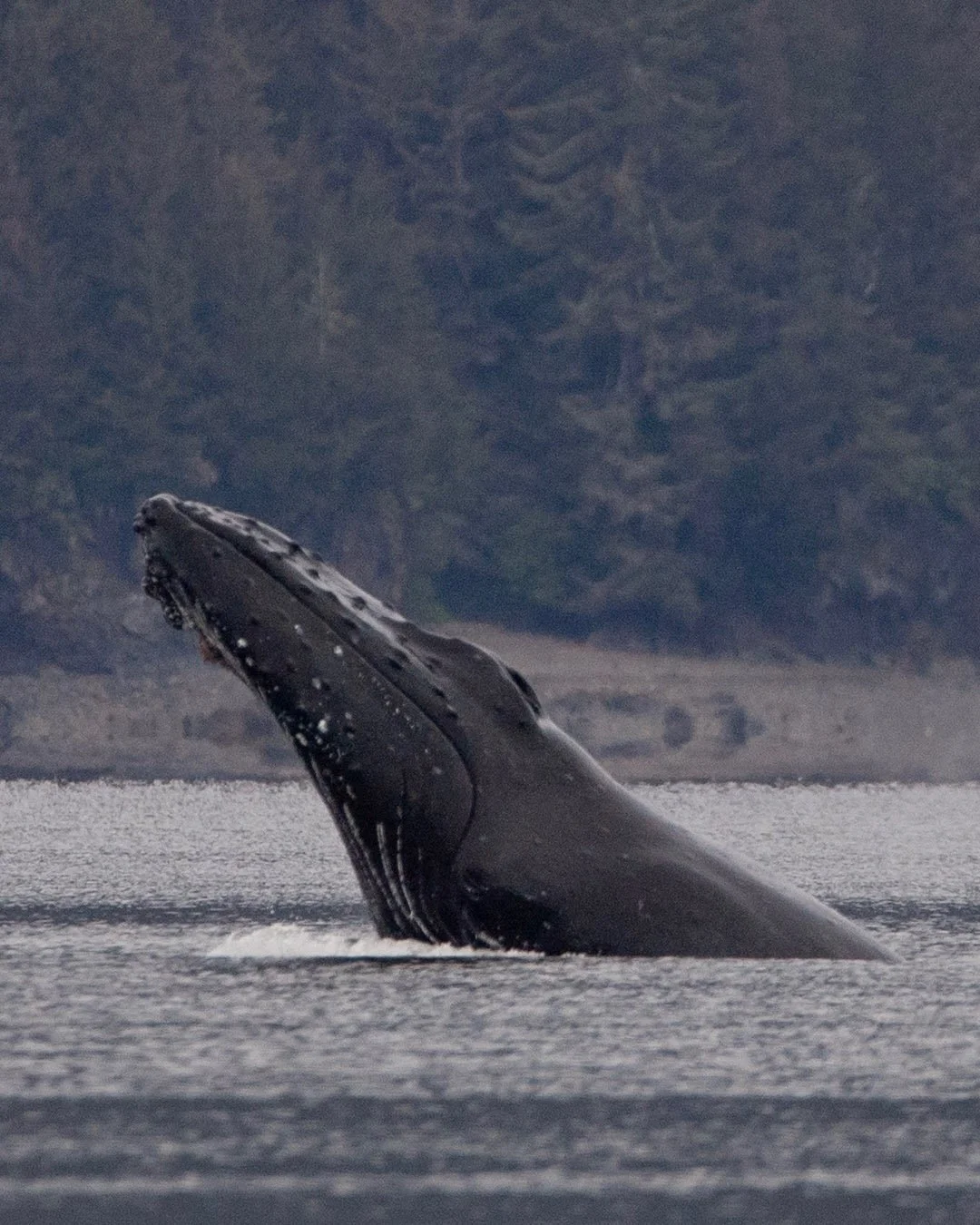
No matter which operator you go with - one thing that I see happen ALL the time is: “well folks, we have to leave” despite the incredible whale activity that might be happening. If you’re someone like me who could stay out whale watching for years at a time (exaggeration but close), it can be disappointing to have to head in.
Small Boat or Large Boat?
This may be a more useful distinction than the name of the tour company.
Choose a smaller boat if you value intimacy and photography
Smaller boats generally create a more personal experience. There are fewer people competing for a railing position, communication with the captain or naturalist tends to be easier, and the entire trip can feel more like being out on the water than participating in a large organized excursion.
For photographers, boat configuration matters enormously. Being able to move quickly from one side of the vessel to another can be more useful than almost any advertised tour feature.
The tradeoff is that smaller boats can feel more exposed to Southeast Alaska's weather and water conditions, and amenities may be limited.
I have photographed whales from massive cruise ships, to 6 person Hewescraft boats. Each has its perk. What I prefer to do is work 1 on 1 with the captain before we even leave the dock. Get a sense of where they recommend to stand or sit, explain the types of shots you are looking for (ie. a straight on shot of a whale fluke as it slips underwater).
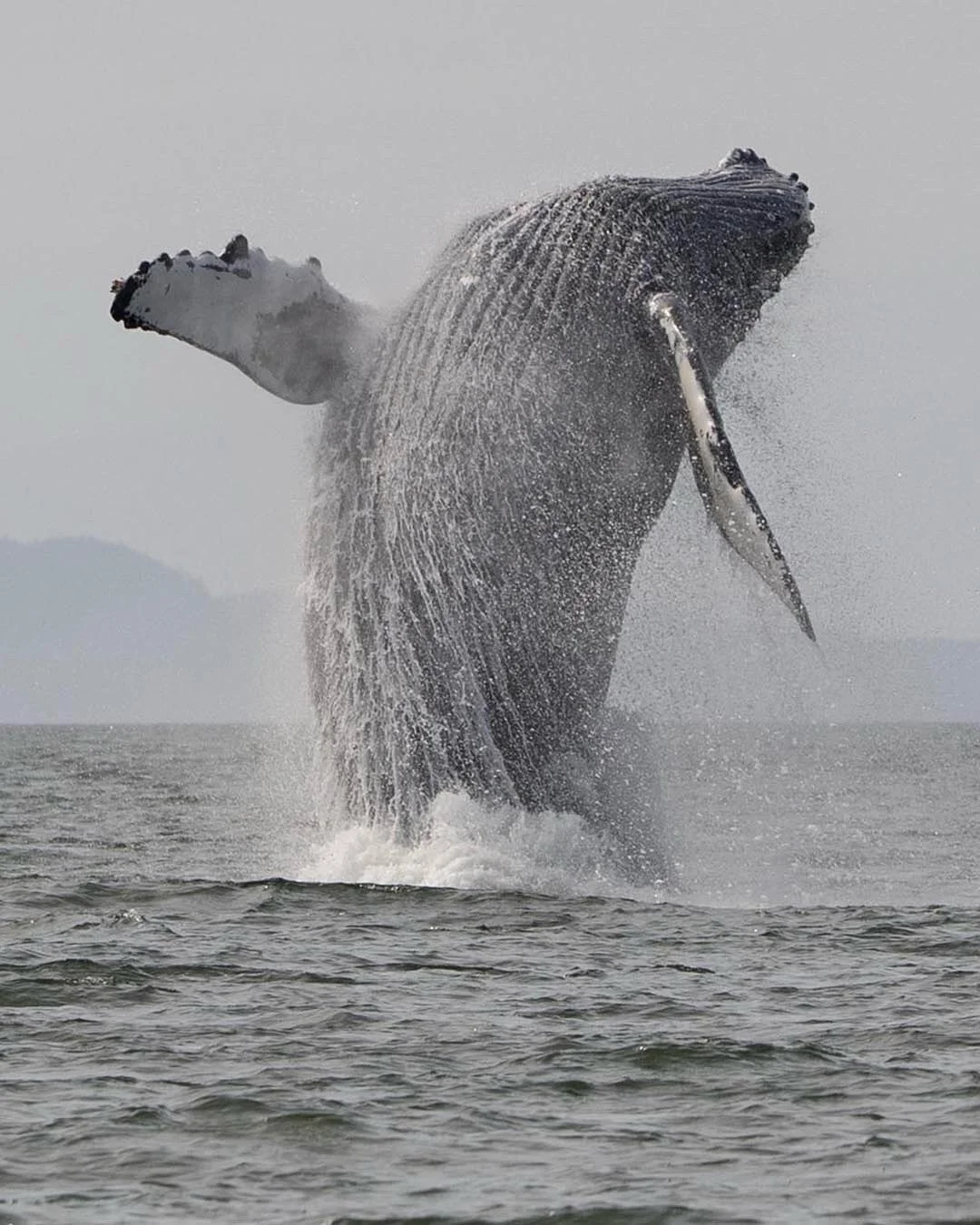
Standing towards the middle or back of the boat tends to be most stable. In a smaller boat, the bow is often aligned with what the captain is looking for and may give you a few seconds longer before the captain swings one side of the boat towards the whales (so that the rest of the group can see it). To help you imagine this scene, think about the boat pulling in parallel with the whales (vs. perpendicular to them). More guests that can see the whales is better.
Choose a larger boat if comfort and accessibility matter more
Larger boats can make sense for families, multigenerational groups, travelers with mobility considerations or anyone who would rather have more indoor space and protection from the weather. Another big win for larger boats (from my perspective) is that you get the excitement of the whole boat. Since there are more people looking for the whales, someone usually sees one and points it out to the rest of the guests.
They can still provide excellent wildlife experiences.
The tradeoff is less intimacy. There’s more people but I’m not sure if there’s really a downside. The whale operators know how to ensure all of their guests get to see the whales. There isn't a universally correct choice. There is simply a better match for the experience you want.
How Long Should a Whale-Watching Tour Be?
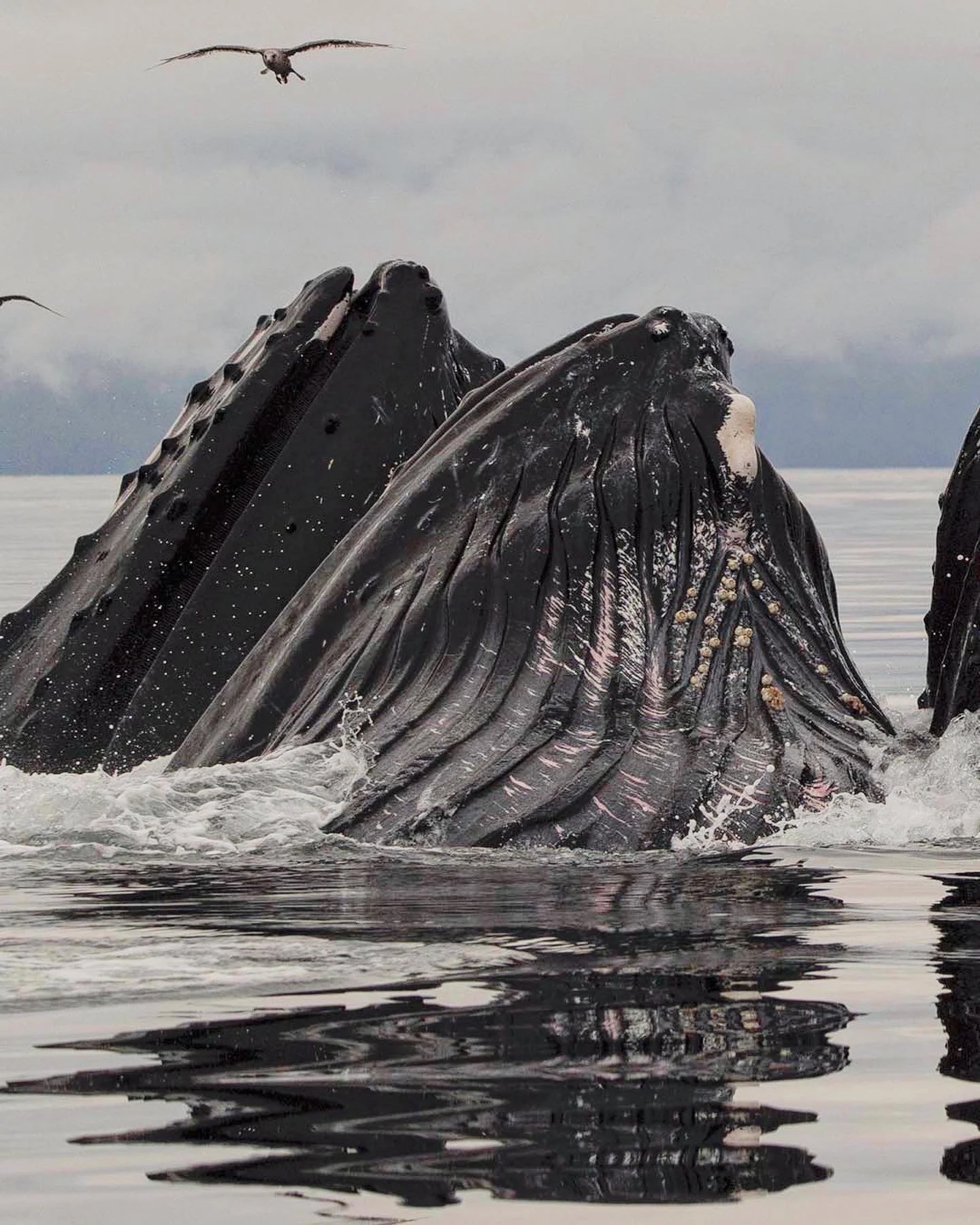
Just like most wildlife viewing, the most amount of time you can secure, the better. Nature and wildlife do not appear on cue so being present and letting it unfold around you is key to your experience.
Traveling from the harbor to productive wildlife areas takes time. Wildlife takes time. The more compressed the excursion, the more pressure there is to locate an animal, get the sighting and move along.
A longer excursion creates room for something different: observing.
There is a meaningful difference between seeing the back of a humpback whale disappear beneath the surface and staying long enough to understand what the animal appears to be doing, noticing its breathing pattern, watching where it resurfaces and recognizing the rhythm of the encounter.
That doesn't mean everyone needs an all-day private charter. For many Alaska itineraries, a standard half-day excursion provides a good balance.
But I would not automatically choose the shortest or least-expensive option simply because the listings all promise whales.
For most people, I would recommend a 3-4 hour whale charter. It gives you enough time to be out on the water, learn about the whales habitat and ecosystem, observe a whale and enjoy the sea breeze.
Is a Private Whale-Watching Charter Worth It?
For the right traveler, I think this is where spending more can materially change the experience. A private charter isn't valuable simply because it is private. It is valuable because you gain control over the pace of the trip.
You are not waiting for a large group to board. You may have more space to photograph. You can ask questions without competing with dozens of other passengers. And depending on the operator and conditions, there may be greater flexibility in how the time is used.
For a family or small group already paying for several individual excursion tickets, the price difference can sometimes be worth examining rather than assuming a private charter is prohibitively expensive.
I would especially consider one for serious photographers, travelers who love wildlife, repeat Alaska visitors or anyone for whom whale watching is one of the central reasons for the trip rather than another activity to fit between attractions.
Since wildlife photography and whale watching is what I gravitate towards, I would recommend the investment on a ‘nice’ day when some of the other conditions such as weather and the marine weather are positively forecasted. When the conditions are right and you are at the height of the whale watching season (ie. when there are lots of whales nearby),
Juneau vs. Icy Strait Point vs. Other Alaska Whale-Watching Destinations
I have been whale watching throughout a lot of Southeast Alaska. I would look at the route you're already traveling and decide where whale watching fits naturally and where it allows you to use your limited time in Alaska.
Juneau
I’m bias but I would recommend Juneau is the place I know most intimately, and it is an easy location to dedicate part of a day to whale watching without building an entire Alaska itinerary around the experience.
For travelers arriving by cruise ship, there are numerous established operators and a wide range of boat styles. For independent travelers spending several days in Juneau, there is even more flexibility to choose a trip based on weather, photography interests and the overall pace of the visit.
The whale watching experiences depart from Auke Bay (right down the road from where I live!) and they often operate on the cruise ship schedule. During the peak season, you don’t have to travel too far to see a whale (I have seen humpback whales lunge feeding in the harbor!). The mid-summer months (July, August) is usually when I will see bubble-net feeding. It can be rare to catch a glimpse of it but absolutely worth trying to see if your schedule allows.
I typically see orcas come into the area a little earlier than humpbacks (April/May/June) as they are following the King Salmon runs. I have also seen them mid to late summer as well but over the years, the majority of my photographs of orcas have been in the earlier summer months.
Icy Strait Point and Hoonah
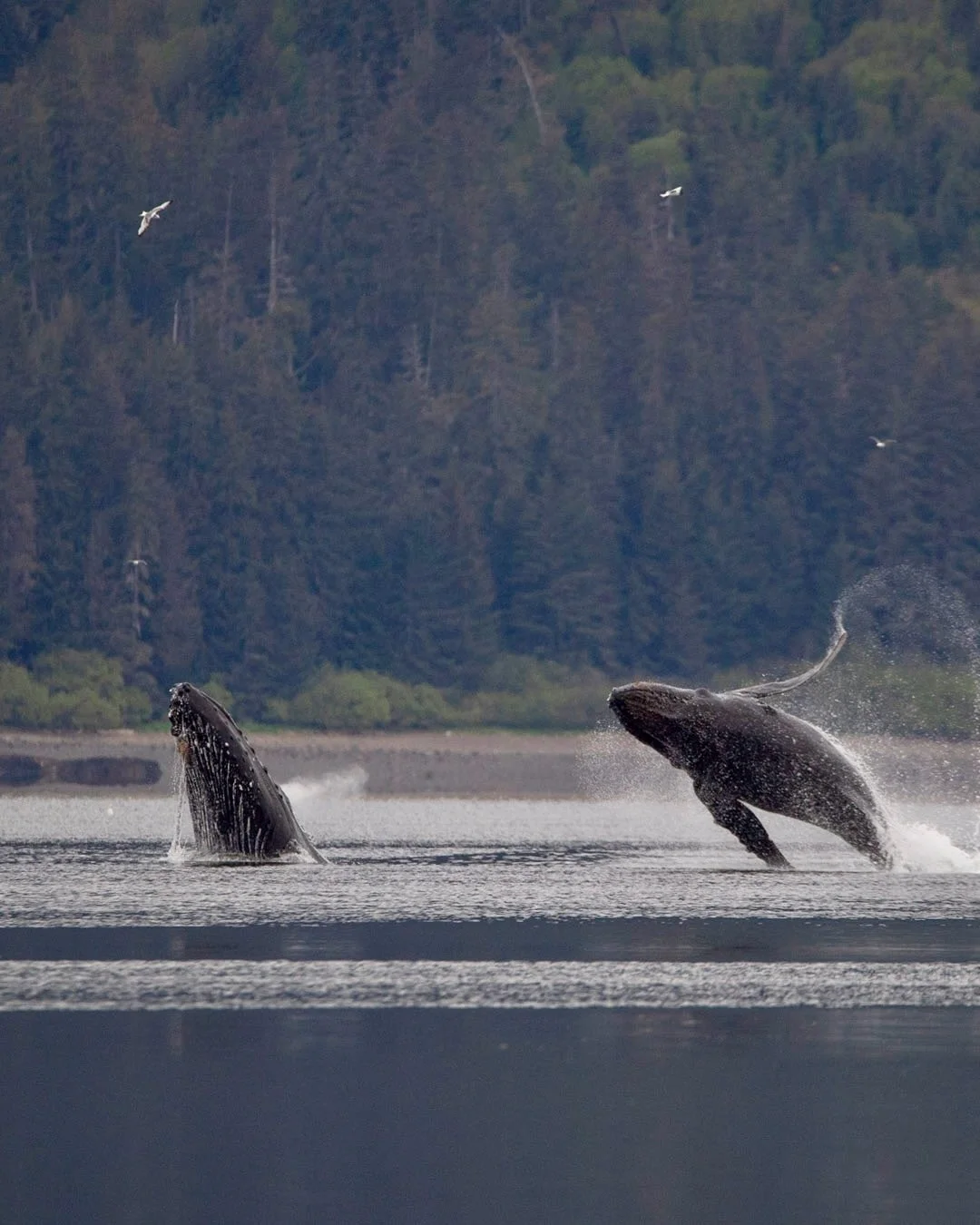
Hoonah and the waters around northern Chichagof Island offer another natural place to look for marine wildlife, particularly for travelers whose Alaska itinerary already includes Icy Strait Point.
The appeal here is partly geographical and partly experiential: you're already in a part of Southeast Alaska where the water, islands, forests and wildlife are the attraction.
If your itinerary includes both Juneau and Icy Strait Point, I wouldn't automatically book whale watching in both. I would compare what else you want to do in each location and use whale watching where it creates the strongest overall trip.
Seward and Southcentral Alaska
Whale watching around Seward is often part of a broader marine wildlife and Kenai Fjords experience rather than precisely the same type of dedicated humpback-watching trip commonly sold in Southeast Alaska.
That can be a wonderful choice, but I would think about it differently.
If glaciers, seabirds, marine landscapes and a full day exploring Kenai Fjords are already priorities, choose that experience for the whole ecosystem rather than treating it simply as another version of a Juneau whale-watching excursion.
What Whales Might You See?
Humpback whales are the species most travelers associate with whale watching in Southeast Alaska.
Orcas are also present in Alaska waters, but I would never book a standard whale-watching excursion with the expectation that you are going to see them. An orca encounter is something to appreciate when it happens (but is more rare to see).
Same with dramatic humpback behavior. A breach is spectacular. So is bubble-net feeding. But a quiet encounter can sometimes be more memorable precisely because you have time to watch an animal move through the water without turning the experience into a hunt for a photograph.
One time, I was over by Fresh Water Bay and we saw a pod of 10-12 humpback whales repeatedly bubble-net feeding. It was absolutely spectacular. The seagulls would start to move towards where the whales were going to come up to start feeding, giving us an early signal of where they would come up. There was no one else around us - it felt like a private viewing.
When Is the Best Time for Whale Watching in Alaska?
For most travelers visiting Southeast Alaska during the main summer travel season, whale watching can fit naturally into the trip.
I would be cautious about selecting a specific travel week solely because someone told you it was the "best" week for whale activity. Marine ecosystems don't work like a theater schedule.
Instead, plan around the Alaska trip you want to take and treat wildlife sightings as part of spending meaningful time in an extraordinary habitat.
Seasonality still matters, and this is one area where The Alaska Edit will continue updating recommendations as conditions and local observations change.
What I Look for in a Whale-Watching Operator
Tour listings tend to emphasize the same things: experienced captains, wildlife sightings, comfortable boats and beautiful scenery.
I would look one layer deeper.
I want an operator whose captain understands that the quality of the experience isn't measured by how close the boat can get to an animal. I want someone who is genuinely interested in the ecosystem rather than simply racing from reported sighting to reported sighting. I want enough space for passengers to see and photograph without the boat itself becoming the dominant part of the encounter.
And I value guides who help people understand what they're seeing.
Here are the 3 things I usually look for:
Does the captain / naturalist onboard know any of the humpback whales by name? In our area, great guides can identify some of the most popular whales that we see year-over-year by their fluke.
Do you feel an immediate sense of hospitality? These operators run and gun each day of the summer season (even multiple trips in a day). When people are tired, they often lose energy and are not as hospitable. Remember, you’re paying for the trip and they are the host.
Safety. Do they start with a safety briefing? Do you know what to do in case of an emergency? While this may seem like the last thing on your mind, boat trouble can be a real challenge in Alaska. Make sure you know where the safety equipment is.
What to Bring
You do not need elaborate equipment to enjoy whale watching in Alaska.
Layers and rain protection matter because conditions on the water can feel very different from conditions at the dock. If you're photographing wildlife, bring the camera you can operate quickly rather than equipment so complicated that you spend the entire encounter looking at settings.
And bring binoculars if you enjoy observing wildlife.
One of the pleasures of being on the water in Alaska is realizing that the whale beside the boat isn't the only thing worth looking at.
If you’re a photographer, bring the biggest lens that you own. Alaska’s size is immense, so even your biggest lens will feel tough when you’re out on the water. If you have a tripod or monopod, bring that if you have a long viewing session (your arms may get tired!) and consider bringing rain gear for your camera as it often rains in Alaska!
The Alaska Edit Take
If this is your first trip to Alaska and whale watching matters to you, I would absolutely make room for it.
But I wouldn't spend hours trying to identify the operator that promises the most spectacular wildlife encounter. No one can promise that.
Instead, spend your energy choosing how you want to experience the water.
For me, that means enough time to let an encounter develop, enough physical space to observe and photograph comfortably, and a captain whose decisions show respect for the animals and the place.
The best whale-watching experiences I have had in Alaska haven't necessarily been the ones with the most dramatic single moment. They are the ones where, for a few hours, I stopped feeling like I was on a tour and simply felt like I was out in Southeast Alaska watching the ecosystem reveal itself.
I hope your whale watching experience helps make you feel humbled, small, and appreciative of the world around you. Humpback whales are massive, gentle and their collaborative nature during bubble-net feeding can help remind you of the power we have as humans when we work together. Whale watching helps provide perspective.
Planning Your Whale-Watching Trip
If you’re looking for recommendations of whale watching experiences, here is my short list. Select one based on one that fits your situation best.
The trip I would book - double decker boat allows for a great vantage point, knowledgable staff
Best for first-time visitor - medium boat, stable catamaran
Best for families - larger boat, more places to walk around, more stability
Best for photographers - Intimate experience, work with captain to line up the best shot