Brown Bear Viewing from Juneau: A Day at Waterfall Creek
There are some Alaska experiences you plan for months, imagining what they might be like, only to find that the reality feels completely different once you're there. Today was one of those days.
I went brown bear viewing with Wild Coast Excursions, flying from Juneau to Waterfall Creek on Chichagof Island during the late-summer salmon run. I knew, of course, that the purpose of the trip was to see brown bears, but what surprised me was how much I loved everything surrounding that moment: the floatplane flight, the forest, the walk in, the sound of the waterfall, and the quiet anticipation of standing beside the water with nothing to do but watch, wait, and see what the landscape offered.
And then a bear appeared.
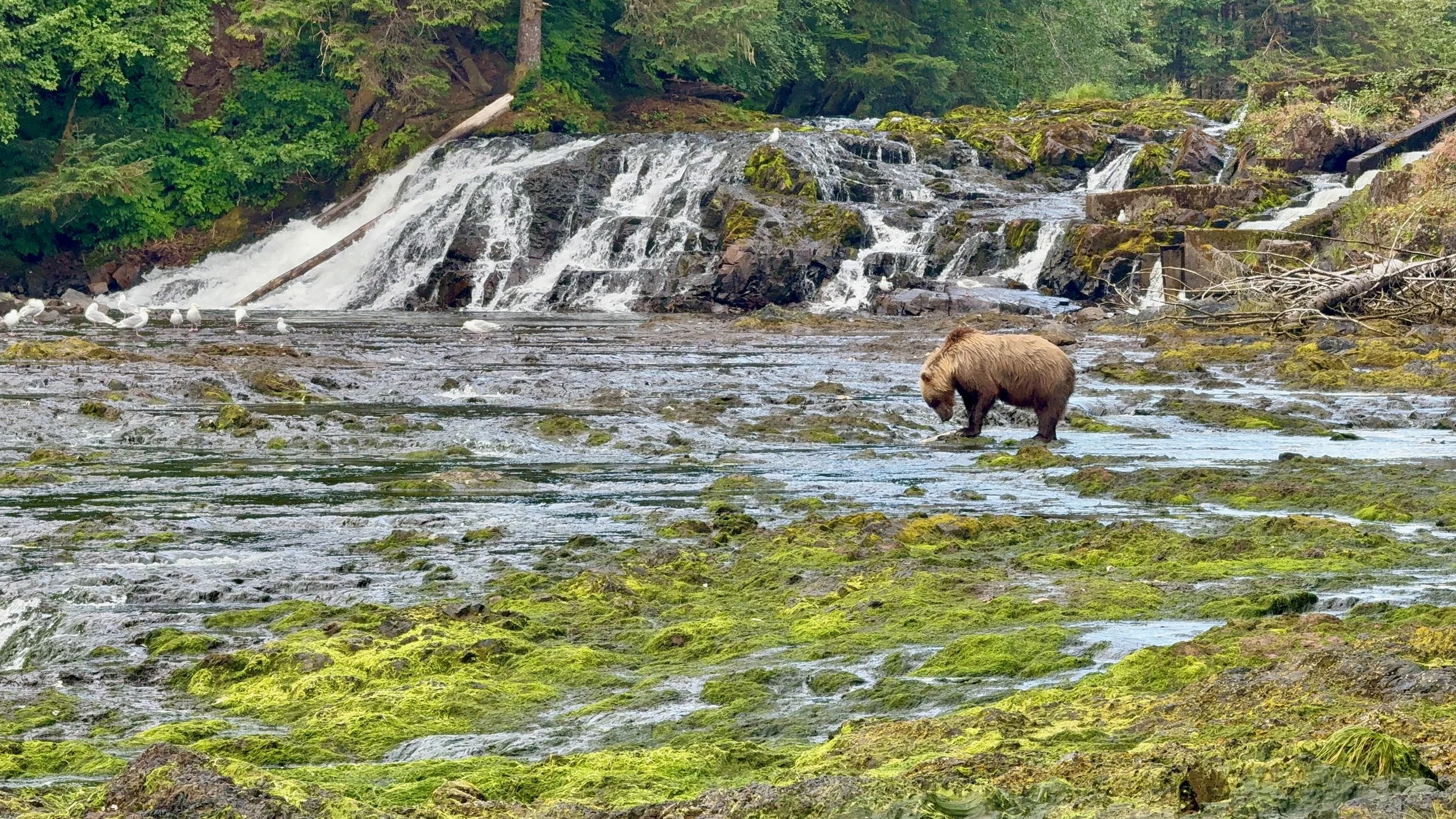
Brown bear standing by Waterfall Creek
The bear emerged into the landscape and began moving along the edge of the water.
For the next stretch of time, we watched it do what bears come here to do.
It walked the shoreline. It disappeared behind vegetation and appeared again. It stood in the water. At one point, it rose onto its hind legs, giving us this extraordinary view of just how large it was. Behind it, water tumbled down the rocks. Around it was forest. And for a while, that little corner of Chichagof Island felt like the entire world.
It was wild to me how quickly I felt comfortable in their presence. We were at a distance, they seemed to know we were there but uninterested in us. The bear would meander - moving over rocks and through the water hunting for a fish. The seagulls would fight over scraps of the fish that the bear would leave. It’s funny, we would all cheer a little when the bear caught a fish; we felt connected to bears in a deeper sense.
Before We Ever Saw a Bear, We Talked About Safety
One of the things I appreciated about Wild Coast was that the bear-viewing experience began before we ever boarded the floatplane. Peter Nave, the owner of Wild Coast Excursions, gave us a safety briefing in Juneau before we left, walking us through what to do if we encountered bears, why we needed to stay together, why you never run from a bear, and how we would move as a group from the landing area to the viewing location. More importantly, he made it very clear that he would be with us every step of the way.
That briefing also introduced an important concept for understanding this particular bear-viewing experience: habituation. Some of the bears using this area are habituated to the predictable presence of people. That doesn’t mean they’re tame, domesticated, or safe to approach casually; they are still wild brown bears. It means that, over time, they have learned that people behaving consistently in these established viewing situations are not a threat.
There is almost a sense of mutual respect to it. We stay together, follow the guide’s direction, and give the bears space rather than chasing them or trying to get closer for a photograph. In return, the bears are allowed to move through their habitat on their own terms. That distinction mattered to me because it made me more aware of the responsibility we had as visitors in their space.
Getting There Is Part of the Experience
The trip begins in Juneau with a floatplane flight across Southeast Alaska.
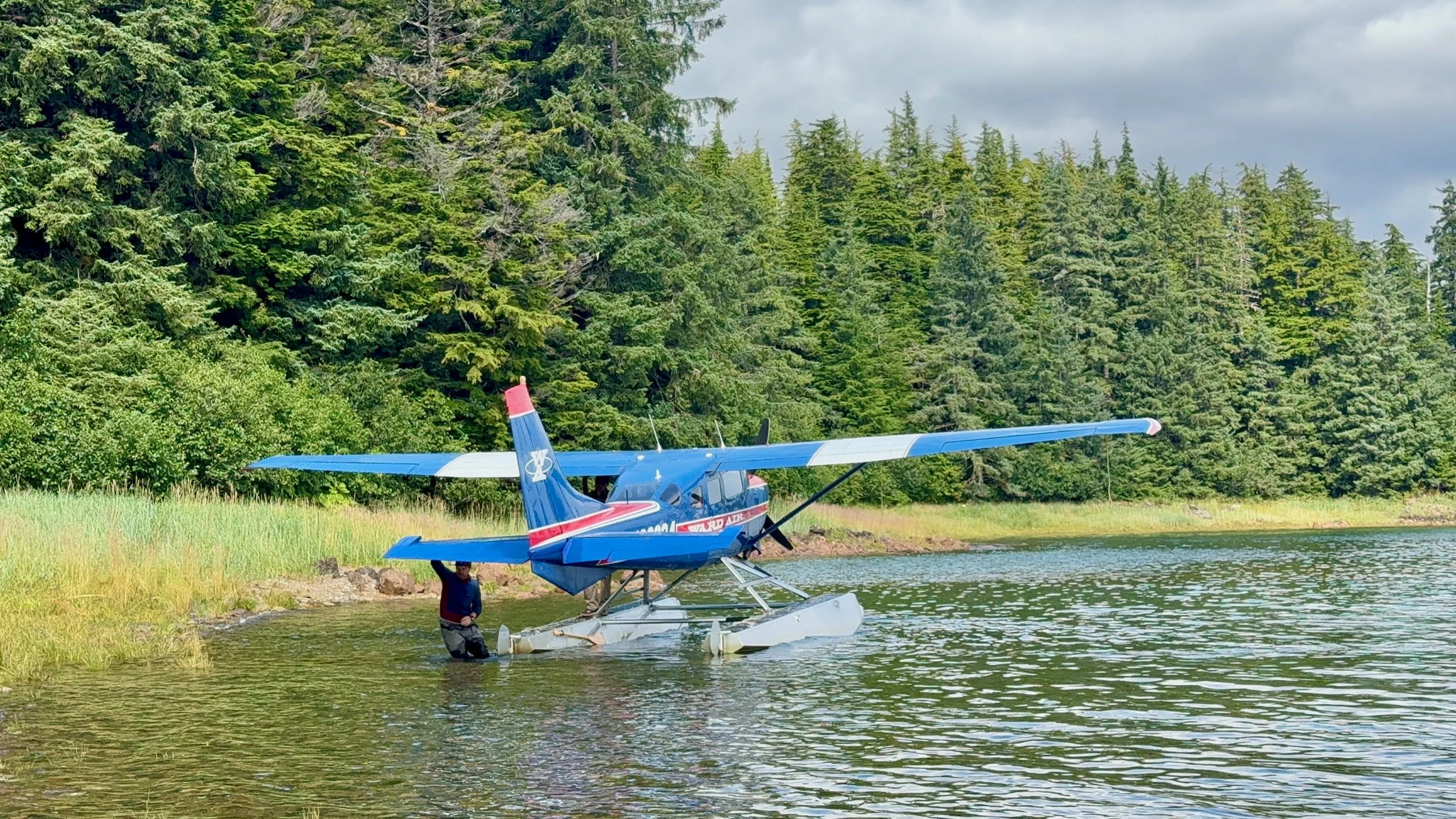
Here’s the plane we took from Juneau to Waterfall Creek (via Ward Air)
I have spent a lot of time here, and flying over this landscape still changes my perspective every time. From the air, you begin to see just how much of Southeast Alaska is shaped by water, forest and mountain. Islands seem to stretch endlessly, roads disappear, and human development suddenly feels very small against the scale of the landscape.
Waterfall Creek sits on Chichagof Island within the vast Tongass National Forest, and reaching it requires a floatplane flight from Juneau. That means the experience begins well before you ever see a bear. Climbing into a small plane and flying over miles of country that simply cannot be reached by road is, in itself, one of those distinctly Alaska experiences.
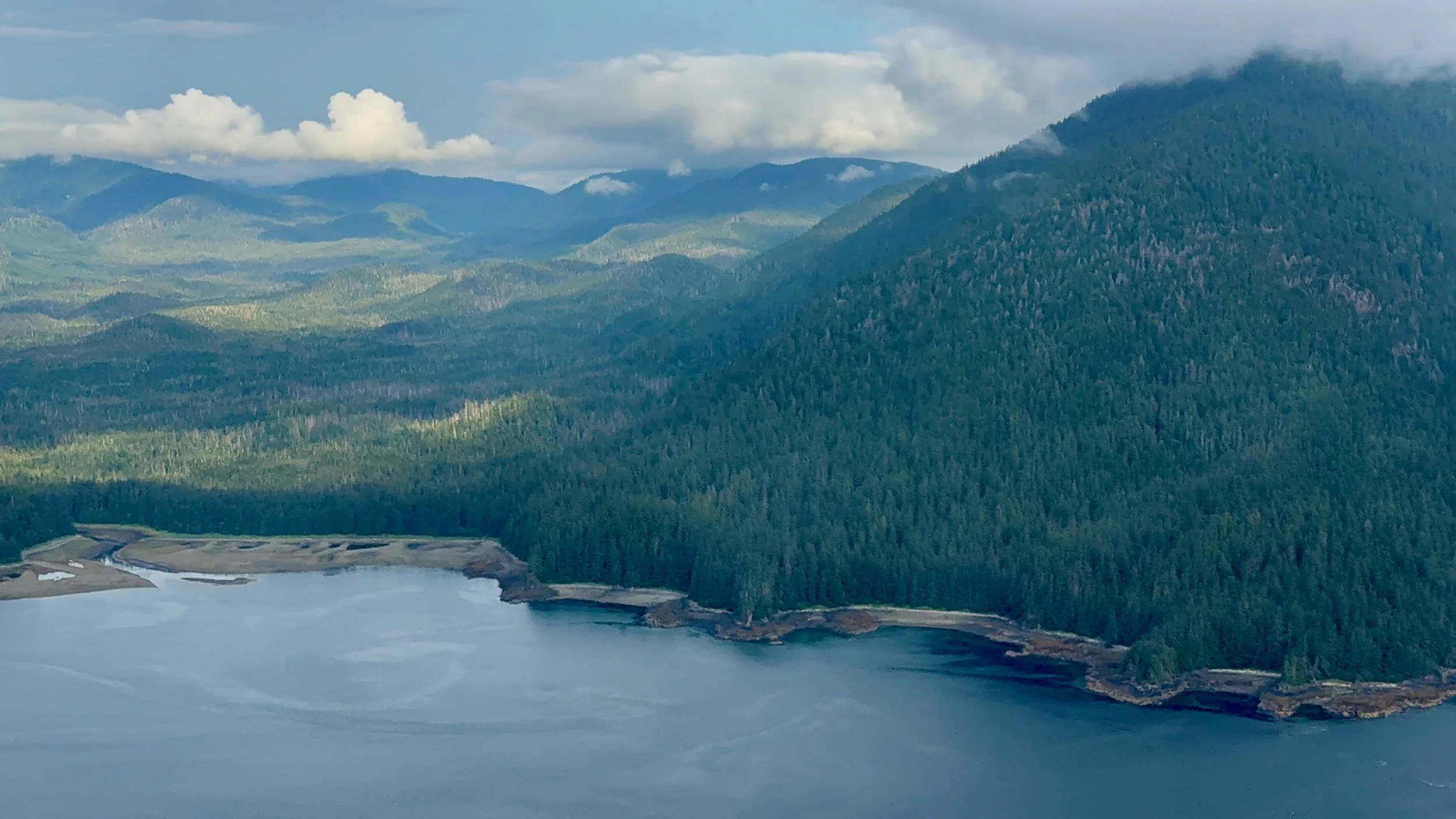
View of an Alaska island from above
Once we landed, we continued on foot, crossing uneven terrain and moving through the forest toward the viewing area. Rather than feeling like a polished wildlife attraction with paved paths and railings, the experience felt much more connected to the landscape itself, which I personally think made it better. You really feel like you’ve gone somewhere.
Throughout the walk, we stayed together as a group, exactly as Peter had explained before departure. Then, when we reached the creek, the pace of the experience changed completely. We stopped moving, settled into the viewing area, and waited to see what would happen.
The Strange Pleasure of Waiting for Wildlife
So much of travel is built around momentum: get off the ship, get on the bus, see the attraction, take the photograph, and move on to the next place. Wildlife watching asks something different of you. It requires patience, attention, and a willingness to let the experience unfold on its own terms.
On our trip, we only had to wait about five minutes after stepping off the floatplane before we spotted our first brown bear in the distance. We all stopped and watched quietly as it fished in the stream, putting its head underwater and even swimming around in search of salmon. There was something mesmerizing about simply standing there together, taking in its size, demeanor, and the way it moved through the water.
Sometimes, when you’re watching wildlife, it almost feels as though the wildlife is watching you too.
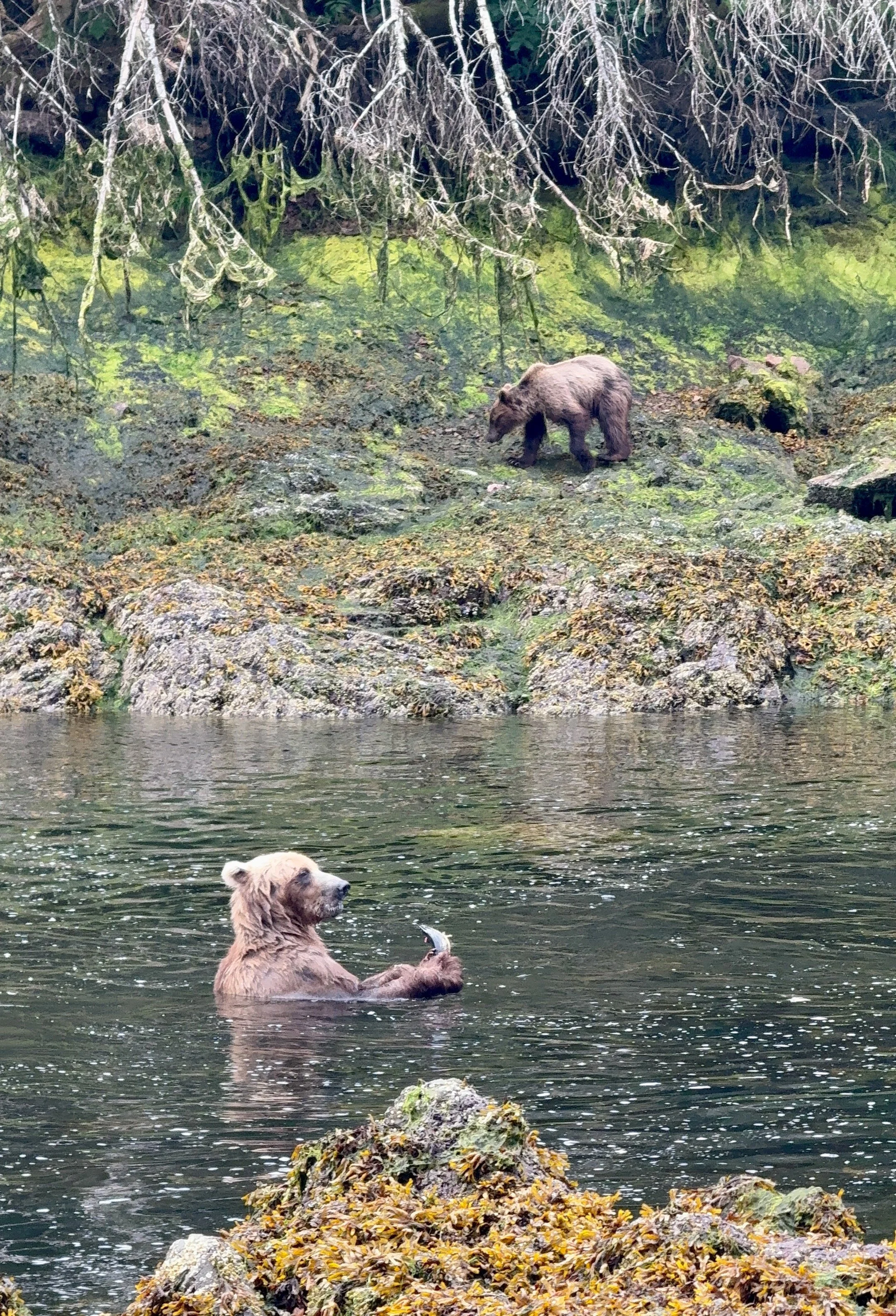
Brown bear catching fish
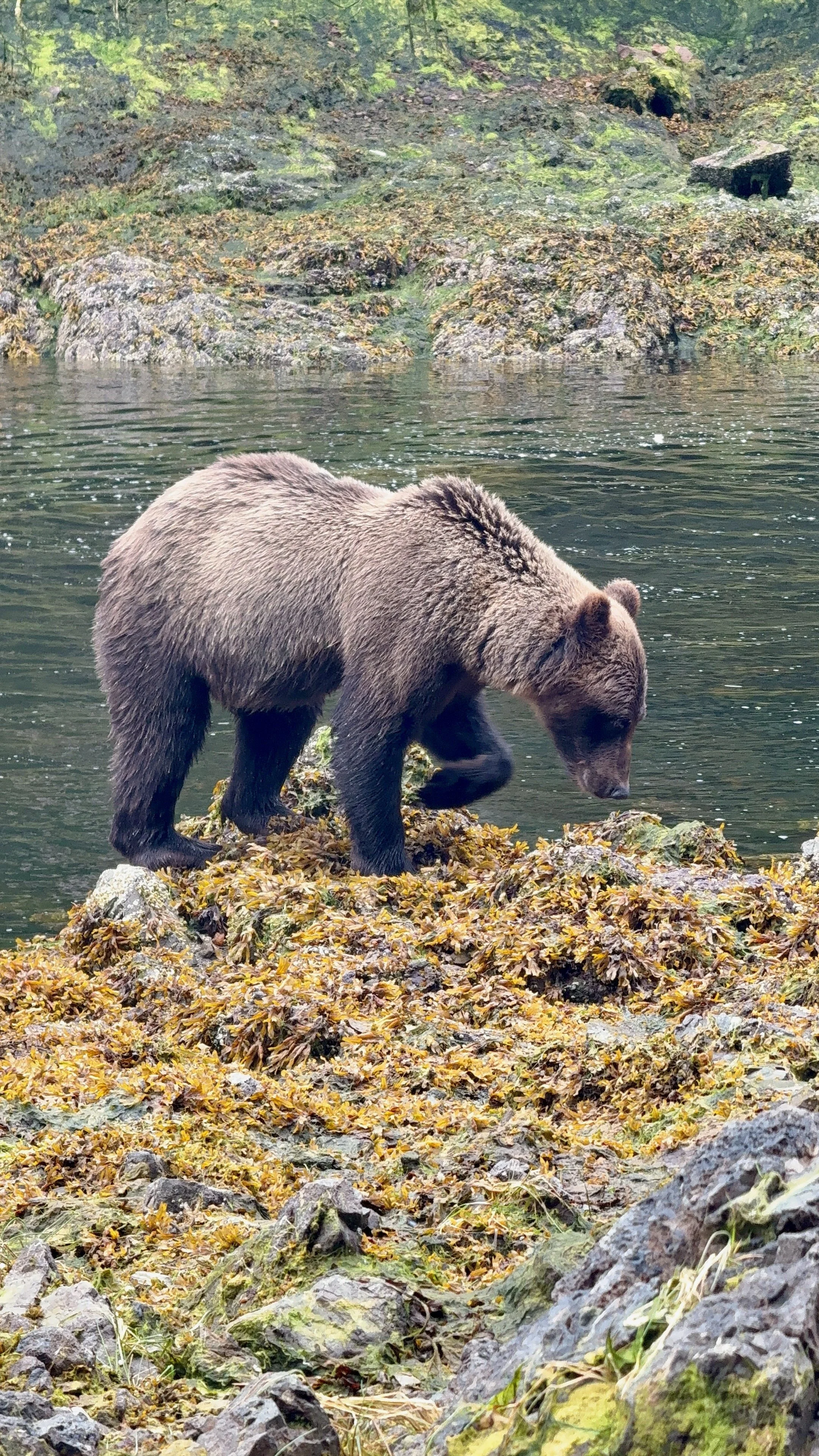
Brown bear moving from place to place
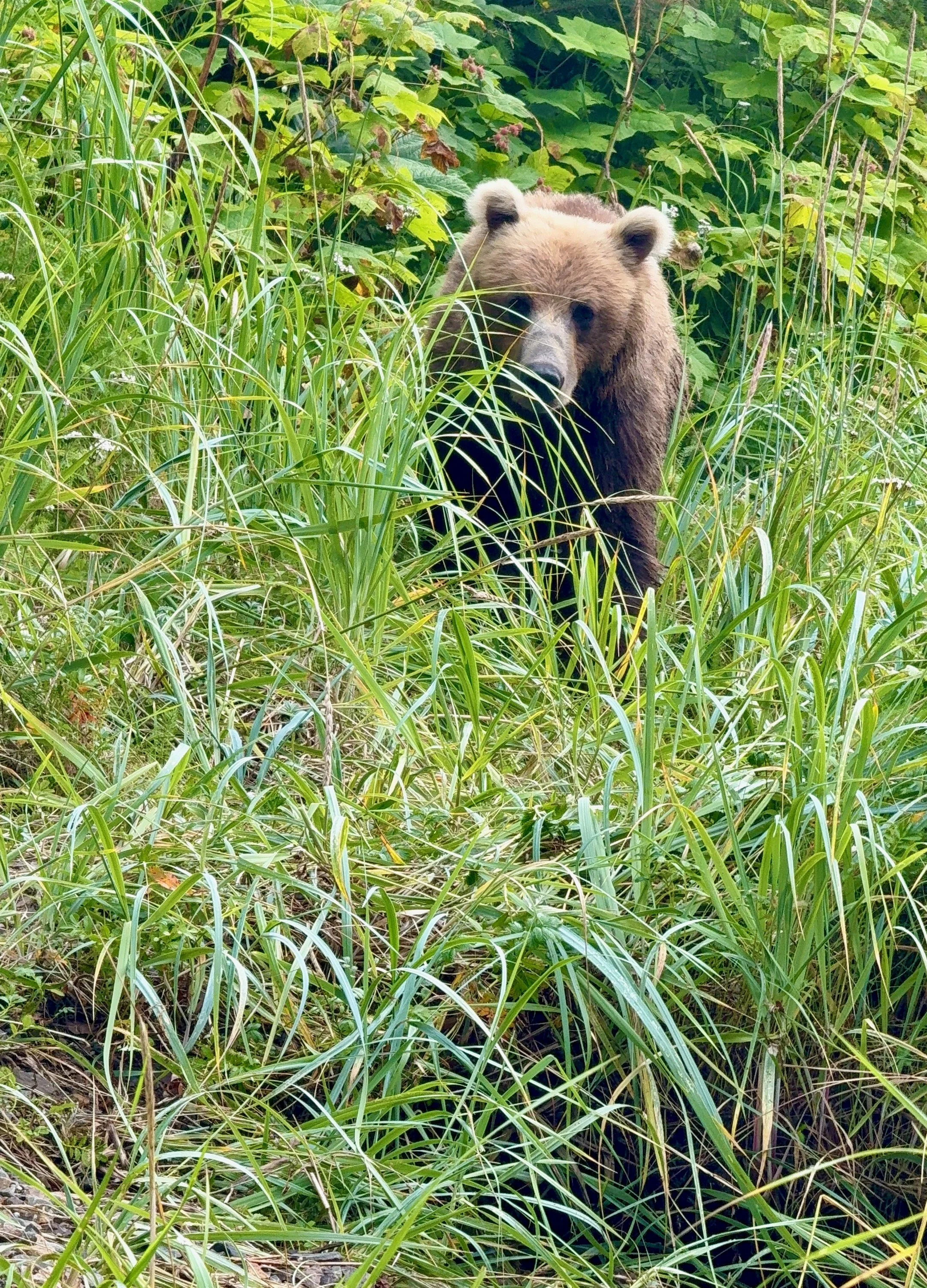
Brown bear heading our way
Some of the Bears Looked Almost Blonde
One thing I hadn't expected was the variation in the bears themselves.Several of the brown bears we saw had much lighter fur than I anticipated, almost blonde in places.
Brown bears can vary enormously in color, from very dark brown to cinnamon and much lighter shades, but seeing that variation in person was striking. Visually, these bears looked quite different from many of the bears I've seen during my experiences on the mainland. It was another small detail that made the experience feel particular to this place rather than interchangeable with every other bear-viewing trip in Alaska.
The Salmon Are the Reason This Happens
The bears are here because the salmon are here. During late summer, salmon return to waterways throughout Southeast Alaska after spending much of their lives in the ocean. And the entire landscape responds. This year, unfortunately, we’re having a record drought so the salmon have been sparse.
Brown bears gather along salmon streams. Eagles watch from the trees. Other animals take advantage of what remains (quite a few seagulls). Eventually, nutrients that began in the ocean make their way back into the surrounding ecosystem.
You're watching one relationship inside a much larger system. The river matters because of the salmon. The salmon matter to the bear. And the bear is part of the forest.
I find it interesting that a bear generally doesn’t eat the whole salmon. It seems to grab the belly meat of the salmon (to my understanding, thats there the most fatty meat of the fish exists) and eat a couple more bites and then onto the next salmon.
On this particular trip, we saw one of the bears stand up. It was not the biggest bear and it looked like it was trying to keep its distance from other big brown bears. It was on lookout duty and stood up to try to see where the other bear was.
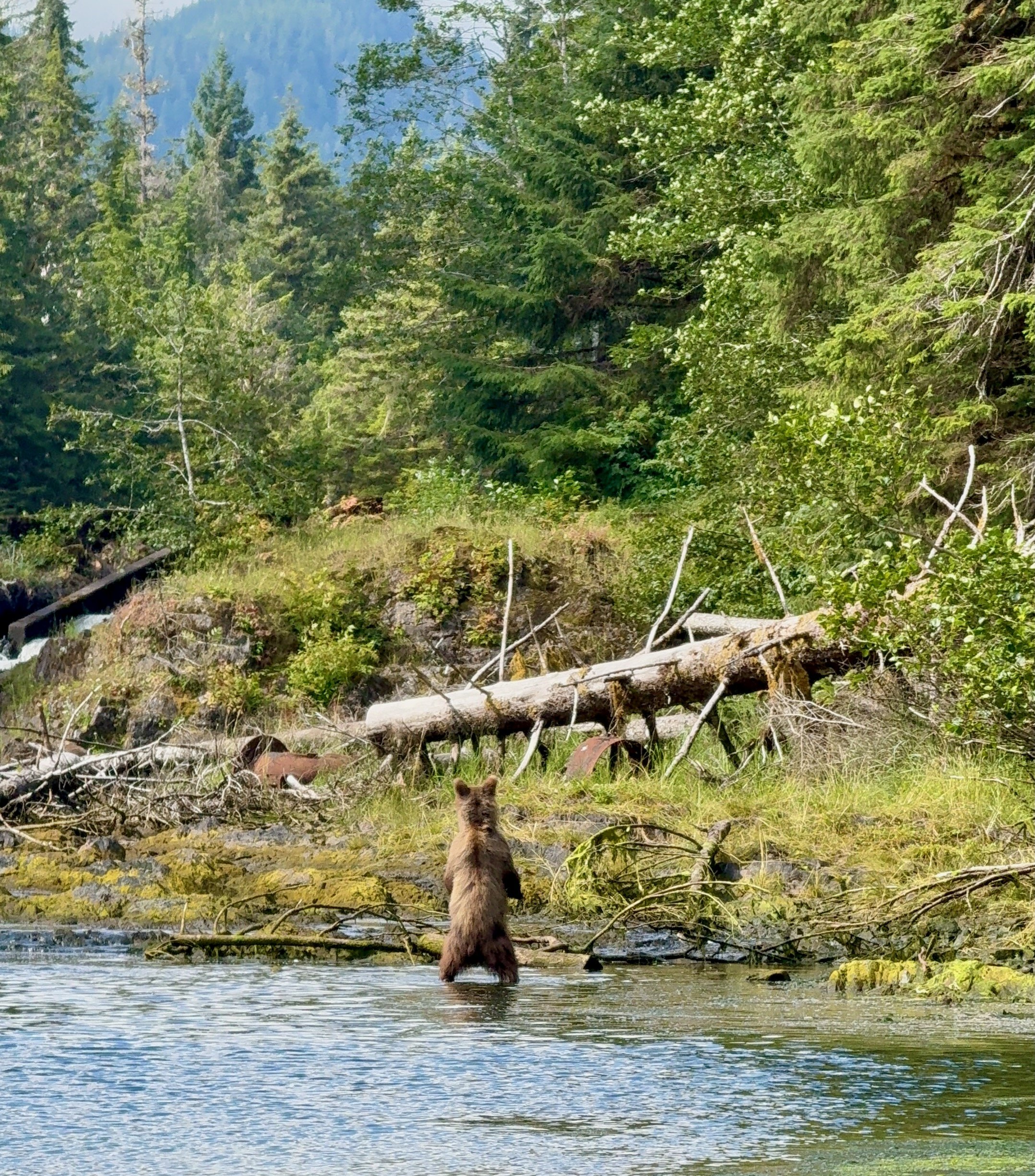
For just a few seconds, the entire scale of the bear became apparent and yet even standing upright, surrounded by trees and water and fallen timber, it somehow still looked like a small part of the landscape.
That's one of the things photographs sometimes get wrong about Alaska wildlife. We zoom in. We fill the frame with the animal. We understandably want the bear to look enormous. But one of my favorite things about seeing wildlife here is exactly the opposite. It's seeing how naturally the animal fits into a place that is much larger than any one creature.
How Is This Different From Other Alaska Bear Viewing?
Alaska has several extraordinary places to see brown bears, and each offers a different kind of experience. Katmai is famous for its large concentration of coastal brown bears and iconic locations such as Brooks Falls, while Admiralty Island is another of Southeast Alaska’s remarkable brown-bear environments. Across the state, other fly-out experiences take travelers to beaches, rivers, and salmon streams depending on the season.
What makes Waterfall Creek particularly interesting to me is how naturally it can fit into a Juneau trip. You can begin the day in Juneau, climb into a floatplane, and before long be standing beside a salmon stream on Chichagof Island watching coastal brown bears in an entirely different landscape.
For travelers already planning time in Juneau, that access creates a meaningful opportunity to experience wild brown bears without needing to build an entire separate trip around it. If seeing a coastal brown bear in the wild is high on your Alaska wish list, Waterfall Creek can be an especially compelling way to make that part of your journey.Is Brown Bear Viewing from Juneau Worth It?
To me, this is an experience worth the investment because of everything that comes with it. You’re flying by floatplane into a remote part of Southeast Alaska, traveling with an experienced guide, and spending meaningful time in a wilderness area during one of the most interesting wildlife periods of the year. This isn’t a quick stop at an overlook; you’re giving yourself the time and space to watch the landscape unfold and see what happens.
My take: If seeing a wild coastal brown bear is one of the reasons you’re coming to Alaska, I would put this experience very high on the list. The combination of the journey, the setting, the wildlife and the time spent in such a remarkable place makes it one of those Alaska experiences that stays with you.
Can You Do This During a Juneau Cruise Port Day?
Potentially, yes, but I would treat this as your primary experience for the day rather than trying to build another major activity around it. Because you’re relying on floatplane transportation, the timing naturally depends on Southeast Alaska weather and the conditions required for safe remote flying.
In my experience, Wild Coast’s approach was clearly safety first, and I appreciated that. If conditions aren’t appropriate for flying, that takes priority over keeping the day exactly on schedule. It’s an important part of planning any flightseeing or fly-out wildlife experience in Alaska, especially for cruise passengers working within a defined port window.
If you’re considering this experience, build some breathing room into your day and pay close attention to the operator’s guidance around your ship’s arrival and departure times. And if seeing coastal brown bears is one of the experiences you’re most excited about in Juneau, I would simply make this the focus of the day.
What I'd Know Before Going
I'd give the experience most of the day.
I'd wear more layers than I thought I needed. Bear viewing involves a surprising amount of standing still, and standing still beside cold water feels very different than hiking through the same weather.
I'd expect uneven terrain.
Listen carefully during the safety briefing.
Stay with the group.
I'd bring the longest camera lens I was comfortable carrying but I wouldn't spend the entire experience looking through it.
And I'd arrive understanding that there is no promise about exactly what the bears will do.
That uncertainty is part of the deal and it's also part of the magic.
One of Those Days I'm Grateful I Get to Have
I spend a lot of time thinking about Alaska as both a traveler and someone who writes about this place. What is actually worth doing? What feels special? What deserves someone’s investment of time and resources? What experiences help someone understand Alaska rather than simply see it?
In closing, I’d like to leave you with this: Standing beside a salmon stream watching the brown bears move beneath a waterfall, made me wish that everyone in the world could experience this ecosystem. There’s such a delight when one of the bears would catch a fish. Watching the bears swim looking for fish or looking into their eyes as they walked past us, just melts your heart. You’re reminded that this world is far more bigger when you explore.
Planning Your Own Waterfall Creek Bear Viewing Trip
I joined Wild Coast Excursions' Waterfall Creek brown bear viewing trip, departing from Juneau during the late-summer salmon season.
The experience includes floatplane transportation from Juneau, guided travel into the viewing area and several hours devoted to bear viewing. Travelers should be comfortable with uneven terrain, changing Southeast Alaska weather and the unpredictability inherent in seeing wild animals.
If you're arriving by cruise ship, confirm your port times with Wild Coast before booking and allow the excursion to be the centerpiece of your Juneau day.
For current dates, pricing, availability, physical requirements and cancellation policies, check directly with Wild Coast Excursions.
Planning a Trip to Juneau?
If you're planning more of your time in Juneau, these guides can help: