Going Deeper: What Southeast Alaska’s Public-Use Cabins Make Possible
There are many places in Southeast Alaska that can be experienced in an afternoon. You can hike through the forest until the trees give way to muskeg or alpine terrain, pause long enough to take in the view, and then begin the return trip before evening. You can leave the harbor in the morning, spend the day fishing or exploring an island, and turn the boat toward home as the light begins to soften. These trips can be extraordinary, but there is inevitably a moment when the experience begins to bend around the logistics of leaving.
A public-use cabin changes that rhythm.
Instead of turning around, you stay. The afternoon stretches into evening, the tide changes, the temperature drops, and a place that had initially been a destination begins to feel, at least temporarily, like somewhere you inhabit. Eventually darkness arrives, and then morning. You experience the hours that normally belong only to the landscape itself.
For me, this is what makes Southeast Alaska’s public-use cabins so special. They are not simply inexpensive places to sleep in beautiful locations; they make it possible to explore this part of Alaska more slowly and more deeply, extending an adventure beyond the limits of a day trip and giving you enough time to notice things you would otherwise miss.
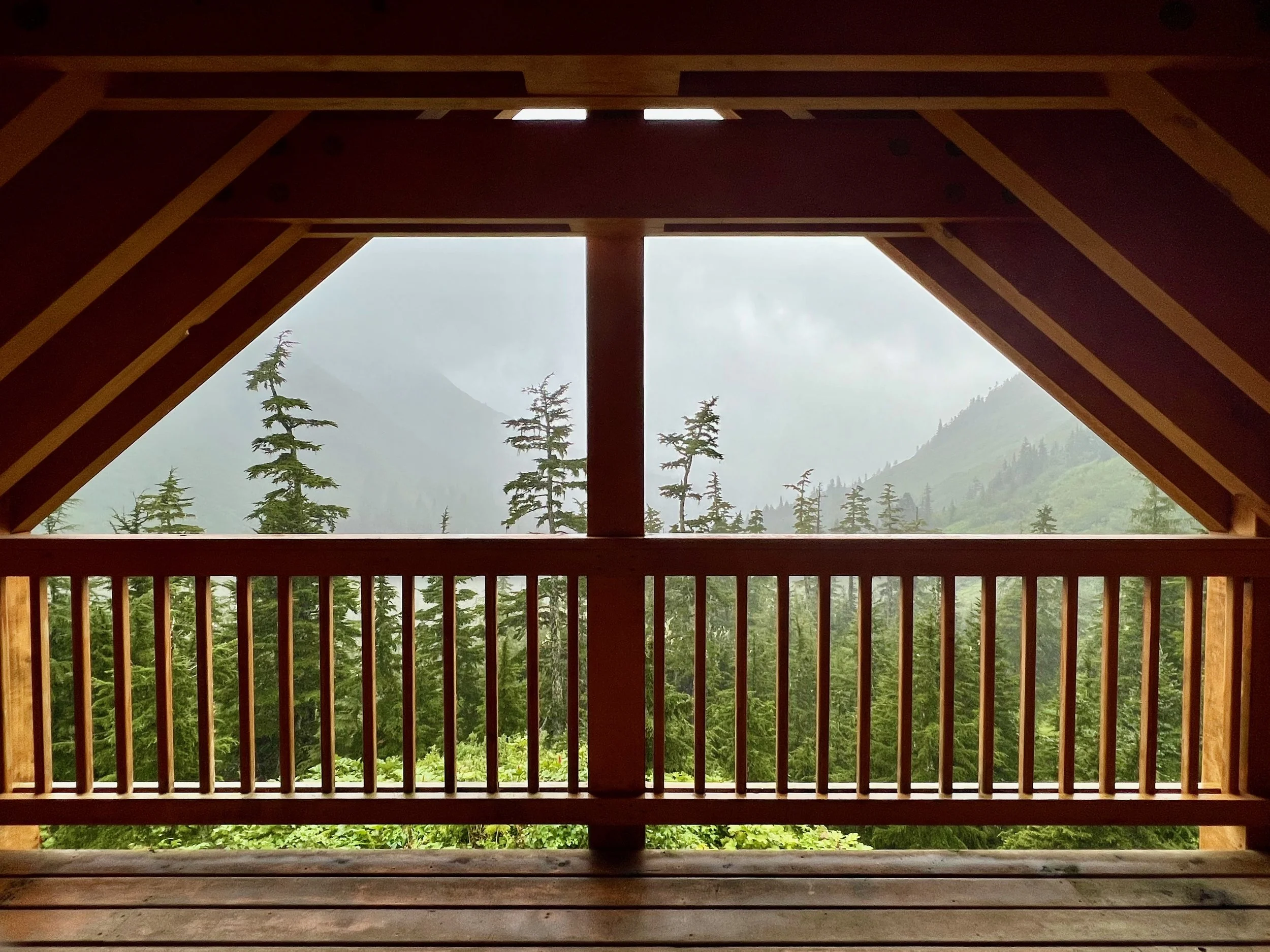
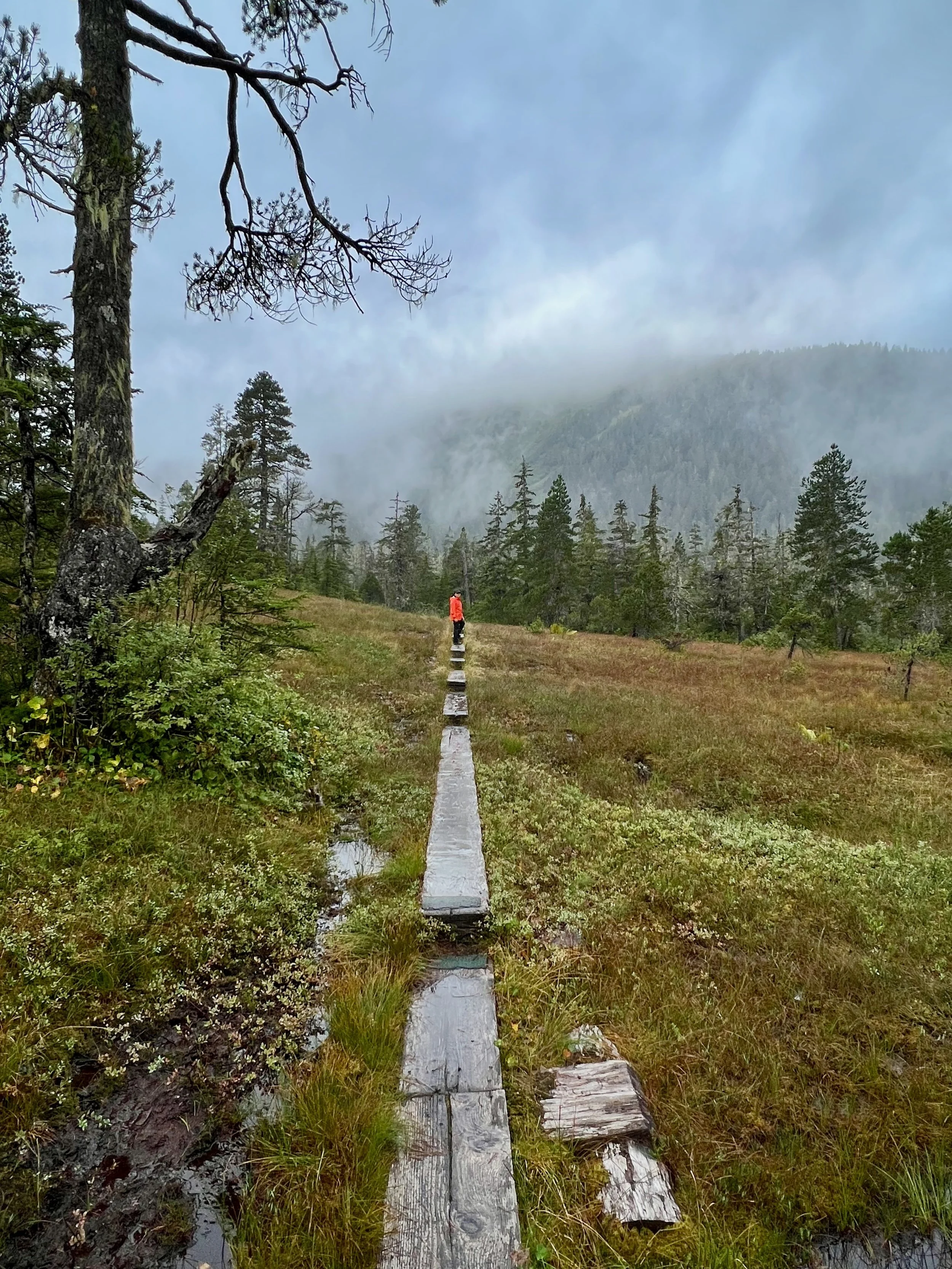
Dan Moller Cabin on Douglas Island, Alaska
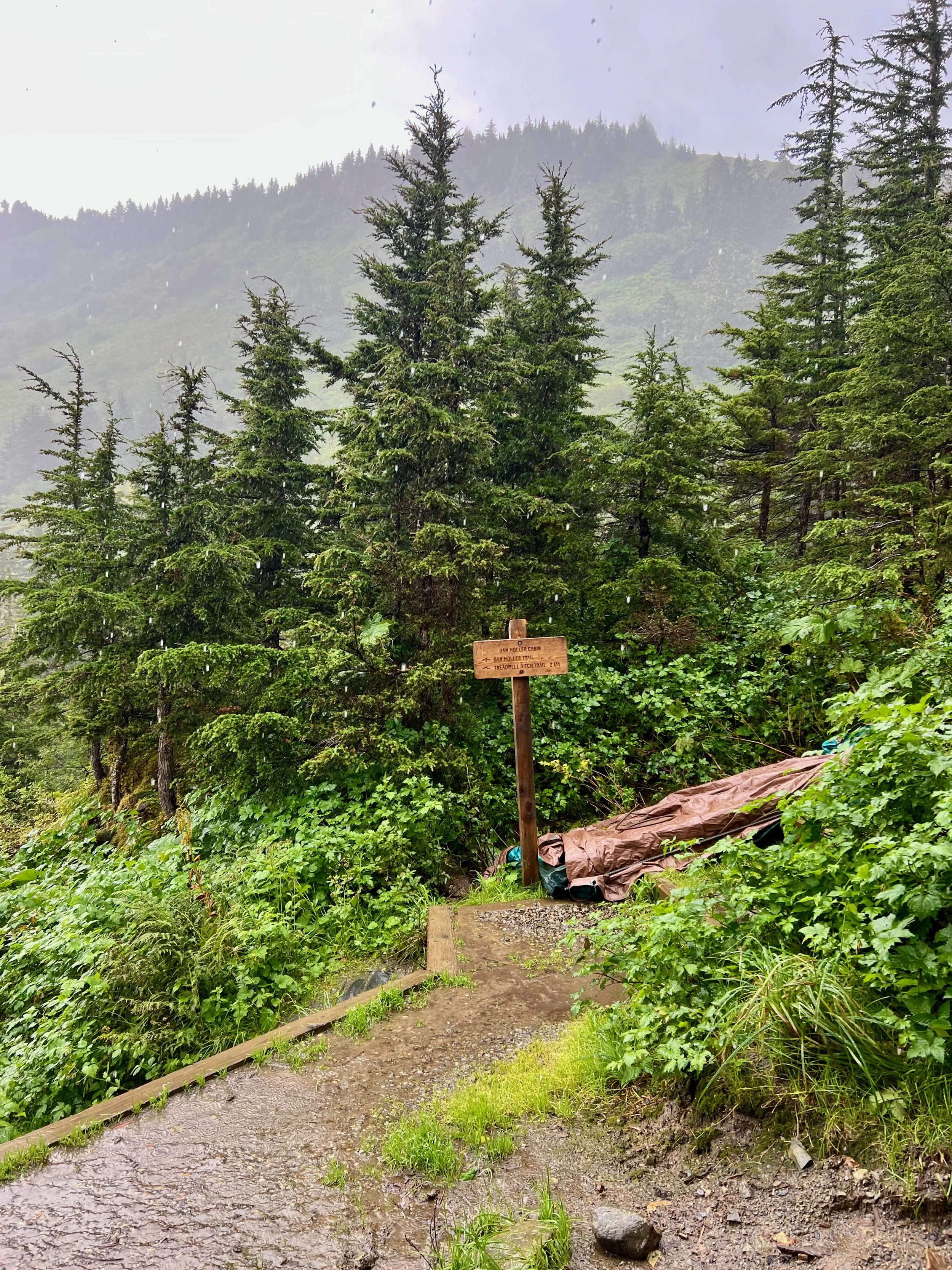
There Isn’t One Public-Use Cabin System
One thing worth understanding is that Southeast Alaska’s public-use cabins do not belong to a single network.
The U.S. Forest Service manages a large collection of recreation cabins throughout the Tongass National Forest, including cabins I have stayed in around Juneau such as John Muir and Dan Moller. But Alaska State Parks maintains a separate network throughout Southeast, including cabins at Eagle Beach and Point Bridget as well as more remote cabins scattered through state marine parks. The City and Borough of Juneau operates Amalga Cabin through yet another system.
Around Juneau alone, that means the public-use cabin landscape is surprisingly varied. Berry Patch Cabin at Eagle Beach, for example, is an Alaska State Parks cabin, as are nearby Saturday Creek and Marten. Other State Parks cabins extend much farther beyond the road system, onto islands and into bays that are reached primarily by boat or floatplane.
The differences matter when you are planning a stay: each agency has its own reservations, rules, amenities and access requirements. What connects these cabins is less about who manages them than what they make possible — relatively simple pieces of public infrastructure that allow people to stay longer in parts of Southeast Alaska where conventional lodging either does not exist or would fundamentally change the experience.
What Staying Makes Possible
One of my favorite cabin memories began with an attempt to make the entire experience as simple as possible.
I decided that dinner would be a charcuterie board, reasoning that cheese, crackers, fruit and a bottle of wine would eliminate the need for any elaborate meal preparation. Yet by the time I added sleeping gear, warm clothes, water, food, the wine, a yoga mat and all of the miscellaneous things that suddenly become essential when there is no hotel room waiting at the other end, I still felt as though I were hauling an unreasonable amount of my life into the woods.
That slight inconvenience is part of the experience. Public-use cabins provide shelter, but they do not remove your responsibility for being outside. You still have to think about what you will eat, how you will stay warm, what the weather might do and what you will need once you are there.
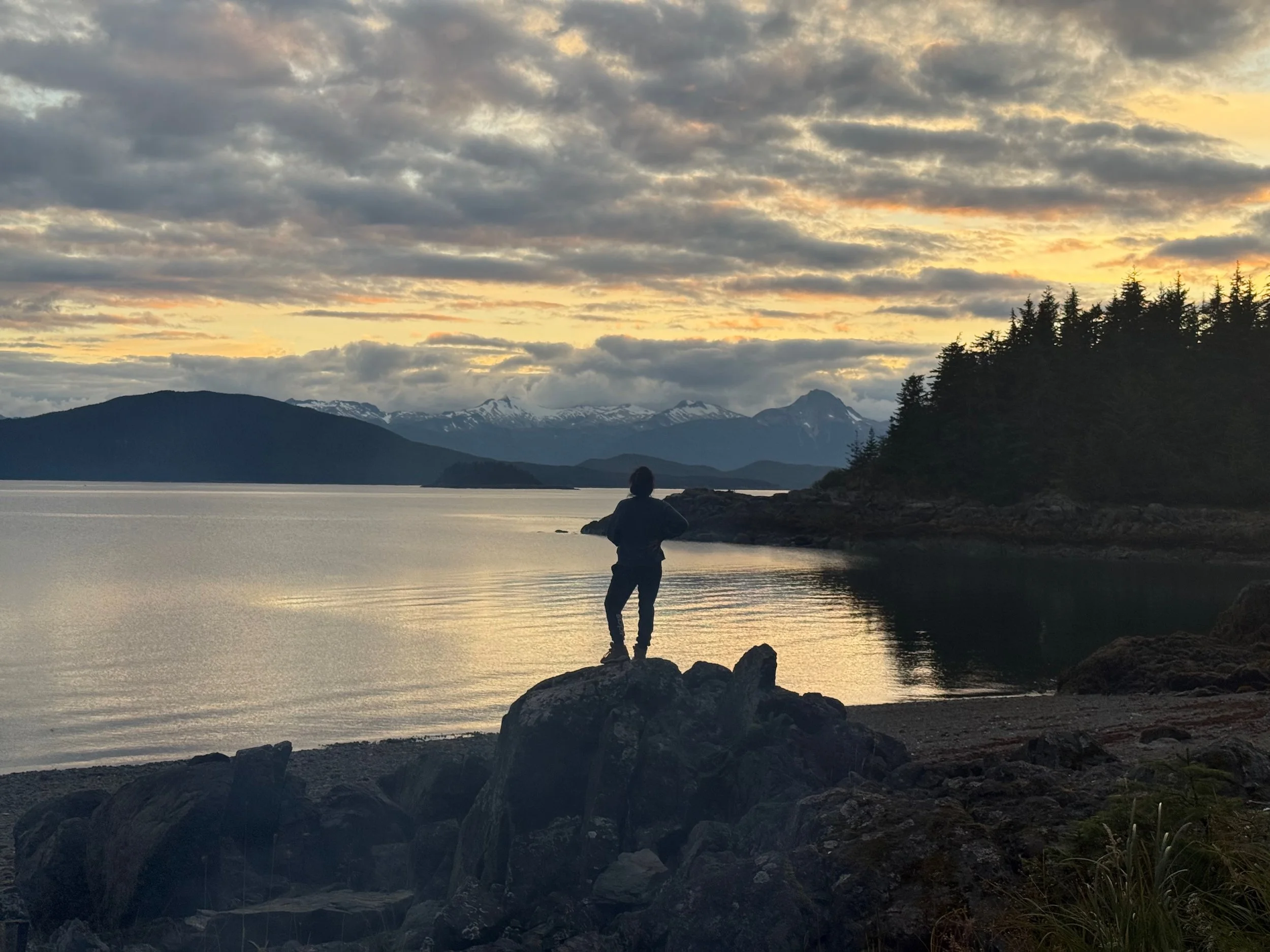
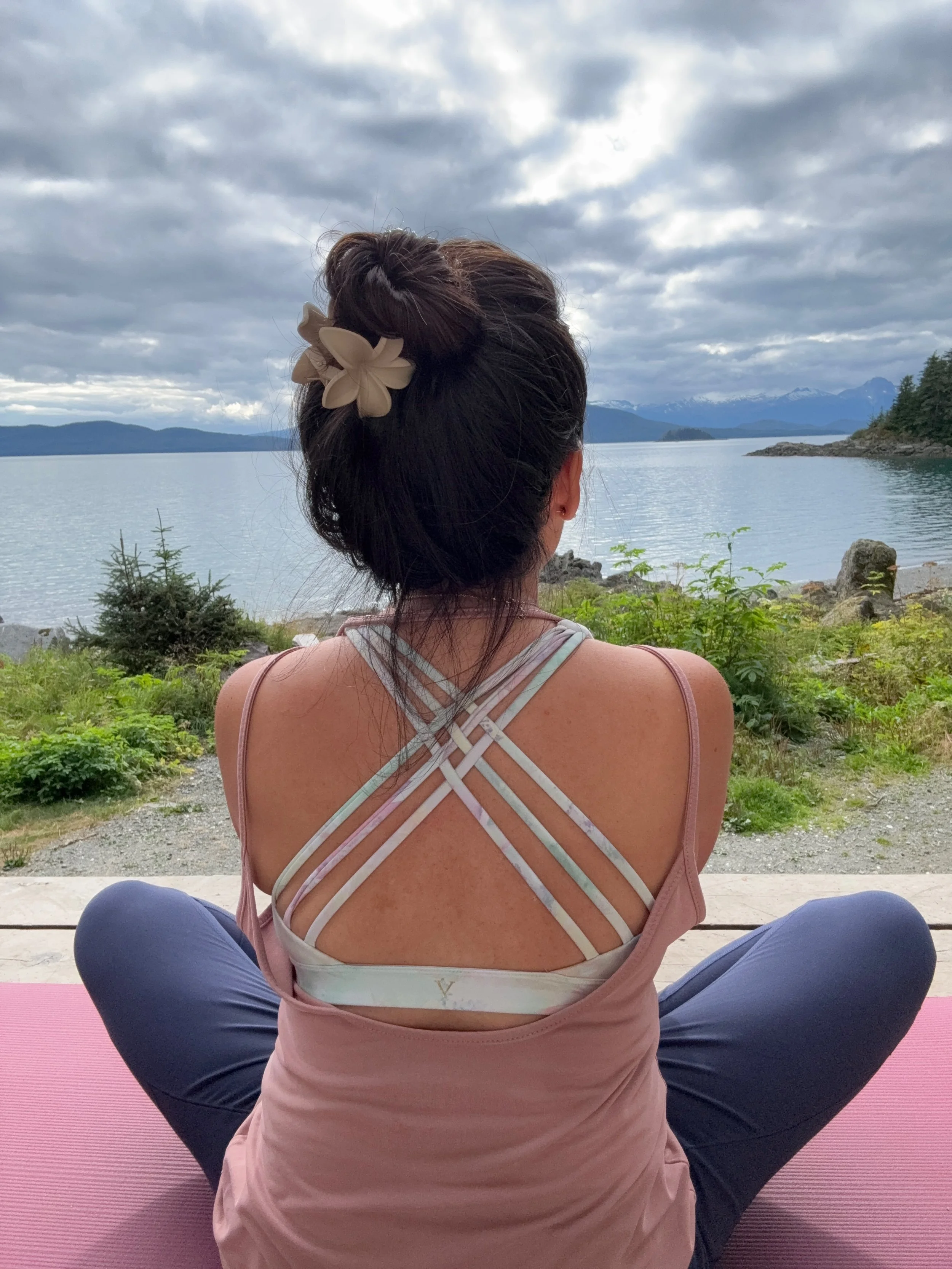
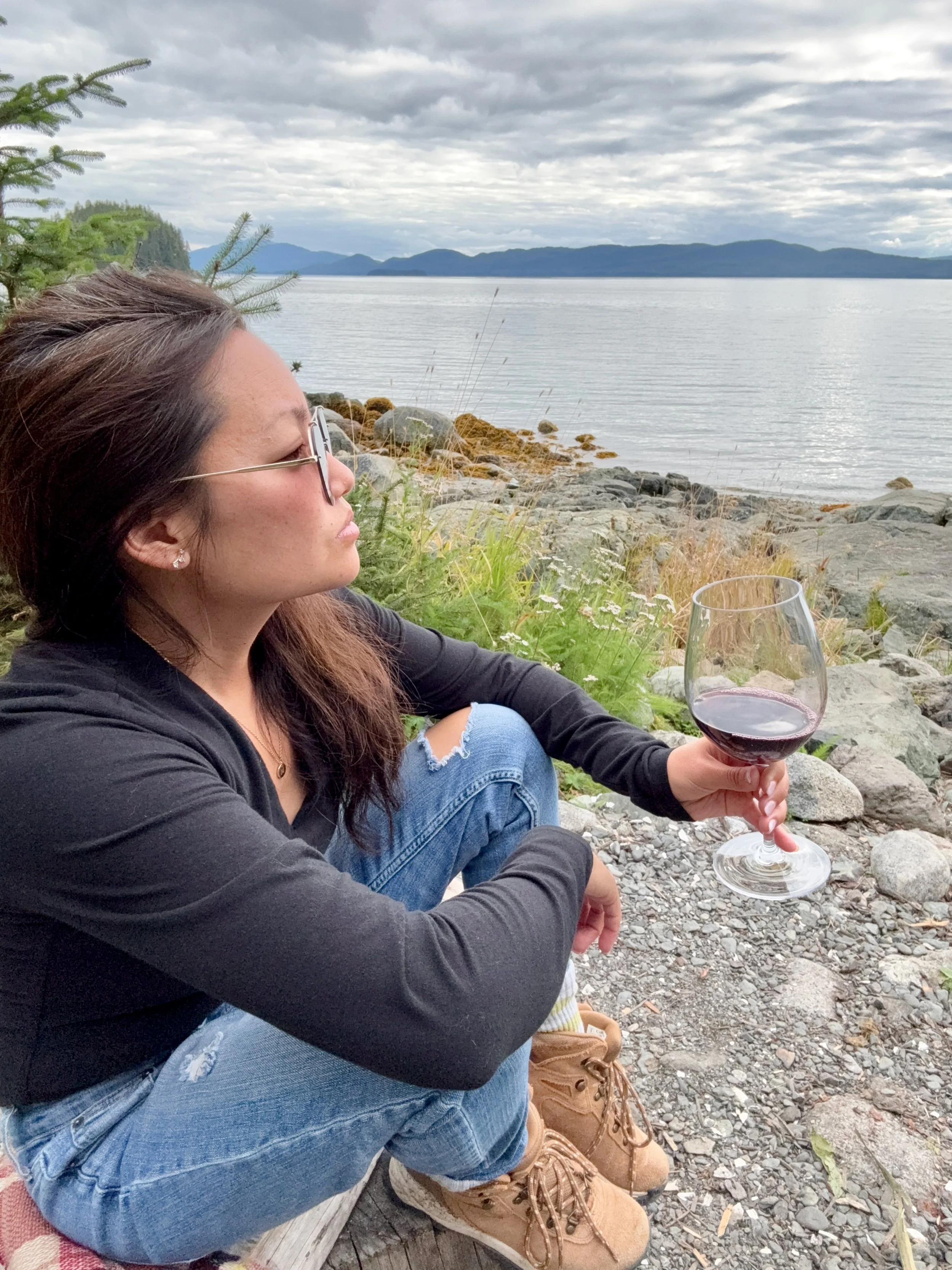
After everything had been carried in and unpacked, however, the logistics receded quickly into the background. I rolled out my yoga mat, built a fire and eventually sat beside the water with a glass of wine while the sun began its slow descent.
Without anywhere else I needed to be, I started paying attention in a different way.
I listened to the ocean repeatedly folding against the shoreline and watched the water change as the tide turned. As evening settled in, the sky became darker and clearer, and I found myself standing outside simply marveling at the night above me. Later, inside the cabin, the propane heater had taken the chill out of the room, and I remember enjoying the residual warmth for a few minutes before turning it off for the night and climbing onto a bed that was undeniably hard and rustic.
There was nothing luxurious about any of it, at least not in the conventional sense.
Yet the luxury was having nowhere else to go.
These public-use cabin networks help make that possible because they create reasons to stop rather than continually moving through the landscape.
From a Hike to an Overnight in the Alpine
Two of the U.S. Forest Service cabins I have stayed in around Juneau are John Muir Cabin and Dan Moller Cabin, both of which demonstrate how dramatically an overnight stay can change an otherwise familiar outdoor experience.
John Muir Cabin sits in the subalpine above the Mendenhall Valley, reached after approximately 3.5 miles of hiking through forest and notoriously wet muskeg, with roughly 1,500 feet of elevation gain along the way. From the cabin, the landscape opens toward Juneau, Auke Bay, Gastineau Channel and the surrounding mountains.
Couple mile hike to the John Muir cabin
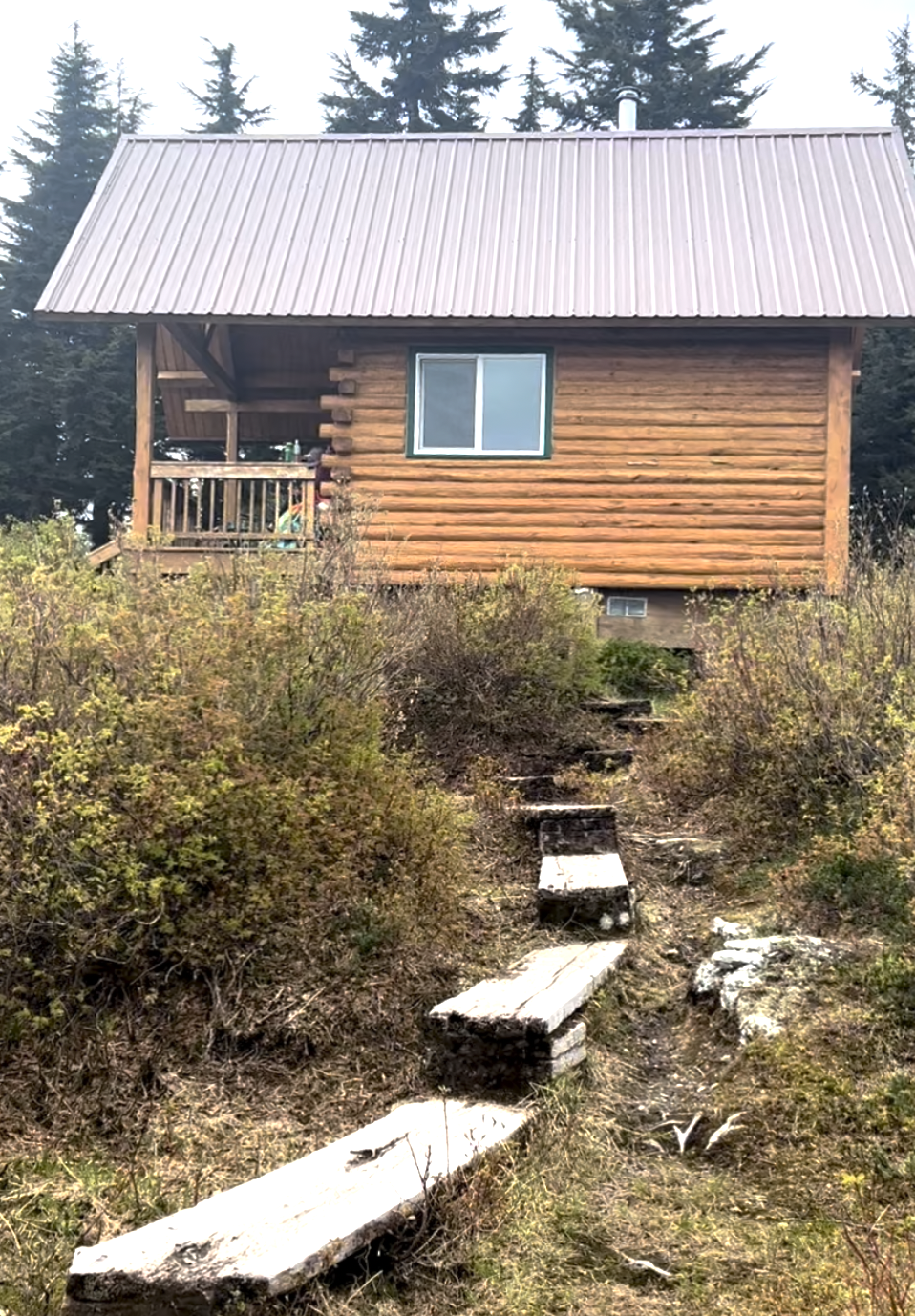
This is the John Muir cabin - a couple mile hike from the road system and sits above the alpine ridge
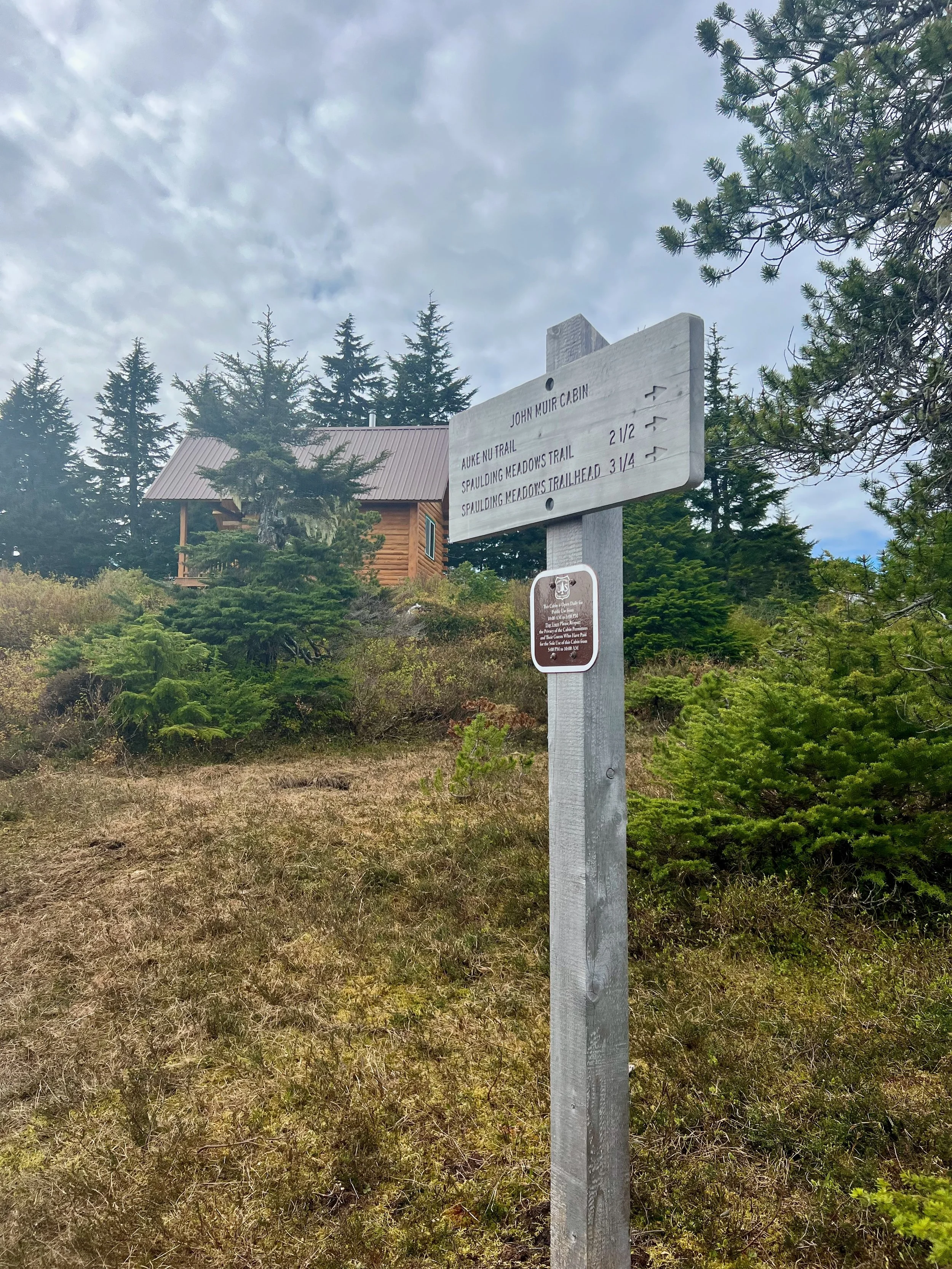
John Muir cabin
Dan Moller offers another variation of the same idea. Its trail climbs roughly three miles from Douglas Island through spruce-hemlock forest and wet meadows toward alpine terrain, eventually reaching a cabin that feels surprisingly removed from downtown Juneau despite being only a few miles away geographically.
Without the cabins, these can simply be hikes: climb, explore, admire the view and descend.
Staying overnight changes the experience from an excursion into something more immersive. Once you know that you do not have to race fading daylight back toward the trailhead, there is time to settle in. Wet clothing gets hung to dry, boots collect near the door, food comes out of backpacks and the landscape outside the windows begins changing almost imperceptibly as afternoon moves toward evening.
You are no longer merely passing through the alpine.
For a night, you are living there.
That distinction may sound small, but it is one of the reasons I continue to find public-use cabins so compelling. They extend the boundaries of where an ordinary person can reasonably spend time in Southeast Alaska without transforming the experience into something polished or manufactured.
Amalga and the Pleasure of Staying Somewhere Familiar
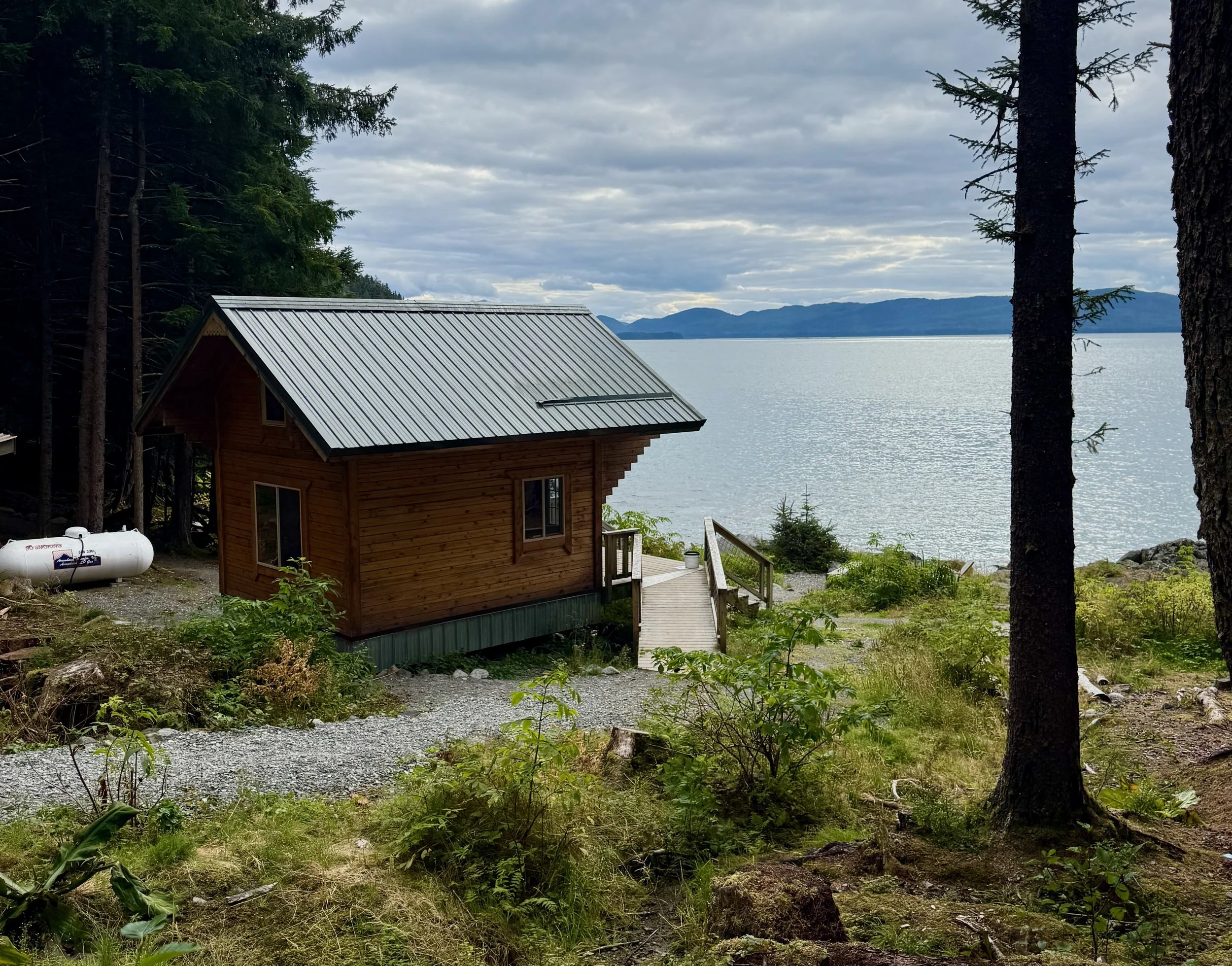
Amalga Cabin - while this cabin is managed by a different entity (ie. not forest service), it’s still a public use cabin that requires reservations
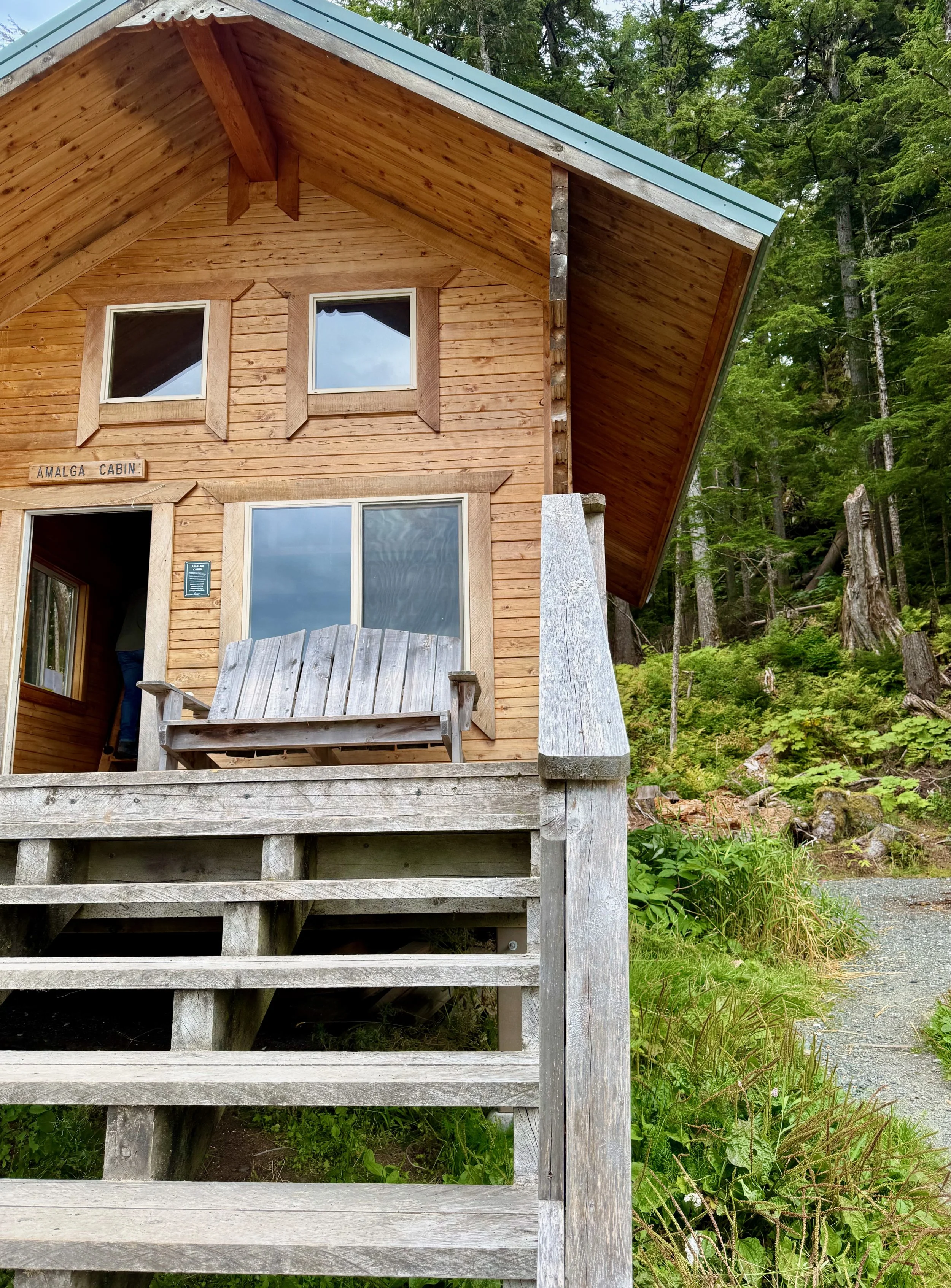
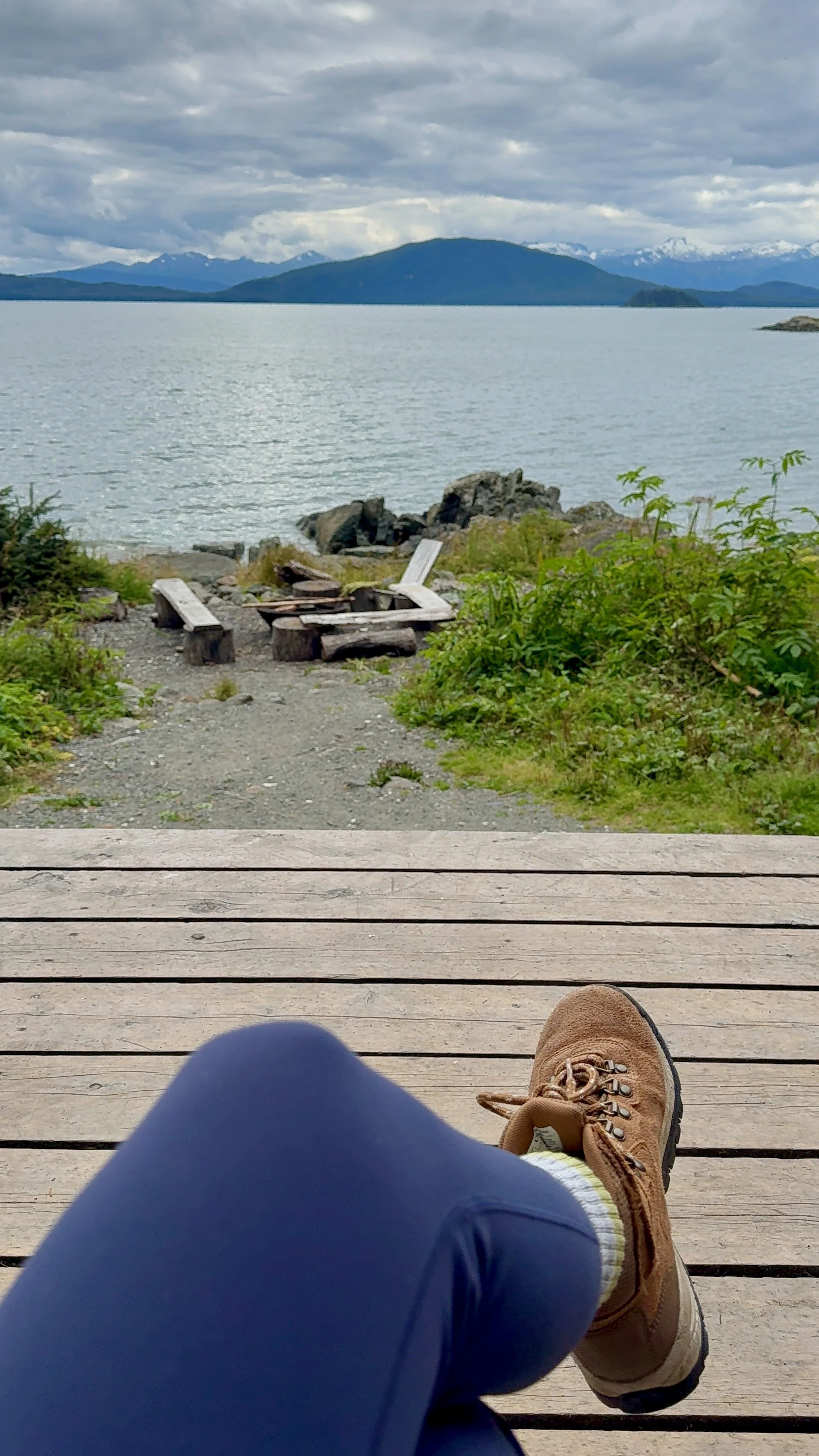
Not every cabin requires climbing into the mountains. I have also stayed at Amalga Cabin, which is managed by the City and Borough of Juneau and sits within Amalga Meadows Park north of town.
The cabin is reached by an easy 10- to 15-minute walk from the Eagle Valley Center area, and its simplicity is part of its appeal: a small sleeping loft, wooden sleeping platform, propane heat, a table and benches, with no running water or electricity. The surrounding trail system connects forest, wetlands and beach, while the water of Favorite Channel lies nearby.
Amalga has reinforced something I have come to appreciate about exploring Alaska: distance is not always what creates a sense of discovery.
Sometimes what changes a familiar place is simply staying after you normally would have left.
A beach that you have walked many times feels different once everyone has gone home and evening begins settling over the water. The same forest sounds different after dark. Waking up somewhere you have previously only visited for a few hours creates an entirely different relationship with it.
In a place like Southeast Alaska, where our communities occupy relatively small pieces of land surrounded by enormous expanses of mountains, ocean and forest, spending a night even a short distance from home can make the world feel considerably larger.
A New Cabin on Mendenhall Lake
That tradition is still evolving.
In June 2026, the U.S. Forest Service and its partners opened Sítʼ Yá Hítʼ, a new public-use cabin within the Mendenhall Glacier Recreation Area. Its name translates to “Face of the Glacier House,” and it is particularly significant because it is the first Forest Service recreation cabin in Alaska to receive an Indigenous name as part of a broader commitment to Tribal partnership and co-stewardship. It is also the first new public-use cabin constructed on the Juneau Ranger District since Windfall Lake Cabin opened in 1998.
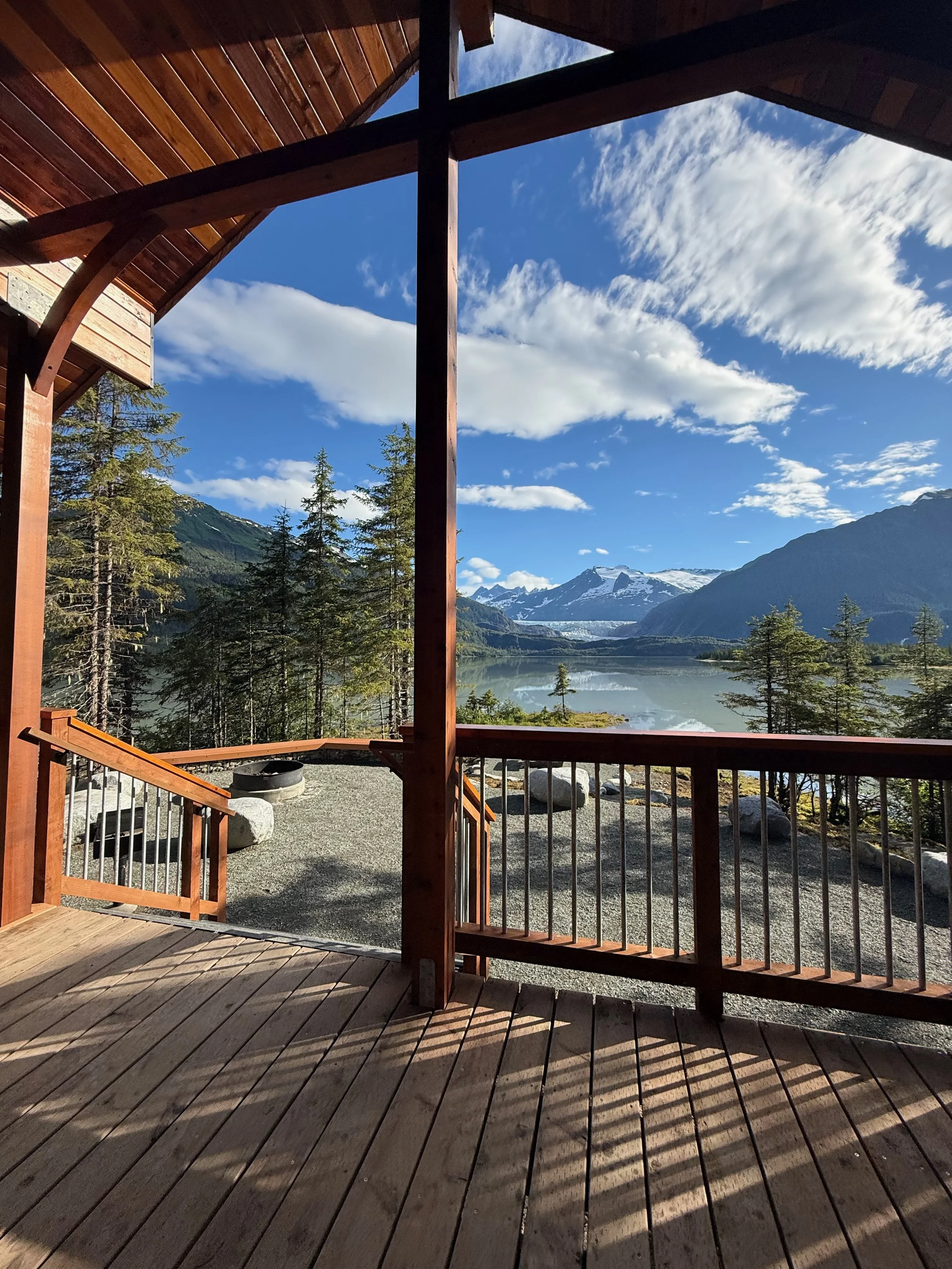
Unlike John Muir or Dan Moller, Sítʼ Yá Hítʼ does not require a long approach into the backcountry. It sits within Mendenhall Campground and has road-based access during much of the year, making it a different interpretation of what a public-use cabin can provide. The cabin has electricity and was designed to accommodate overnight stays as well as family gatherings, outdoor education and community recreation.
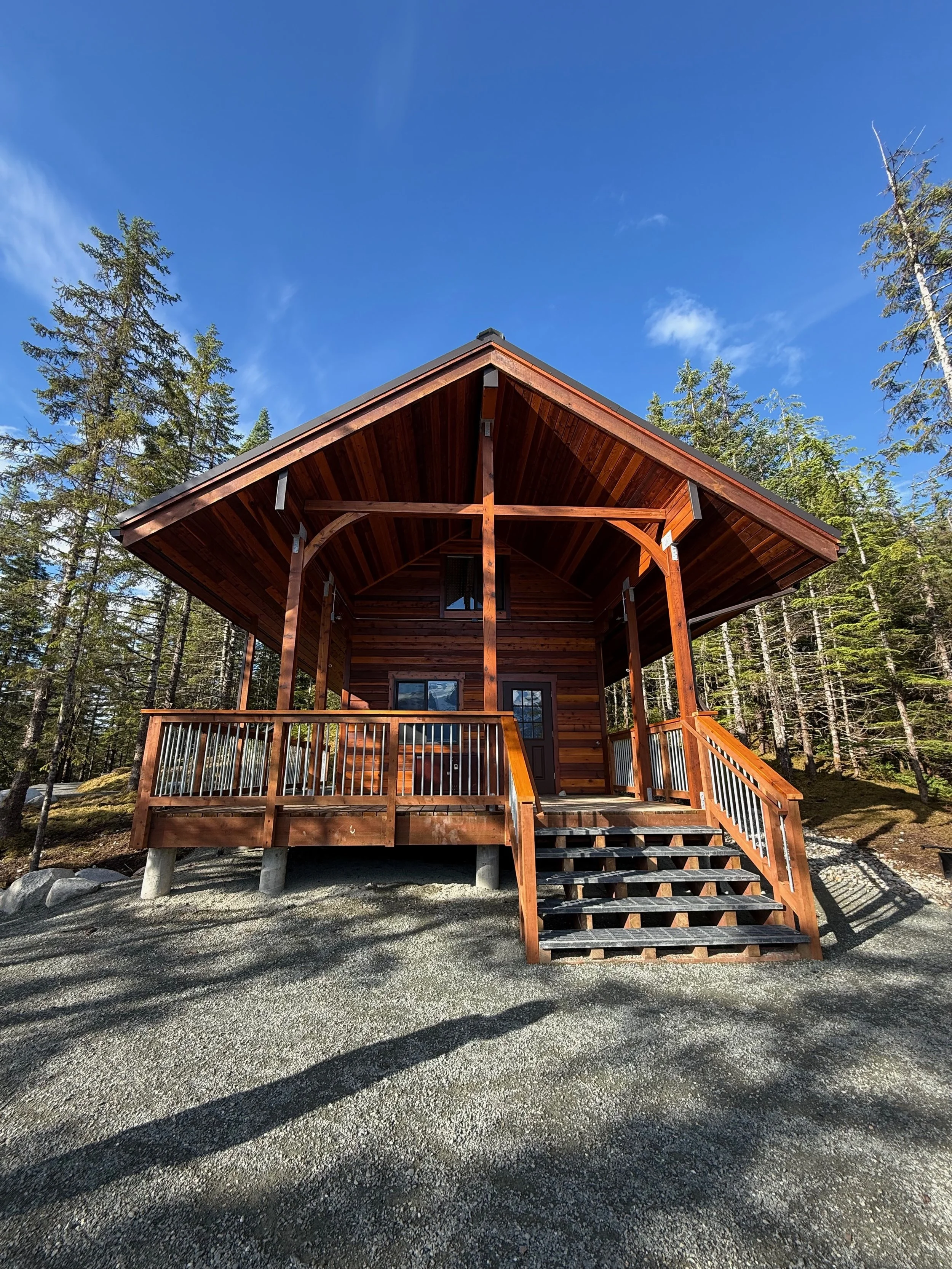
I have not stayed in this cabin yet, but I recently went to see it, and I wanted to include it here because its setting illustrates the broader idea behind these cabins so beautifully.
Most people experience the Mendenhall Glacier area during the day. It is one of Juneau’s most visited landscapes, and for good reason. Yet a cabin creates the possibility of experiencing that same landscape at an entirely different tempo, after the daytime movement has subsided and the lake begins reflecting the quieter light of evening.
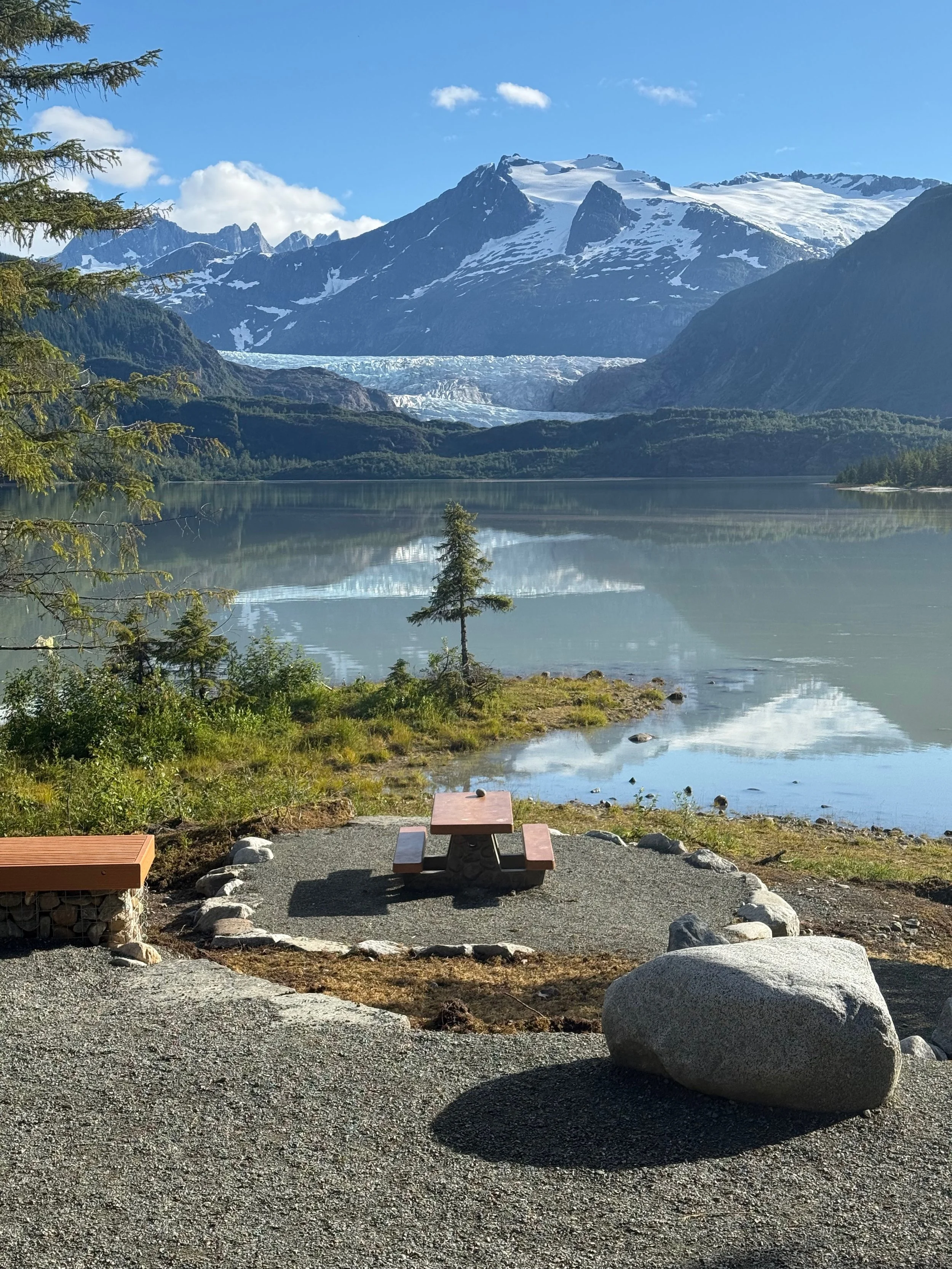
What interests me most about the cabin is not simply that it is new. Its construction is evidence that public-use cabins remain relevant recreation infrastructure in Southeast Alaska. The Forest Service has said that the cabin is part of a broader effort to meet growing recreation demand, while the project itself brought together the Forest Service, National Forest Foundation, Tlingit & Haida, local contractors, Juneau donors and other partners. Even the lumber was milled locally in Hoonah.
In that sense, Sítʼ Yá Hítʼ feels both new and very much part of an older Alaska tradition: creating modest structures that allow people to stay in landscapes that deserve more than a passing visit.
A Cabin Is Not a Hotel Room
The simplicity of these places is important because public-use cabins operate according to a fundamentally different social contract than conventional lodging.
A cabin provides shelter, but it does not provide the experience for you.
You bring your food and sleeping gear. Depending on the cabin, you may need to bring drinking water, fuel, a cooking stove and other basic supplies (most forest service cabins that I’ve been to include propane as a heat source). At remote cabins reached by boat, even getting yourself there requires understanding weather, tides, water conditions and your own limitations (and knowledge about bears / wildlife!).
The inconvenience is part of what keeps the experience connected to the landscape rather than separated from it.
There is responsibility at the other end of the stay as well.
When I arrived at the cabin on that memorable trip, I found it clean. Before I left, I swept the floor, cleaned the porch and steps, straightened what was inside and made sure that everything had been neatly returned to its place. I wanted the next person who opened that cabin door to encounter it in at least as good a condition as I had and, ideally, slightly better. I don’t really consider this housekeeping as much as I do stewardship.
Public-use cabins are places we borrow for a night or two. Someone occupied the cabin before us, someone will arrive after us, and our presence is supposed to leave as little evidence as possible. Forest Service and state cabin guidance repeatedly emphasizes packing out what you bring in and leaving cabins ready for the next user.
I like that expectation because it preserves something increasingly rare in travel: the understanding that access to a beautiful place comes with responsibilities, not simply amenities.
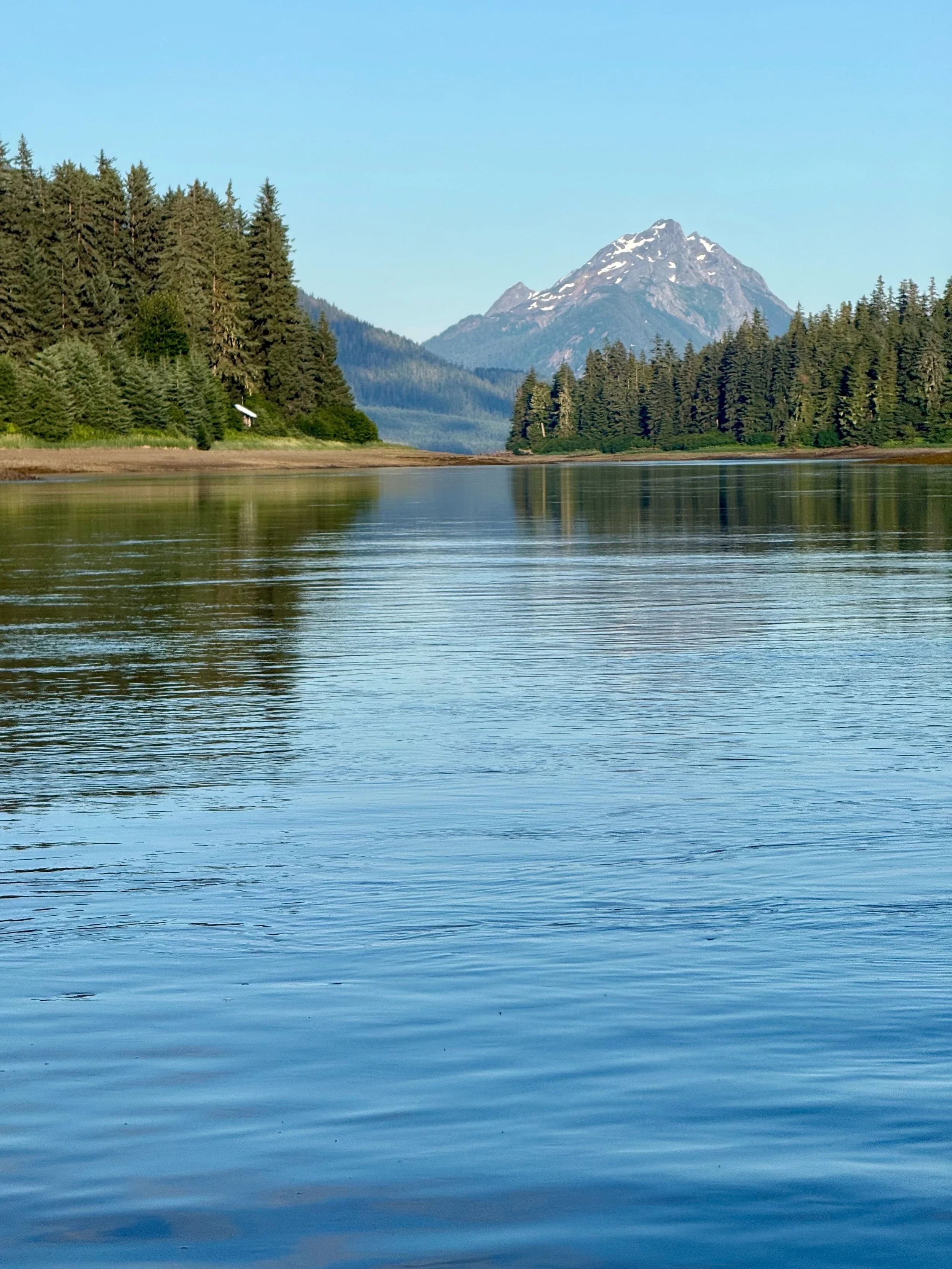
Learning Southeast Alaska by Water
The longer I live in Southeast Alaska, the more I realize that there are multiple maps of this place.
There is the road map, limited as it is around communities such as Juneau.
There is the trail map, which begins opening up the mountains and forests behind that road system.
Then there is another map altogether, one that develops slowly after enough time spent on the water. It is composed not primarily of highways or towns, but of channels, passes, points, coves, anchorages, islands, tides and weather windows.
Over time, those names acquire memories. North Pass becomes somewhere you go to watch whales. An anonymous-looking bay on a chart becomes the place where you once waited for the weather to improve. A stretch of coastline becomes familiar because you have traveled beside it often enough to recognize its shape from the water.
This is the version of Southeast Alaska that I want to continue learning.
The cabin system helps make that possible because it creates reasons to stop rather than continually moving through the landscape.
The Cabins Still on My List
There are several cabins that I have wanted to reach for years, particularly those that would take me farther into the geography of Southeast Alaska by water. Interestingly, several of the cabins highest on my list are part of the Alaska State Parks system rather than the Forest Service network.
One is the Bob Hinman Memorial Cabin at St. James Bay State Marine Park, northwest of Juneau along Lynn Canal. The bay itself offers fishing, wildlife, boating and protected anchorages along a section of coastline that most people experience only while passing through. Managed by Alaska State Parks, the cabin can be reached by boat or floatplane. For me, its appeal is not simply the prospect of sleeping in another cabin; it is the opportunity to travel somewhere by boat and, for once, not have the day structured around the need to make the return trip home.
I want to know what the bay feels like when the engine has been shut off for the evening, when the water begins changing with the tide and when morning arrives without the immediate pressure to go anywhere else.
Lincoln Island Cabin, part of Channel Islands State Marine Park near North Pass, has stayed on my list for similar reasons. Also managed by Alaska State Parks, the cabin sits on the eastern side of Lincoln Island, approximately a mile north of North Pass, an area that is already familiar to Juneau boaters for fishing, wildlife viewing and time on the water. It is reached by boat or floatplane.
Spending the night there would not take me dramatically farther from Juneau in terms of miles, but mileage is increasingly an inadequate way for me to think about exploration here. Sleeping on an island, watching another tide turn and waking somewhere that would normally only be part of a day on the boat changes the scale of an experience.
I am also intrigued by Clover Beach Cabin in Clover Islands State Marine Park, on an island roughly midway between Juneau and Gustavus. Another Alaska State Parks cabin, it is reached by boat or floatplane and sits within the maze of forested islands, channels and open water that characterizes so much of Southeast Alaska beyond the road system.
I like having these places ahead of me.
Modern travel culture often encourages us to complete things: visit every destination, finish the list, reach the landmark and move on to whatever comes next. I feel almost the opposite about Southeast Alaska.
I hope it takes me years to understand this place.
I hope there are always bays I have not entered, cabins I have not slept in, trails I have not finished and pieces of coastline whose names I still have to look up on a chart. One of the privileges of living here is the possibility of building a relationship with the landscape slowly rather than attempting to consume it all at once.
Why Scarcity Matters
Public-use cabins are also finite resources, and that reality is worth acknowledging.
There is not an endless inventory of them waiting in the woods. For any particular cabin, there is one building, one reservation and one Saturday night in July. During Southeast Alaska’s compressed summer season, the combination of good weather, personal schedules, transportation and cabin availability can make the most desirable dates difficult to secure.
The reservation process also depends on who manages the cabin. Alaska State Parks cabins are generally reserved through ReserveAmerica, while U.S. Forest Service cabins use Recreation.gov. Amalga follows the City and Borough of Juneau’s own reservation system. Identifying the agency that manages a particular cabin is therefore one of the first practical steps in planning a stay.
Amalga offers a particularly clear example. Reservations open only 90 days in advance, one new night at a time, and CBJ limits each guest to three nights during a six-month period. Those restrictions exist within a system where demand is already significant.
That scarcity is why I hesitate to treat public-use cabins as simply another category of Alaska visitor accommodation.
They are public spaces, and visitors are legally entitled to reserve them. This is not an argument that someone from outside Alaska has less right to public land than someone who lives here. It is, however, an acknowledgment that these cabins already serve an important role in the lives of the communities surrounding them, giving residents an affordable way to hike farther, spend a weekend beyond the road system, take children into the outdoors, travel by boat and continue learning the place they call home.
For that reason, I am intentionally not turning this into a ranking of the “best public-use cabins in Southeast Alaska,” nor am I offering strategies for securing the hardest summer reservations.
The cabins are part of this story because they reveal something important about how Southeast Alaska can be experienced, not because I believe every one of them needs a larger audience.
The Privilege of Going Deeper
There are easier ways to spend a night away from home, and there are certainly more comfortable beds.
There are also far more efficient approaches to dinner than carrying the ingredients for a charcuterie board, a bottle of wine, sleeping gear, warm layers, water, a yoga mat and all of the other belongings that seemed completely reasonable when I packed them and considerably less reasonable once I had to carry them.
Yet none of the inconvenience is what I remember most clearly.
I remember sitting beside the water as daylight faded and realizing that I did not have to leave.
I remember the sound of the ocean against the shoreline and the slow, almost imperceptible moment when the tide changed direction. I remember the fire, the night sky and the warmth remaining inside the little cabin after I shut off the heater. I remember climbing onto a hard wooden bed knowing that, when I woke up, I would still be there.
Those are small memories, but I think they explain why these cabins matter.
They give us time.
Time for an afternoon destination to become a place.
Time to understand what happens after the day trip ends.
Time to discover Southeast Alaska beyond the familiar roads and viewpoints, gradually learning its trails, islands, bays, passes, tides and weather.
The longer I live here, the less interested I am in trying to finish Alaska.
I would rather keep going deeper into it, one place at a time.
And fortunately, I feel as though I have barely begun.