Late July in Southeast Alaska: Fireweed, Berries & Salmon
Lupine is fading, fireweed is climbing, berries are ripening and the air around Juneau has begun to cool. Summer is still here, but Alaska is already preparing for what comes next.

Lupine beginning to fade near Juneau in late July 2026
There is a point each summer when Southeast Alaska begins to lean toward autumn, even though the calendar still insists it is July.
The days remain long. Boats are still moving across the water. Wildflowers continue to cover the roadsides, and summer still feels fully present. But the light has begun to shift, and lately there has been a welcome chill in the air, the kind that makes me reach for another layer before stepping outside in the morning.
I love it.
After a stretch of warm, bright weather, I also find myself wishing for more rain. Not necessarily the heavy rain that settles over Southeast Alaska for days, but a steady soaking rain that darkens the tree trunks, clears the air and gives the forest what it seems to be asking for.
Around Juneau, the landscape is beginning to reveal the first quiet signs that August is approaching.
Observed around Juneau in late July 2026: Lupine is fading, fireweed has reached approximately the midpoint of many stalks, salmonberries are ripe and blueberries are beginning to turn blue. Cooler air has returned after a warm, relatively dry stretch, while the salmon season in some of the places we watch and fish has felt later or less consistent than expected.
Lupine Fades as Fireweed Climbs
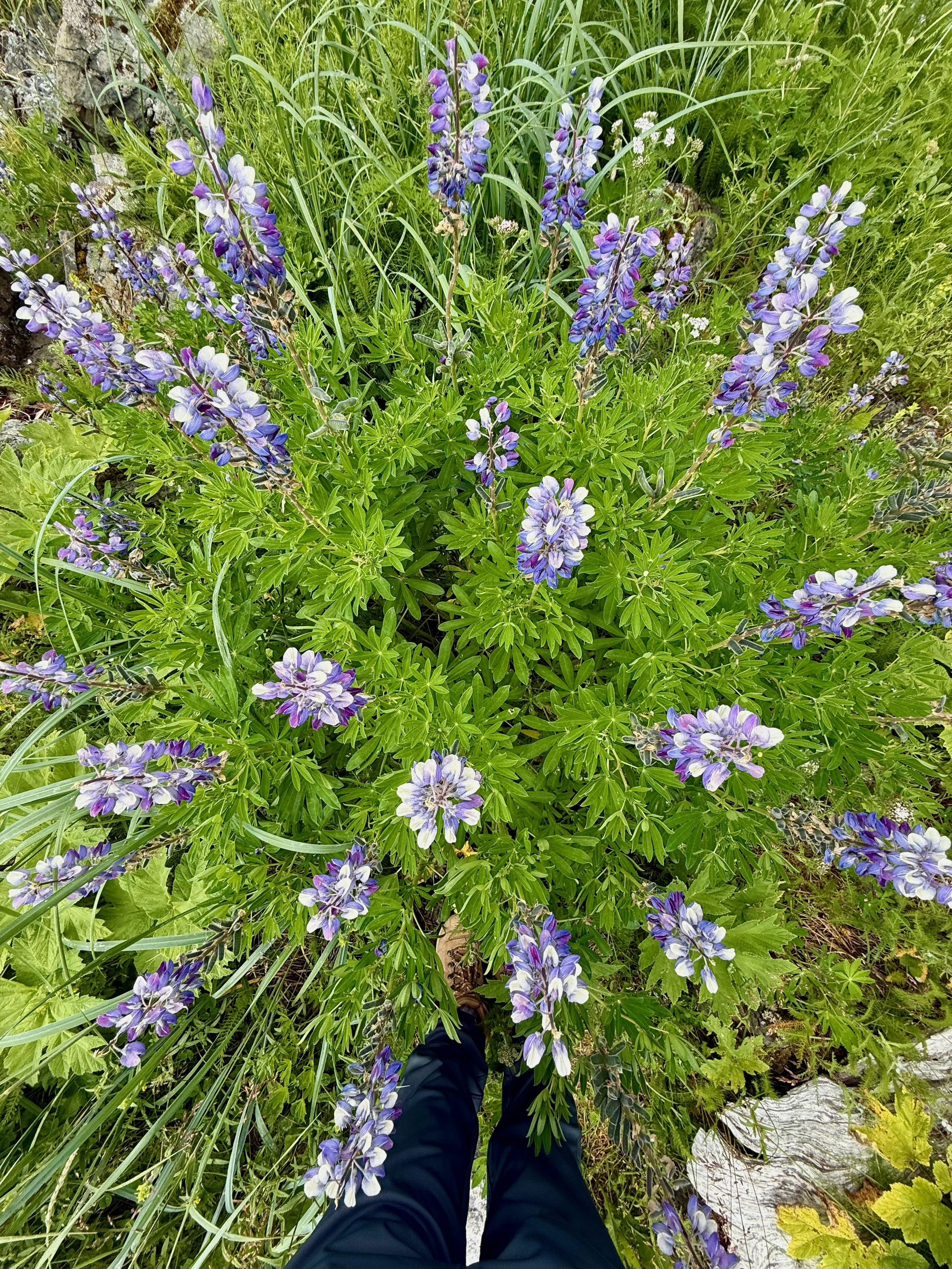
Standing in a field of lupine - July 2026
The lupine that filled early summer with tall purple blooms is beginning to disappear.
A few patches still hold their color, but many of the flowers have softened at the edges or begun turning toward seed. Their fading is one of the first changes I notice each year because lupine feels so closely tied to the beginning of an Alaska summer.
When it starts to go, something else is already taking its place.

Fireweed blooming approximately halfway up its stalk in Southeast Alaska.
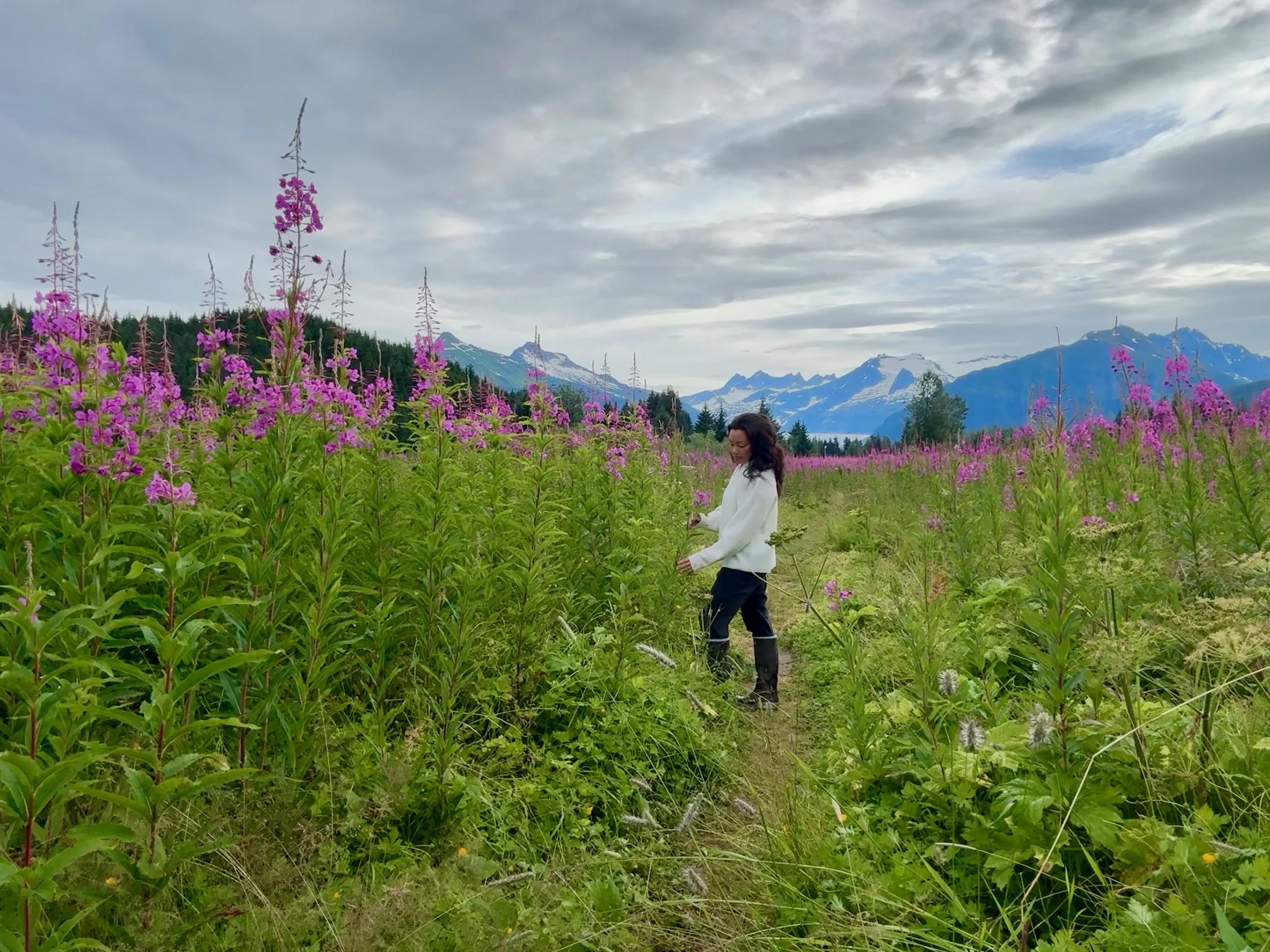
Fireweed is now blooming around the midpoint of many stalks, each new flower appearing slightly higher than the one before it.
Alaskans often say that when fireweed reaches the top, summer is nearly over. It is not a precise calendar, and conditions vary by location, elevation and year. Still, it is easy to understand why people watch it.
Fireweed feels less like a flower and more like a living measure of the season.
In early summer, the stalks are mostly green. By late July, pink blossoms are climbing upward. Eventually, only the highest flowers will remain.
The progression is difficult to ignore.
Blueberries and Salmonberries Begin to Ripen
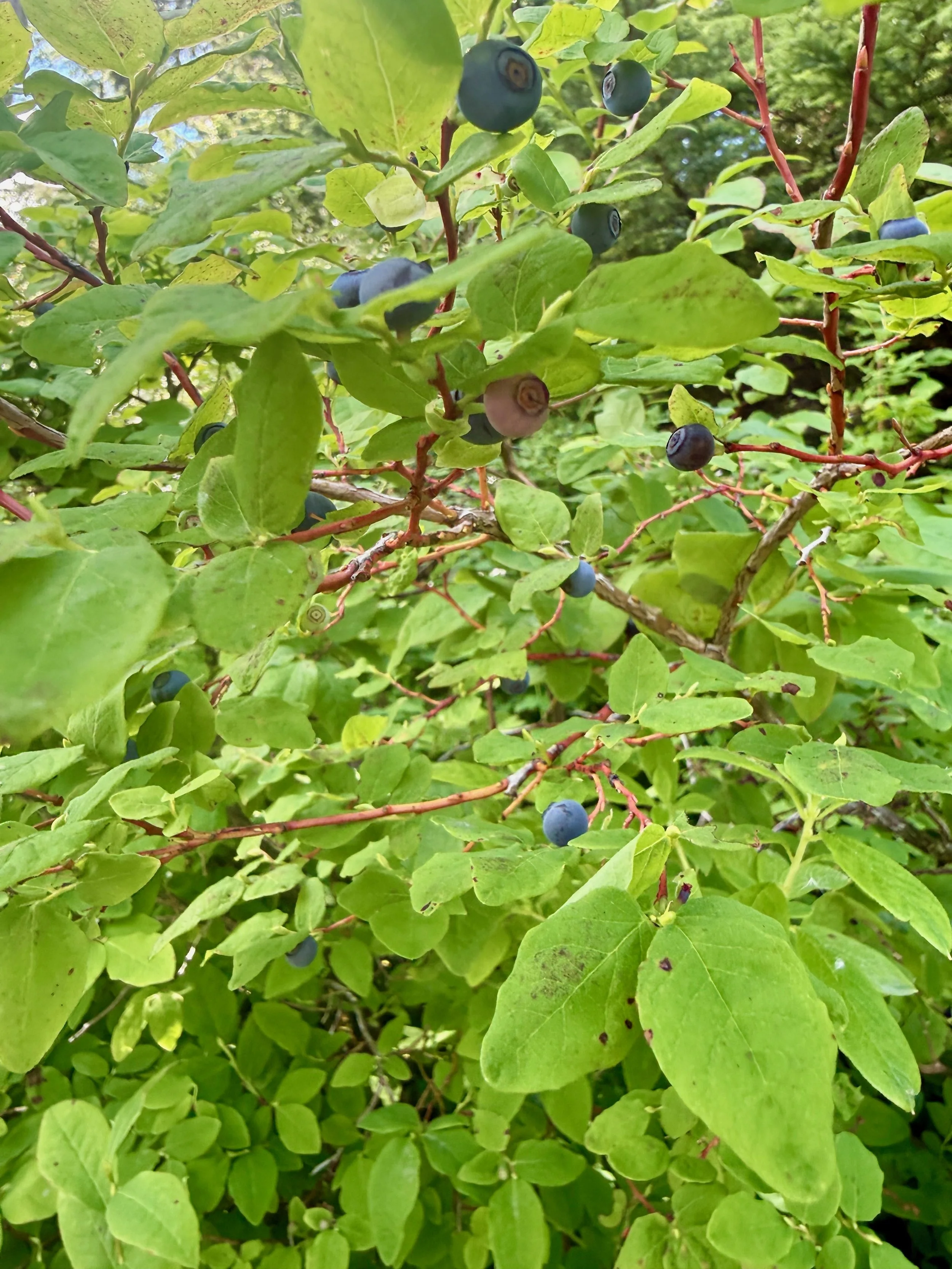
Blueberries are beginning to appear beneath the leaves, some still pale and firm and others deepening into that familiar dusty blue.
Along the trails around Juneau, I find myself looking down more often now, checking the bushes and wondering whether the berries need another week or whether someone else will find them first.
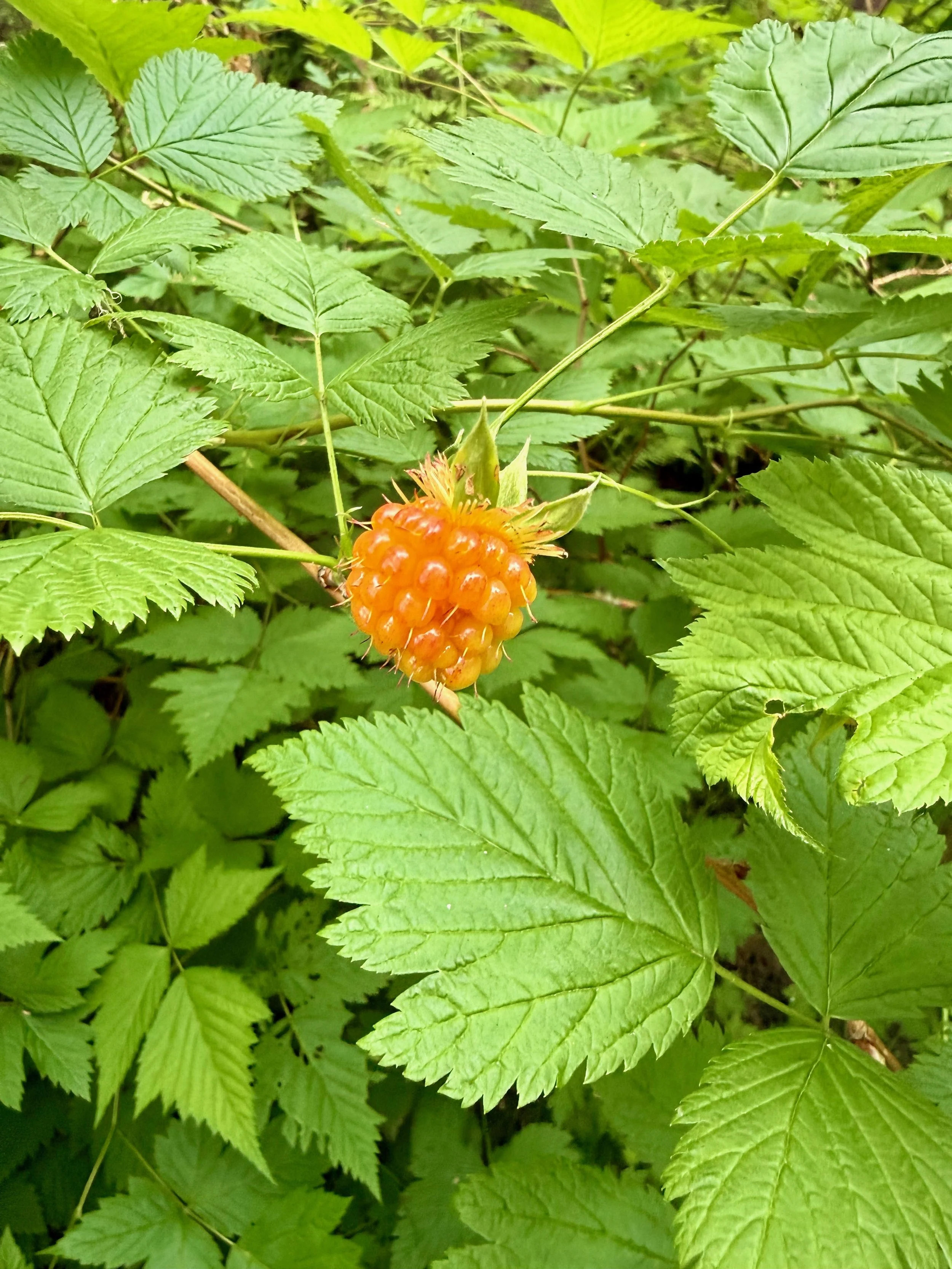
The salmonberries are farther along.
Many have already softened into shades of orange and red, glowing against the green undergrowth. The ripest berries disappear quickly, picked by people, birds or animals moving through the forest before the rest of us ever see them.
There is something reassuring about the arrival of berry season. It reminds me that an Alaska summer is not simply a stretch of long days and good weather. It is a sequence, and each stage has its own purpose.
The flowers bloom. The berries form. Animals begin feeding more intently. The landscape quietly shifts from growth toward preparation.
Waiting for the Salmon
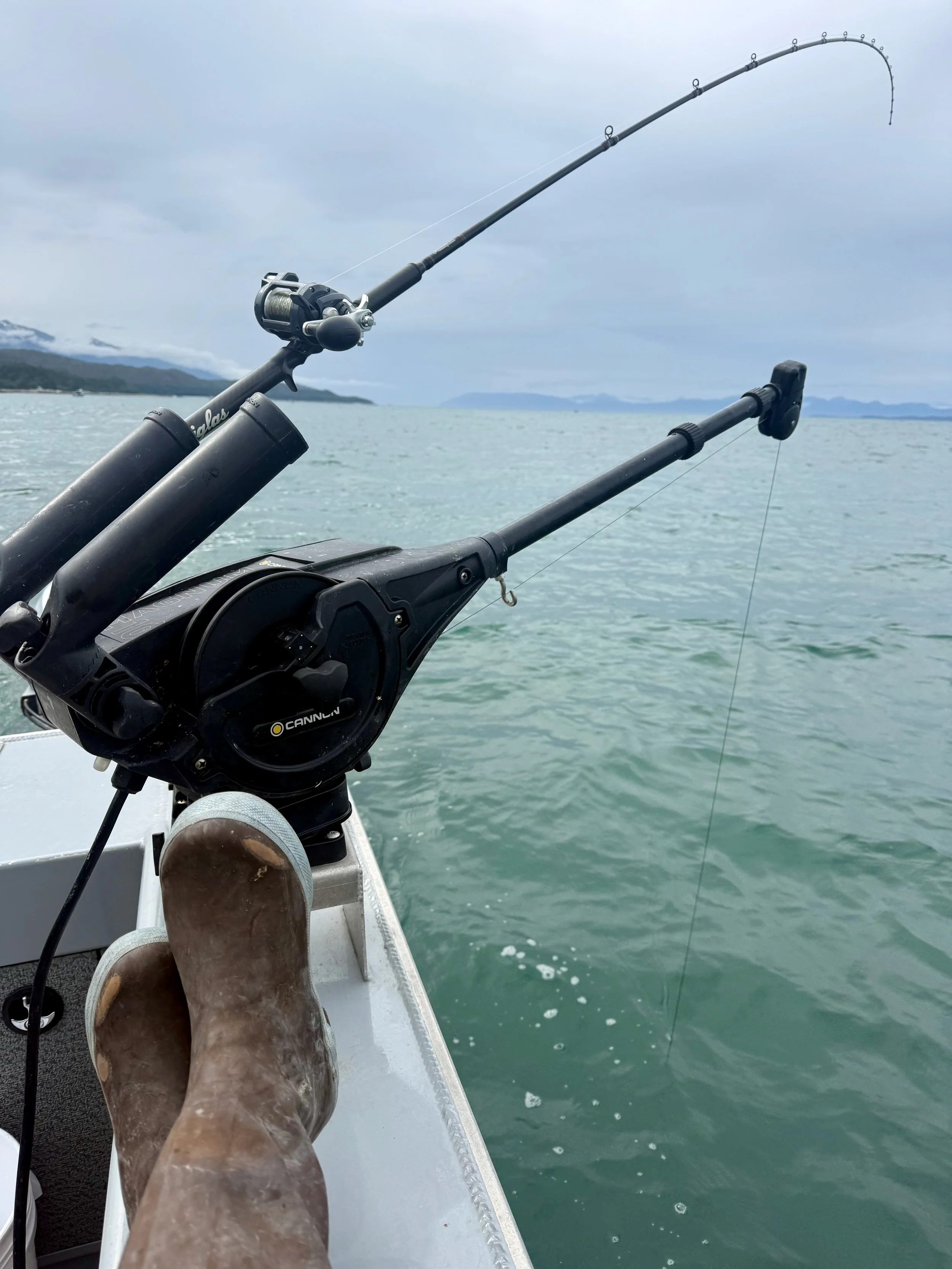
The salmon season has felt uneven in some of the places we watch and fish this year.
There is a sense of waiting: for more fish to arrive, for the runs to gather momentum and for the familiar rhythm of salmon season to settle over the water.
That does not mean every Southeast Alaska salmon run is late. Timing varies by species, stream and location. But in our own conversations and fishing experiences around Juneau, the fish have sometimes seemed later or less consistent than we expected.
So we keep watching.
We watch the water. We compare catches. We wonder whether the next tide, the next rain or the next few days will bring the movement everyone has been waiting for.
The salmon will shape much of what happens next.
Their return feeds far more than people. Eagles gather near the water. Bears spend more time near streams and berry patches. The forest seems to become more alert.
The Animals Are Preparing Too
As berry season advances and salmon begin moving toward local streams, black bears become more noticeable.
They appear near roadsides, along the edges of the forest and in places where food is becoming more plentiful. Even when I do not see them directly, their growing presence changes the way I move through familiar places.
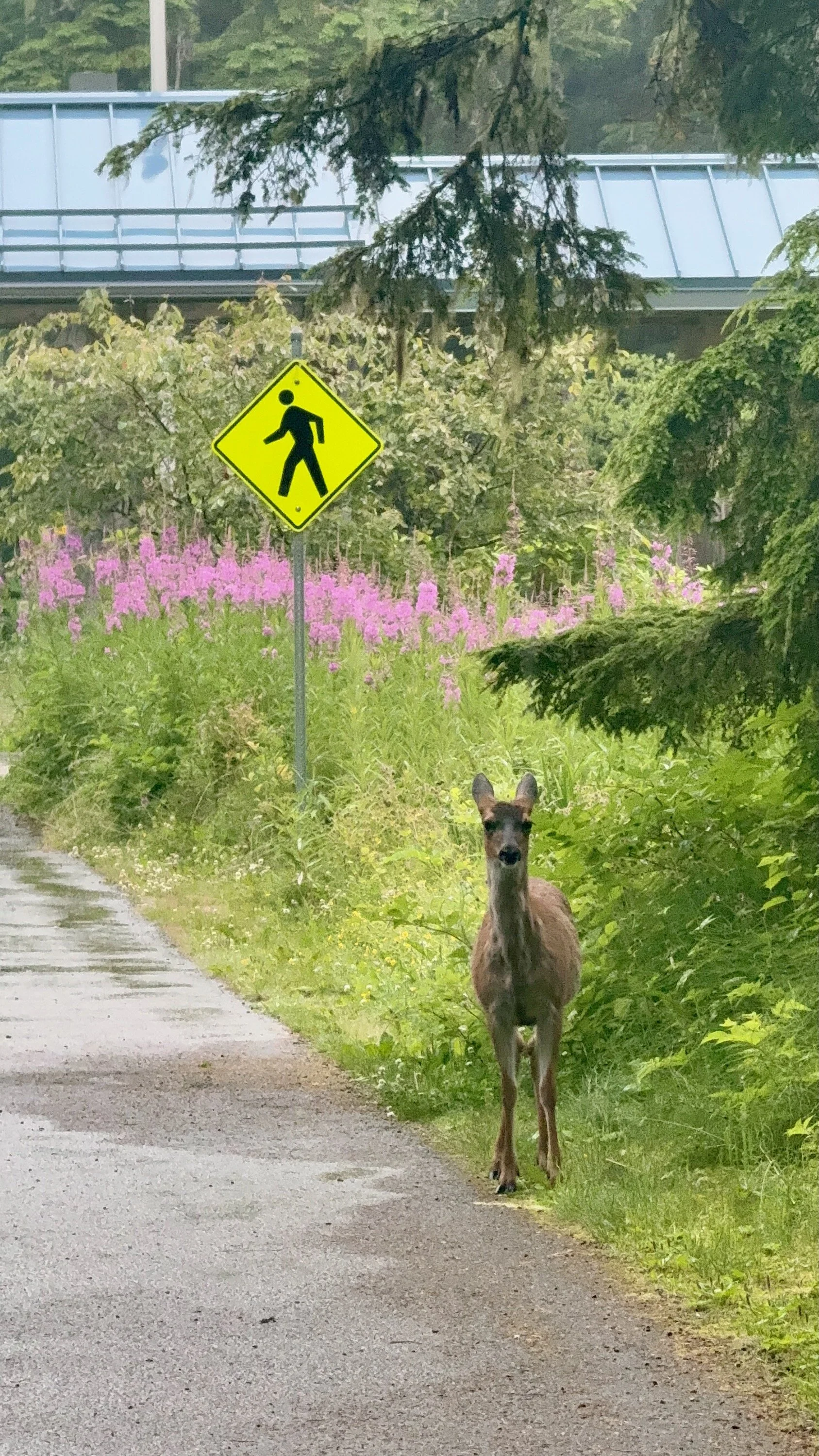
The Sitka black-tailed deer look fuller than they did earlier in the season. Their bodies are rounder after weeks of feeding on fresh summer growth.
They seem to understand what is coming long before we acknowledge it ourselves.
There is no visible panic or urgency. Only steady preparation: eating, growing and making use of everything the brief Alaska summer provides.
The Season Before the Season
August is not autumn in Southeast Alaska.
There are still bright days ahead, more time on the water and more berries yet to ripen. Fireweed has not reached the top. The salmon are still arriving. Summer is not over.
But Alaska rarely waits for one season to end before beginning the next.
While summer is still unfolding, the landscape is already preparing to let it go.
Lupine fades as fireweed climbs. Green berries darken. Bears return more frequently to the edges of our lives. Deer grow fuller. Salmon gather somewhere beyond our view, preparing to complete a journey that will feed an entire ecosystem.
And in the cool air moving through an open window, I can feel the turn beginning.
Not the end of summer.
Just the first quiet movement toward whatever comes next.