Fishing in Juneau for First-Timers: What It’s Really Like and How to Choose a Charter
I have spent more time fishing in Southeast Alaska than is probably reasonable.
Some of those days have been spectacular, the kind when the fish are biting, the weather cooperates and everyone on the boat feels remarkably competent. Others have involved a tremendous amount of waiting, rain running down the sleeves of my jacket, tangled gear, lost fish and plenty of time to stare at the mountains.
Both are fishing in Alaska.
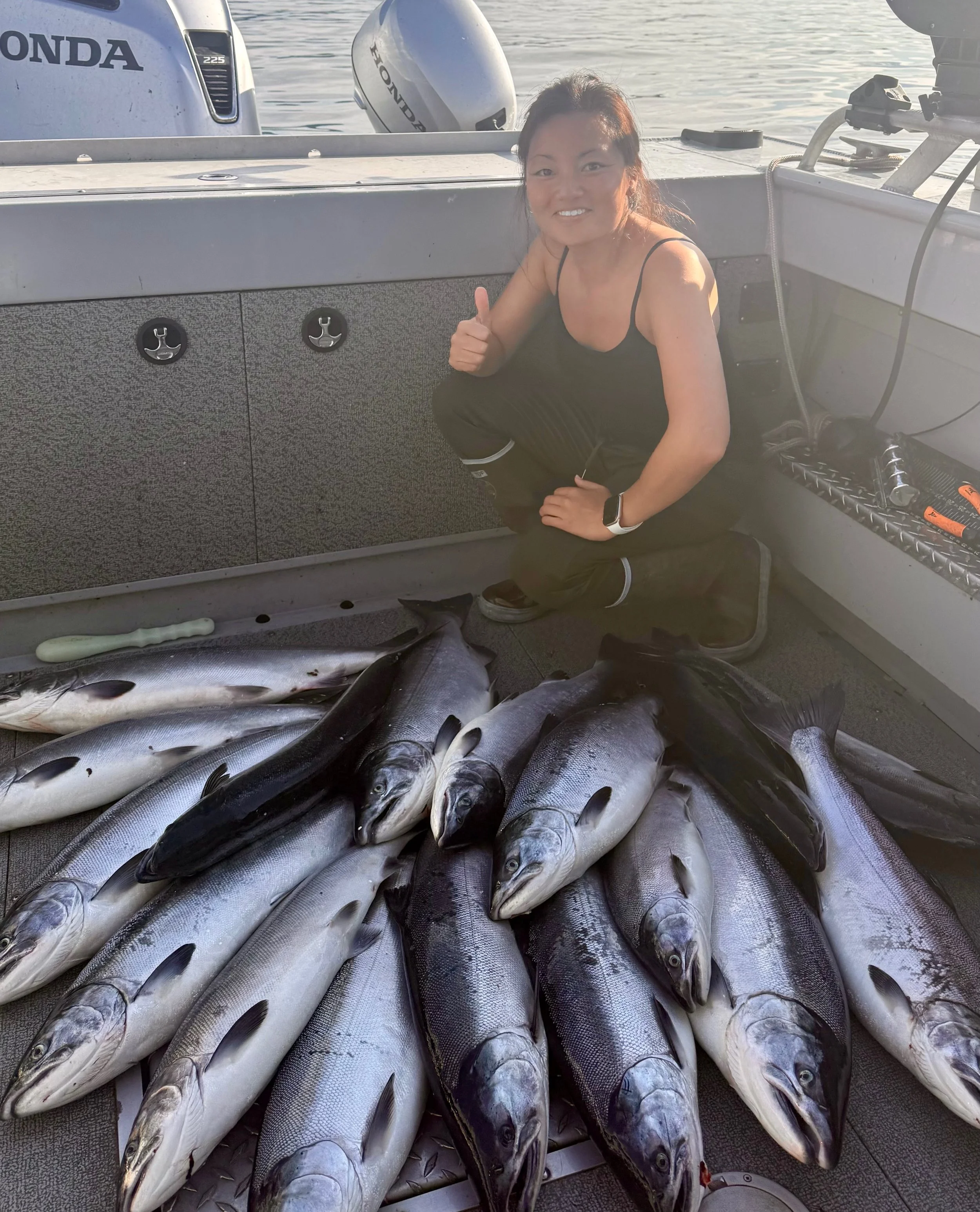
Here I am with a coho catch (3 people’s limits)
And that is probably the first thing I would tell someone considering a fishing charter in Juneau. Fishing is different from many of the other experiences you can book here because the experience isn't entirely controllable. You aren't buying admission to see something that will happen at a scheduled time. You're going out onto the water with someone who knows it well, putting yourself in the best possible position and seeing what the day gives you. You’re going on an adventure!
That uncertainty is part of what makes fishing interesting. It's also why I don't think a fishing charter is automatically the right choice for every Alaska visitor.
But for someone who likes being on the water or has always wanted to catch a salmon or halibut in Alaska it can be one of the best ways to spend a day in Juneau.
You may have watched me fishing right here near Juneau if you have watched Captain Zac on YouTube. I’ve spent an almost unreasonable amount of time on the water in Southeast Alaska, fishing alongside Zac and learning these waters through years of actual days on the boat: the productive ones, the slow ones, the beautiful ones and the ones spent getting rained on while waiting for something to bite. The Alaska Edit is where I bring that firsthand experience together with the practical information I wish more travelers had before they arrived, so let’s dive into the basics of selecting a fishing charter.
Is Fishing in Juneau Worth It?
If you enjoy being on the water, wildlife and being outside, then yes it can be.
The caveat is that you have to enjoy the experience of fishing, not simply the outcome of catching a fish.
A good captain can read weather, tides and water conditions, choose where to fish, adjust gear and move when something isn't working. Experience matters enormously. But even the best captain in Southeast Alaska cannot guarantee that a salmon will decide to bite while you're there.
I've had days when it seemed almost impossible not to catch something and others when a perfectly good stretch of water felt completely empty.
For me, a good day fishing is: not crowded fishing spots, a decent weather day (ie. not too many waves), fish biting and also incredible wildlife. What I’ve found is that there’s always some type of wildlife around, humpback whales, otters or sea birds. It’s enjoying the whole experience of fishing. While I don’t mind longer boat rides, if I’m really serious about catching fish I’d prefer not to spend most of my time running and gunning to the fishing spot. Great charter captains can match the fishing tone of the group to their itinerary of the day.
For some travelers, that unpredictability is frustrating. For others, it is precisely the point.
What Can You Catch While Fishing in Juneau?
Salmon and halibut receive most of the attention, and for good reason, but they're not the entire story. Depending on the trip, season, location and regulations, rockfish can also be part of a Southeast Alaska fishing day.
The three offer very different experiences.
Salmon
For many visitors, catching a salmon is inseparable from the idea of fishing in Alaska.
Salmon fishing around Juneau often means trolling: moving slowly through the water with lines set at particular depths while looking for fish that are feeding or moving through the area. There can be plenty of quiet time, and then a rod releases and the entire mood of the boat changes.
In Juneau, most times people will fish for King Salmon or Silver Salmon (cohos). The kings are early summer and the coho show up mid-summer. Sometimes these fish can be tough to net so it’s always exciting when you hear a nearby boat cheer for landing a fish!
To me, what makes salmon especially interesting in Alaska is that the fish you're catching offshore are partway through their larger journey.
A salmon's life is much bigger than the few minutes on the end of your line
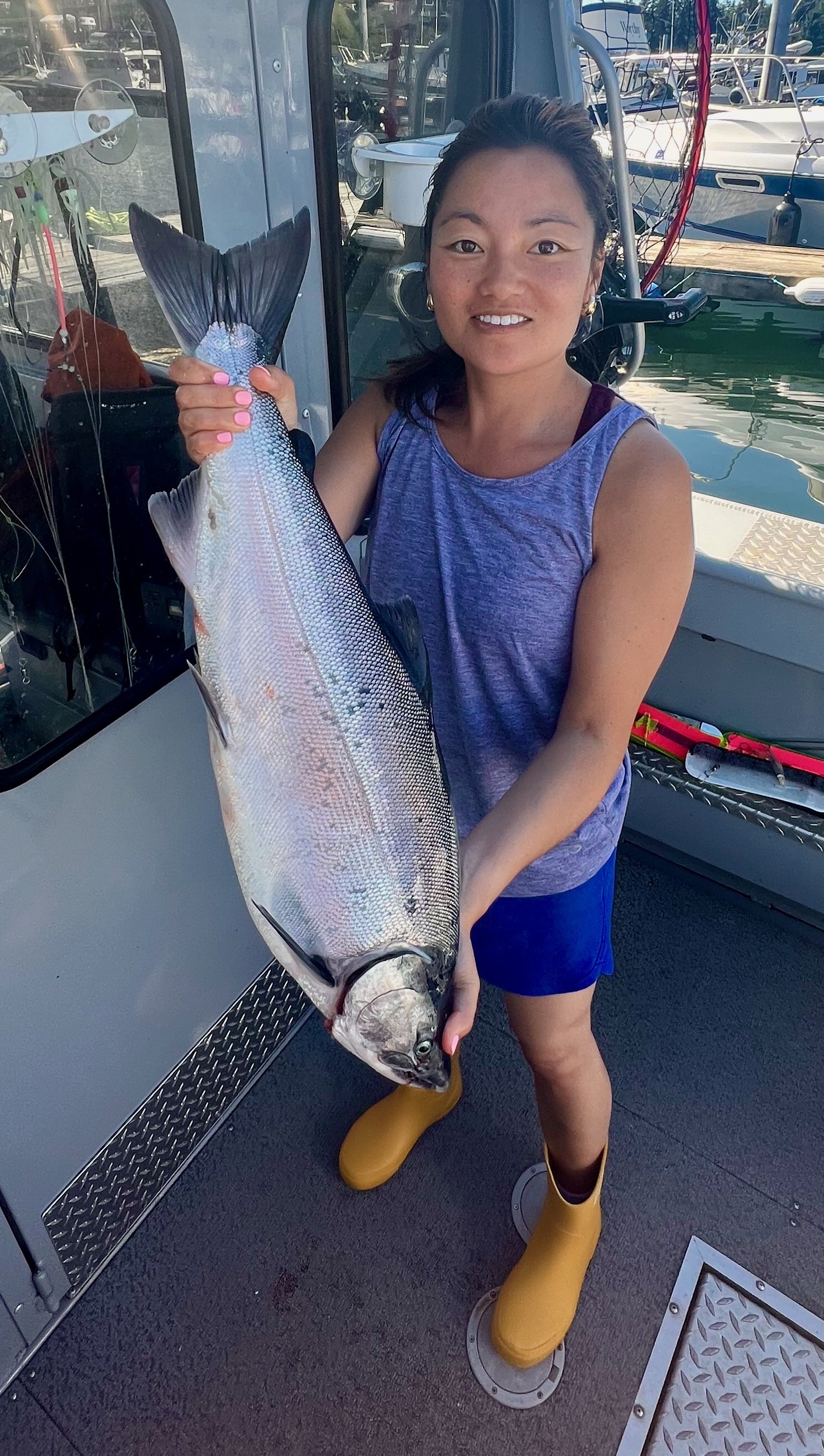
Pacific salmon begin their lives in freshwater. Eggs are laid in gravel beds, and the young fish eventually emerge and grow before beginning their migration toward saltwater. Depending on the species, they may spend very different amounts of time in freshwater and at sea. King salmon can spend years feeding in the ocean, while pink salmon complete their entire life cycle in only two years.
Eventually, adult salmon turn back toward freshwater. Remarkably, they return to the stream system where they were born, sometimes nearly the same place, changing physically as they leave the ocean and begin their final migration upstream. After spawning, Pacific salmon die, completing a cycle that moves marine nutrients back into rivers, forests and the wider ecosystem. I think understanding that changes the experience of catching one.
When you're trolling for a bright, silver salmon in saltwater outside Juneau, you're encountering that fish during the ocean portion of a journey that may eventually take it back into one of the rivers or streams braided through this landscape. It reminds you to be incredibly humble. The fish that feeds us was still in its own lifecycle, struggling out at sea for years but will never fulfill its destined journey. It also reminds you that we’re a part of such a large ecosystem.
There are five Pacific salmon species found in Alaska: king (Chinook), coho (silver), sockeye (red), chum and pink and timing varies substantially by species and from year to year. Even ADF&G cautions that salmon run timing isn't perfectly predictable.
For a visitor, the practical takeaway is simple: if catching a particular salmon species matters to you, tell the charter company before you book and ask what is realistically being caught during the dates you'll be in Juneau.
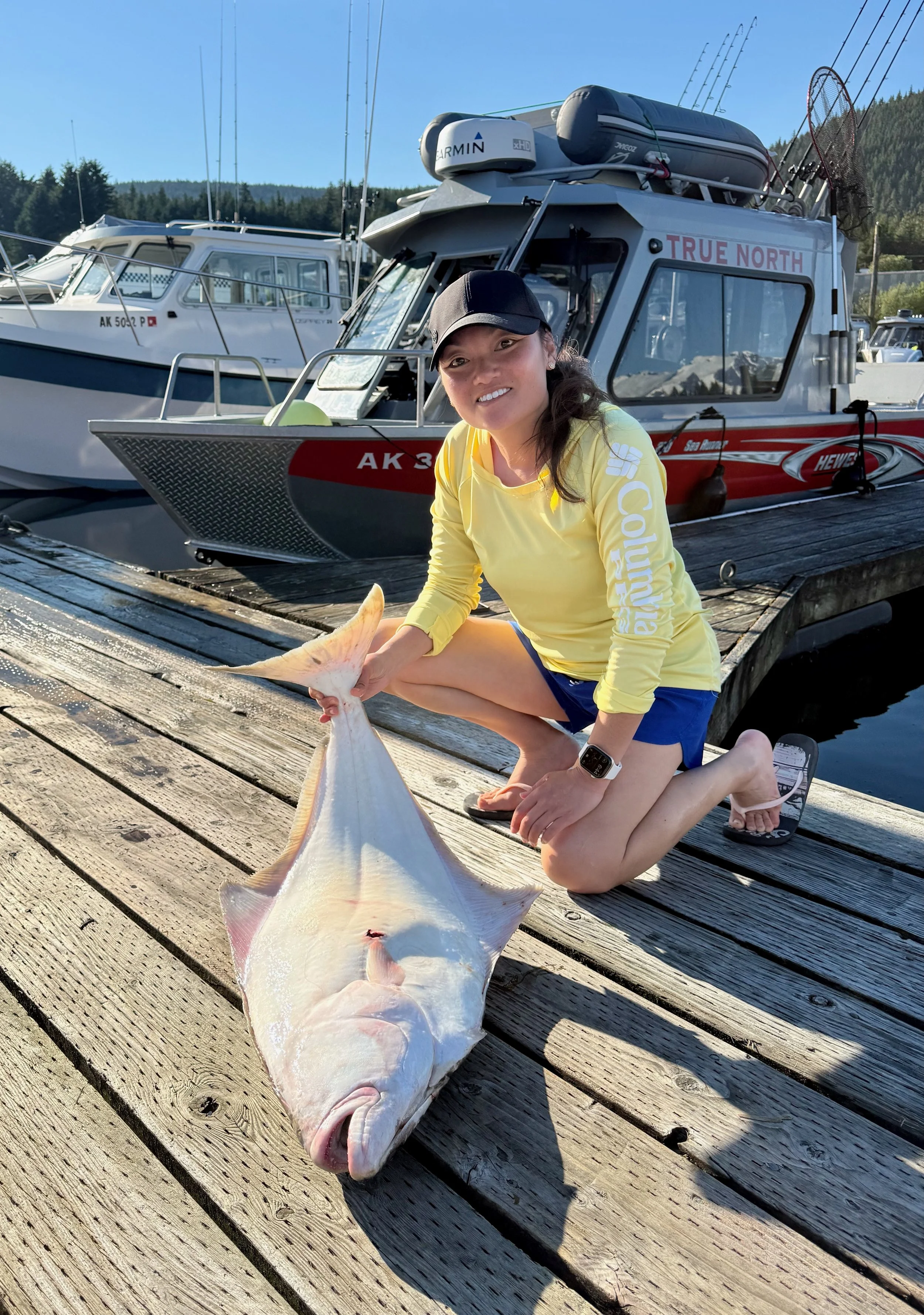
Halibut
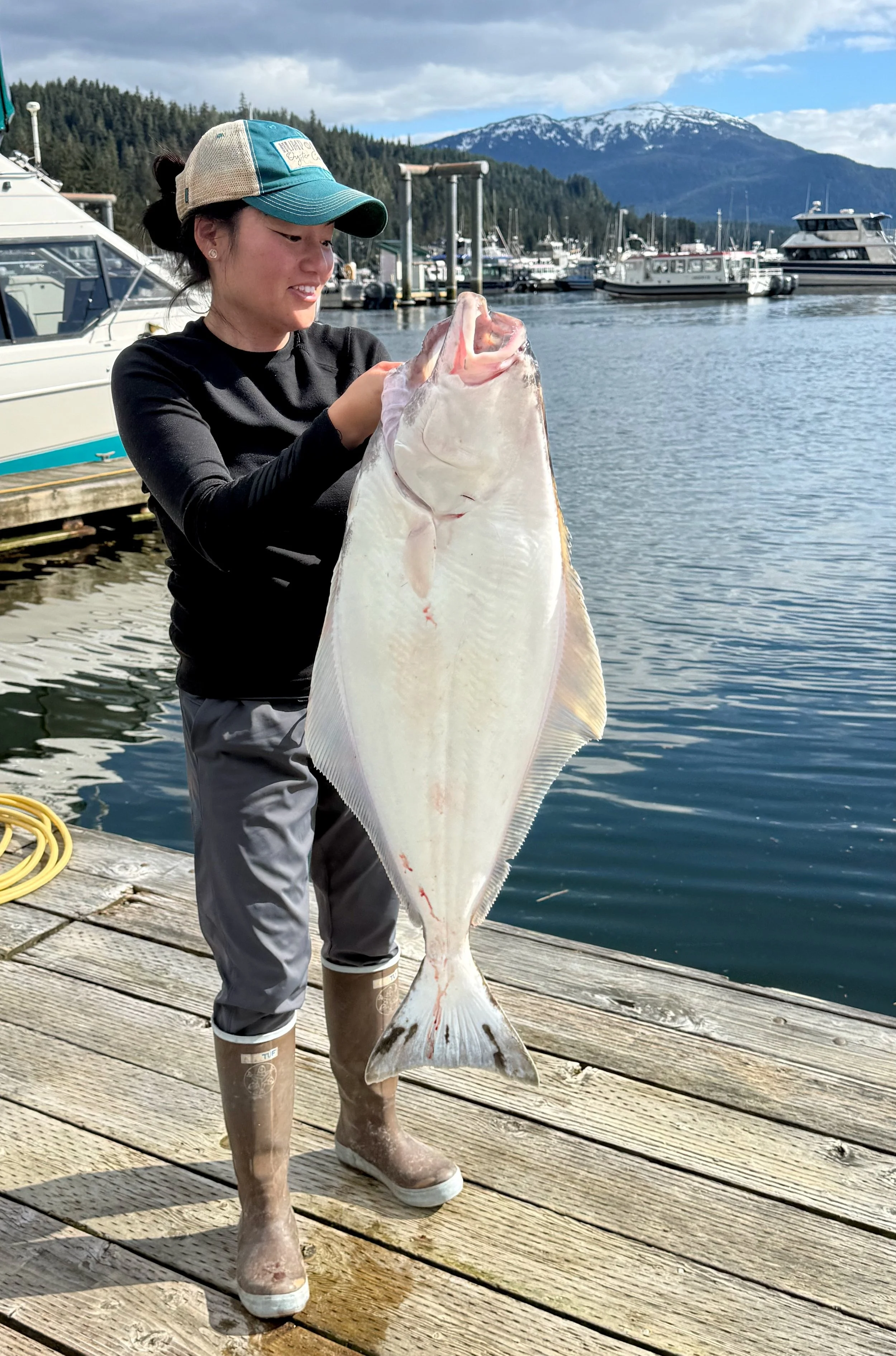
Halibut fishing is a completely different experience.
Rather than trolling for a fish moving through the water column, you're generally fishing toward the bottom. Depending on where you're fishing, that can mean dropping bait a surprisingly long way and then discovering that bringing a fish back up requires considerably more work than dropping the line down did.
Halibut aren't particularly glamorous animals. They are flat, strange-looking and extraordinarily well designed for life on the seafloor. They are also powerful fish, and catching one gives you a new appreciation for something most people have only encountered as a fillet on a dinner plate.
To me, there’s nothing more thrilling than filling the ‘thump thump’ of a halibut biting at the end of your rod. They have a distinctive bite that you can recognize. Reeling them up can be a workout and the larger the fish, the more they will fight and try to shake the jig (or circle hook) before getting to the surface.
If your primary goal is to catch halibut, I would specifically choose a trip designed around halibut rather than assuming any Juneau fishing charter will naturally include it.
Rockfish
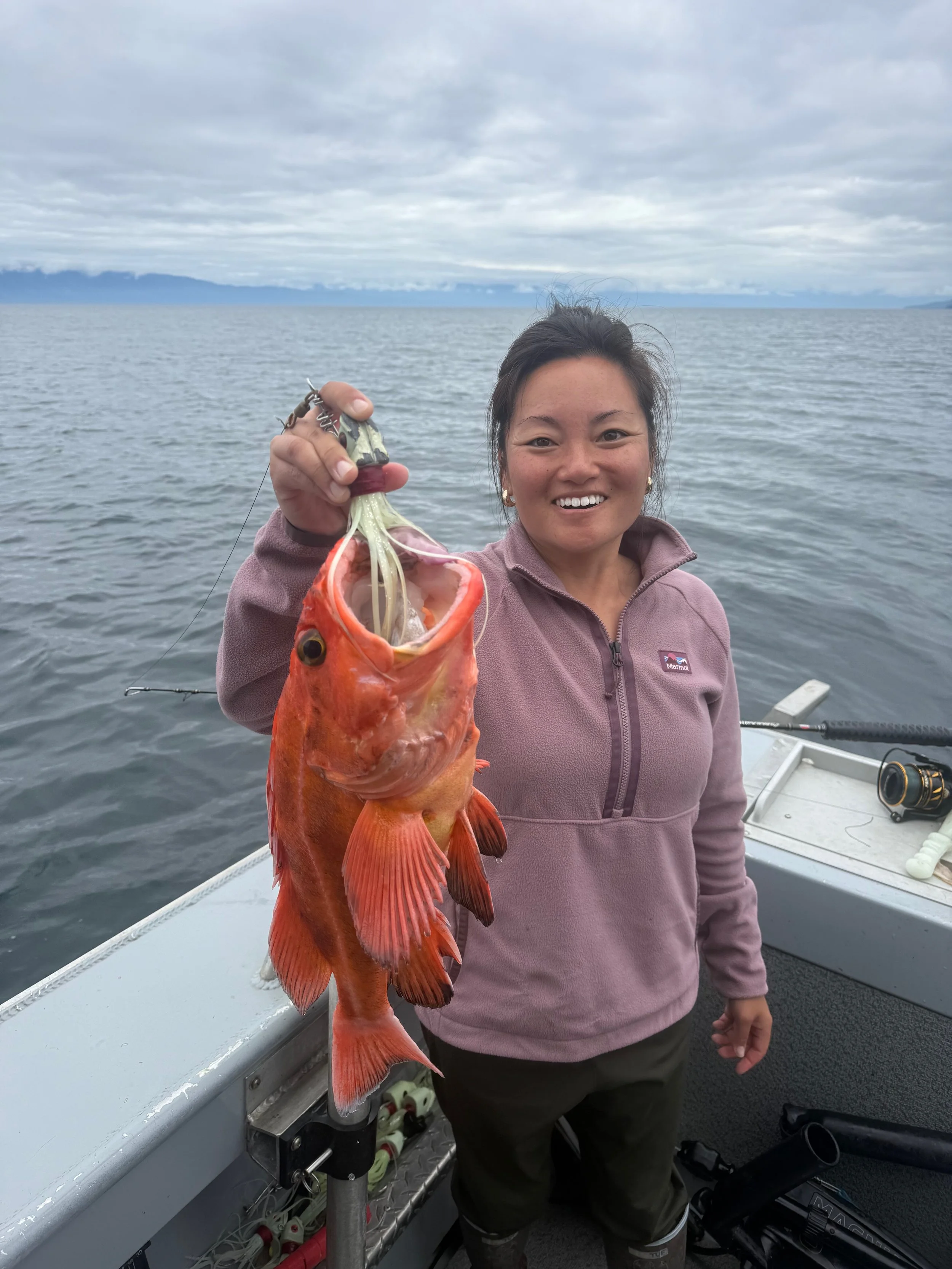
Rockfish are much less famous outside Alaska, but they are an important part of fishing in Southeast Alaska.
“Rockfish” is actually a broad category encompassing many different species, which is one reason identification matters so much. Some live around rocky structure and deeper water, and different species can be subject to very different retention rules. In Southeast Alaska, the demersal shelf rockfish group alone includes species such as yelloweye, quillback, tiger, China, canary, copper and rosethorn rockfish.
They can also be exceptionally good eating (a lot of people like to make rockfish tacos).
Rockfish also illustrate something visitors should understand about fishing in Alaska: catching a fish and being legally allowed to keep that fish are not necessarily the same thing.
That brings us to regulations.
Alaska Fishing is Highly Regulated
Fishing in Alaska is heavily managed, and regulations can become surprisingly specific. Bag limits, size restrictions, seasons and retention rules can vary by species, location, residency and even the type of boat you're fishing from. Emergency orders can change regulations during the season and override the rules printed in the annual regulation booklet. These rules are part of how Alaska manages fisheries that are biologically, culturally and economically important.
And guided charter anglers sometimes have different rules than people fishing from their own boats.
Halibut is probably the clearest example. For 2026, charter anglers in Southeast Alaska's Area 2C (which includes Juneau) may retain one halibut per day. That fish must fall within a “reverse slot” limit: 34 inches or shorter, or 80 inches or longer. Charter anglers also cannot retain halibut on specified Thursdays between June 18 and September 10.
There is also a new rule in 2026: charter anglers age 18 and older who intend to retain halibut must have a $20 charter halibut stamp for each charter fishing trip that day. NOAA says the guide handles the stamp, although the cost may either be included in the trip price or charged separately.
Salmon have their own rules. For example, Southeast Alaska's 2026 regional rules include separate resident and nonresident limits for king salmon, an annual king-salmon limit for nonresidents, and additional nonretention areas around places including Juneau to protect wild king stocks.
Rockfish regulations can be equally specific. Some species have narrow retention seasons, and when a rockfish is released, Southeast Alaska anglers are required to use a deepwater-release mechanism to return it to depth; saltwater sport-fishing vessels must have a functioning release device readily available.
This is one reason I strongly prefer fishing with a knowledgeable local charter operator if you're new to Alaska. Youdon't need to memorize the regulations before stepping onto the boat, but you do need to fish with someone who knows what applies that day.
I would also check the current Alaska Department of Fish and Game regulations shortly before any trip rather than relying on a blog post (including this one) to tell you what you can keep. Regulations and emergency orders can change during the season.
Each year, I find that the regulations change slightly. It might be the amount of fish you can catch (as an example, one year Yelloweye limits were 1 per person per year vs the next year regulation which was 1 per person per month) or when the season is open / closed. If you watch the Captain Zac fishing videos, you’ll hear him say something like: “I’m throwing this one back because it’s too small” or “we’re getting close to our limit”. Both mean that he’s respecting the fishing regulations.
What Is a Day of Fishing in Juneau Actually Like?
This is one of the things excursion descriptions struggle to convey.
Fishing contains long stretches in which nothing particularly dramatic is happening, and I mean that as a compliment.
You leave the harbor and the houses begin to disappear behind you. Someone gets the gear organized. You're watching the shoreline and listening to seagulls in the distance. Coffee gets passed around. Lines go in. The engine settles into a different rhythm.
And then you wait.
It might be raining softly enough that nobody bothers mentioning it. Mountains sit across the water looking closer than they are. An eagle passes. A whale might surface somewhere completely unrelated to the thing you came out to do.
Fishing creates room for all of that because there isn't a guide talking every minute or a sequence of attractions you're supposed to get through.
Then a rod goes, and suddenly everyone is moving.
When a rod goes down, the entire rhythm of the boat changes. A good deckhand begins coaching the person through it, telling them when to reel, when to move faster or slower, and above all, to keep tension on the line. At the same time, the deckhand is preparing the area and getting ready to bring the fish aboard. Once it crosses the rail, there may be pictures, cheers, and a little bit of chaos. Fishing can get messy, but a good crew restores order remarkably quickly.
Then something funny happens. The moment one person catches a fish, everyone else begins fishing harder. The jigging becomes more deliberate. People watch their lines more intently. One fish is proof that there are fish below the boat, and suddenly everyone believes their rod could be next.
After thousands of hours fishing in Alaska, I can tell you that the fish were there before that first rod bent. If you want to make the most of your day, fish with that same intensity from the first drop. Do not wait for someone else to prove there are fish beneath you.
This is part of why I think fishing belongs in an Alaska trip even when catching the maximum number of fish isn't the goal. It slows the landscape down enough that you start to notice it.
Can Cruise Passengers Go Fishing in Juneau?
Absolutely. A fishing charter can fit comfortably into many Juneau port calls, but I would pay close attention to timing.
The number of hours your ship is in Juneau isn't the same as the number of hours you have available to fish. You still have to get off the ship, travel to the marina, run from the harbor to the fishing grounds, fish, return to the marina and get back to the ship with enough margin that nobody is spending the final hour staring nervously at a watch.
Some charters cater heavily to cruise passengers and understand ship schedules extremely well. That is worth confirming before you book.
It takes about :20 minutes to get from downtown Juneau (where the cruise ships port) to Fisherman’s Bend or Starter Harbor where the fishing charters depart from. Since cruising is one of the most common ways people visit Juneau, often times the charters will pick up from the cruise ship and run their trips for the best length of time to help ensure passengers maximize their time on the water and also hit their all aboard time on their ship.
How Long Should You Book a Fishing Charter?
This may be an unpopular thing to say but in my experience, fishing rewards time.
Part of every trip is transit. Part of it is finding fish. Part of it is setting gear and waiting long enough to discover whether your first idea was a good one.
A very short charter can work, particularly for a cruise passenger with limited time, but if fishing is one of the reasons you're coming to Alaska, I would give it enough room to be an actual fishing day rather than squeezing it between other activities.
I would not pay for anything under 4 hours. You need transit time. You need time to get set up. Even at 4 hours, that could look like :45 min run, :15 to get set up, and only 2 hours to fish. The further you go (away from the dock), the better the fishing is because the closer fishing spots have become more fished out over time. 4 hours minimum is what I would aim for.
Do You Need Fishing Experience?
No. Plenty of people step onto a Juneau charter having never fished before.
A good captain or guide should be able to explain the gear, show you what to do and help when a fish is on. I'd be much more concerned with finding a patient, competent operator than arriving with experience of your own.
And beginners can be great fun to fish with because the experience hasn't become normal to them yet.
Most beginners that I talk with after they get back are thrilled. They did not realize how much fun fishing can be - and they did not anticipate that they would want to go again!
What Should You Wear Fishing in Juneau?
Even in summer, being on the water can be considerably colder than standing downtown. Wind, rain and several hours of limited movement change things quickly.
I would wear layers with a waterproof outer shell and bring more warmth than the forecast seems to require. Shoes should be practical on a wet boat, and I would bring a hat even on a decent day.
Usually, I wear (varies depending on time of the year):
light rain coat (outside shell)
light rain pants
top and bottom thermal
top and bottom mid-layer
thick, heavy boot socks
rubber boots
What Happens to the Fish You Catch?
If bringing fish home matters to you, ask about processing before you book.
Charter operators can explain what happens after you return to the dock and what local options exist for cleaning, freezing, processing or shipping your catch. The logistics and investment is worth understanding in advance, especially if you're traveling by cruise ship or flying home shortly afterward.
Also remember that the amount you catch and the amount you are legally permitted to retain may be very different things.
How I Would Choose a Juneau Fishing Charter
I wouldn't choose a charter because the website has the photograph of the largest halibut.
After spending as much time around fishing as I have, I care much more about the person running the boat.
I want a captain who fishes these waters constantly and pays attention to weather, currents, what has been happening over the last several days and what isn't working that morning. I want someone who can change the plan rather than simply repeat it.
I'd also be very clear about what kind of fishing day you want. If catching a salmon is important to you, say so. If you've always wanted to catch halibut, say that. If you'd rather have an interesting mixed-species day and don't care exactly what ends up on the line, that's useful information too.
For cruise visitors, I would specifically ask about transportation, meeting location, trip duration and the operator's plan for getting guests back to the ship. And I'd ask whether the boat is private or shared, because a six-person charter and a boat with just your family can feel like two very different experiences.
Most importantly, I would look for someone capable of giving you a good day when the fishing isn't good.
Any captain looks excellent when every rod is going.
Experience becomes much more apparent when they're not.
To me, a good captain sets the expectation for the day. They don’t overhype how many fish or how big of fish. They dive into a safety briefing enough that everyone on the vessel feels like they know what to do in an emergency situation. They respect the fishing regulations and they also share their fishing experiences and stories as well.
Who I Wouldn't Recommend Fishing To
Fishing is expensive enough that I wouldn't book it simply because catching a salmon appears on somebody's Alaska bucket list.
If you need constant entertainment, would consider the day a failure without a fish, strongly dislike being on smaller boats or only have a very narrow window in Juneau, there may be other experiences that suit you better.
That's one of the wonderful things about Alaska: you don't have to do all of it.
But if you like being on the water, can tolerate some uncertainty and are curious about an activity that has shaped life in Southeast Alaska for generations, fishing gives you access to a different part of this place.
You begin noticing tides. Weather. Birds. Bait. Water depth. Where boats are gathering. When the salmon are moving. What came back this year and what didn't.
And eventually you realize the fish is only one part of what you've been watching.
A day fishing in Alaska is a day that you will remember for the rest of your life - I consider it a memory dividend. Most days of your life, you forget. This time spent in Alaska will be one you come back to for many years to come.
Ready to Go Fishing in Juneau?
If a day on the water sounds like the way you'd like to experience Juneau, you can compare current Juneau fishing charters and availability here.
Before booking, I would confirm what species the trip is targeting, the actual amount of fishing time, whether transportation is included, whether the charter is private or shared, and how the operator handles current fishing regulations and cruise-ship return times.