The Town That Still Faces the Water
In Petersburg, commercial fishing is not part of the scenery. It is the force around which the town has arranged its life.
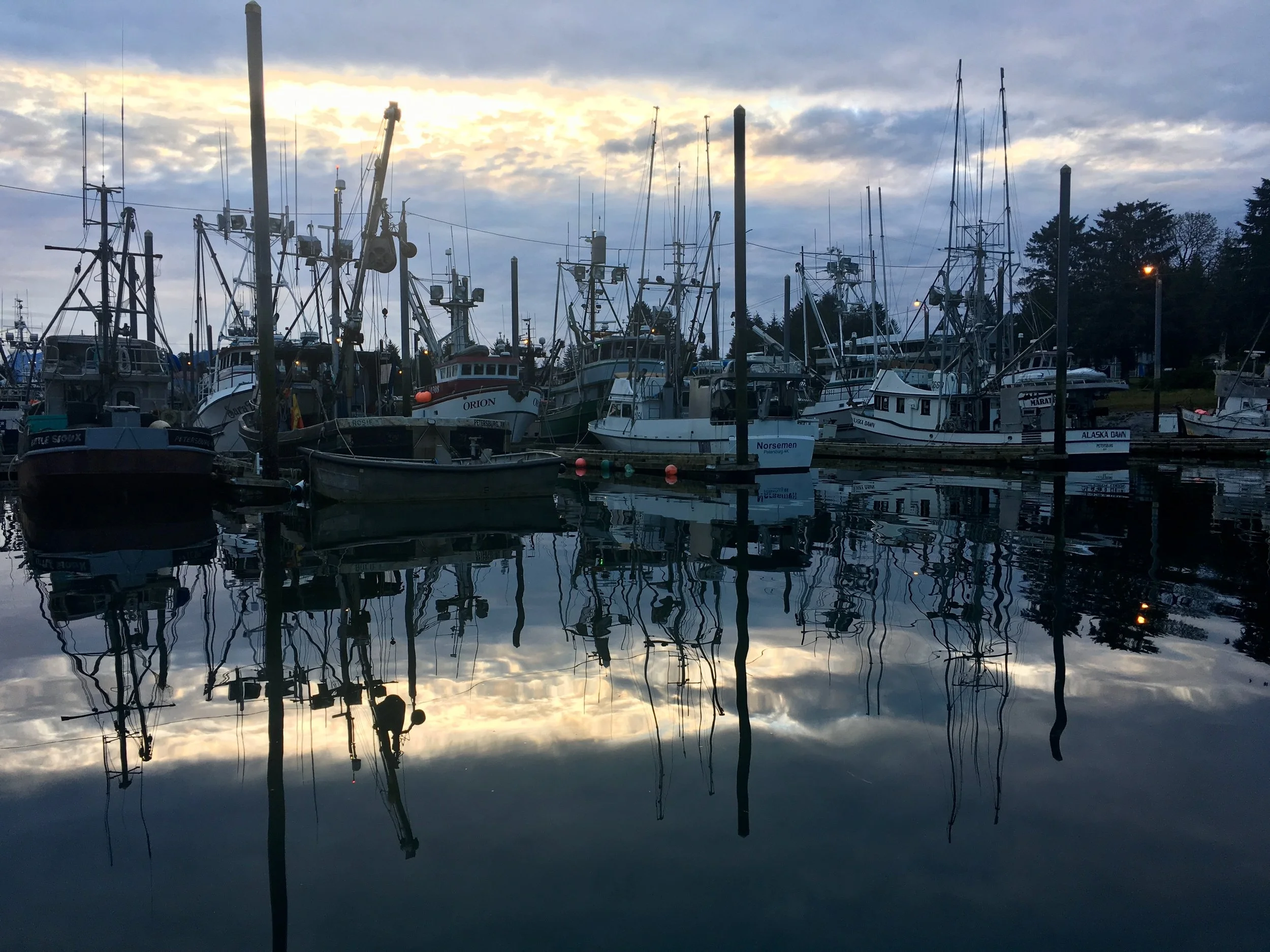
Petersburg is easiest to misunderstand when the harbor is still.
In the early light, the boats sit doubled in the water, their masts and rigging reflected so clearly that the working waterfront can look almost ornamental. The streets are quiet. Most of the storefronts have not opened. From shore, the town appears to be waiting.
But the harbor has already been awake for hours.
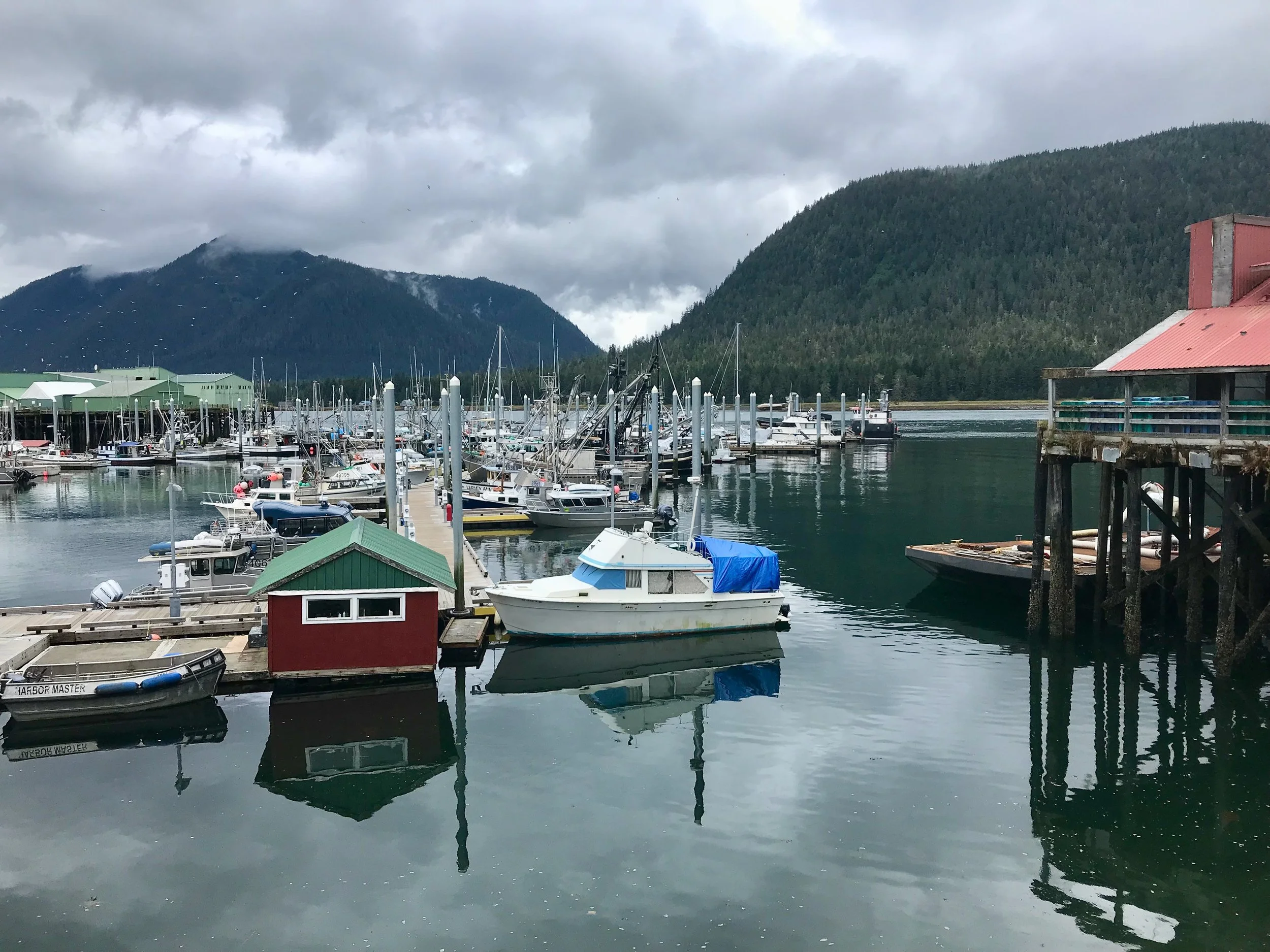
Lights burn inside wheelhouses. Engines turn over. Someone crosses a wet dock carrying what will be needed for the day. Beyond town, weather is moving across the water, and decisions are already being made around it.
Petersburg is often described as quaint. It is. But quaintness is only what the work looks like from a distance.
Up close, there is diesel, salt, wet rope and the metallic geometry of rigging. There are boats being repaired, catch being unloaded, forecasts being watched and seasons measured not only in light and rain, but in what returns through the harbor.
Commercial fishing is not a remnant here. It is not an old identity preserved for visitors beneath painted signs and carefully restored buildings. It is the reason the town is here—and the organizing principle around which much of Petersburg still turns.
The harbor wakes first
The harbor is not positioned at the decorative edge of Petersburg. It is the town’s center of gravity.
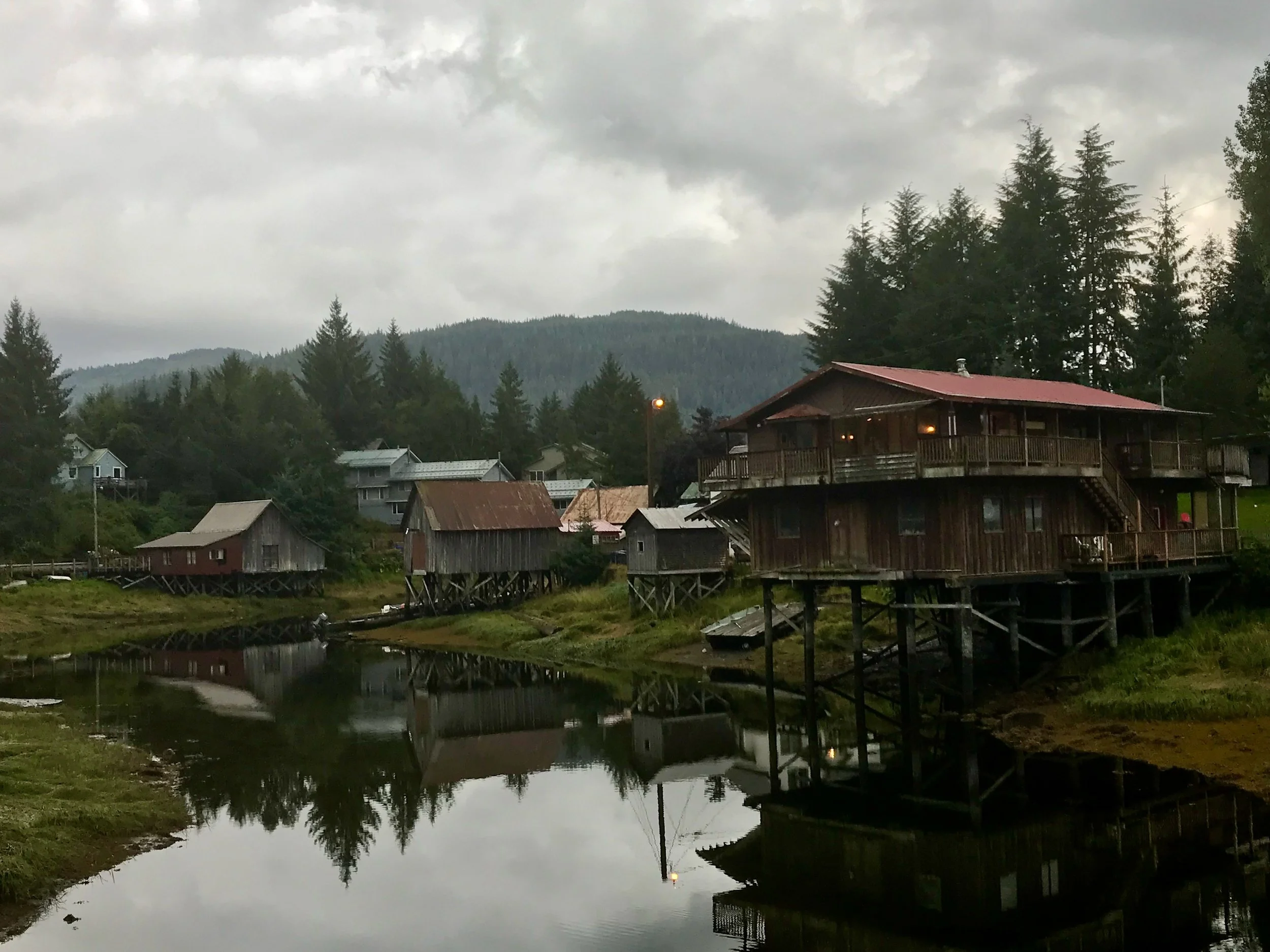
The cannery, the docks, the boats and the businesses that support them give Petersburg its daily rhythm. The rest of town seems to have gathered nearby: homes climbing gently away from the water, a compact main street, a few familiar places for groceries, dinner, a drink and conversation.
In larger towns, daily life disperses. People disappear into different neighborhoods, different stores, different routines. Petersburg keeps folding people back toward one another.
There seems to be one of nearly everything: one pizza place, one general store, one bar where the same stories gather and circulate. The details may change, but the feeling remains. Choice is limited; contact is not.
You see the same person loading supplies near the harbor, then again over dinner, then once more the next morning. A conversation begun on the dock can continue in line at the store. News moves quickly because people do too and because there are only so many places for a day to carry them.
To a visitor, this concentration can feel charming. To the people who live here, it is simply the scale of the place: intimate, practical and sometimes inescapable.
Petersburg’s smallness does not feel like an unfinished version of somewhere larger. It feels complete on its own terms.
What the light falls across
Some of the most beautiful moments in Petersburg arrive without any separation between labor and landscape.
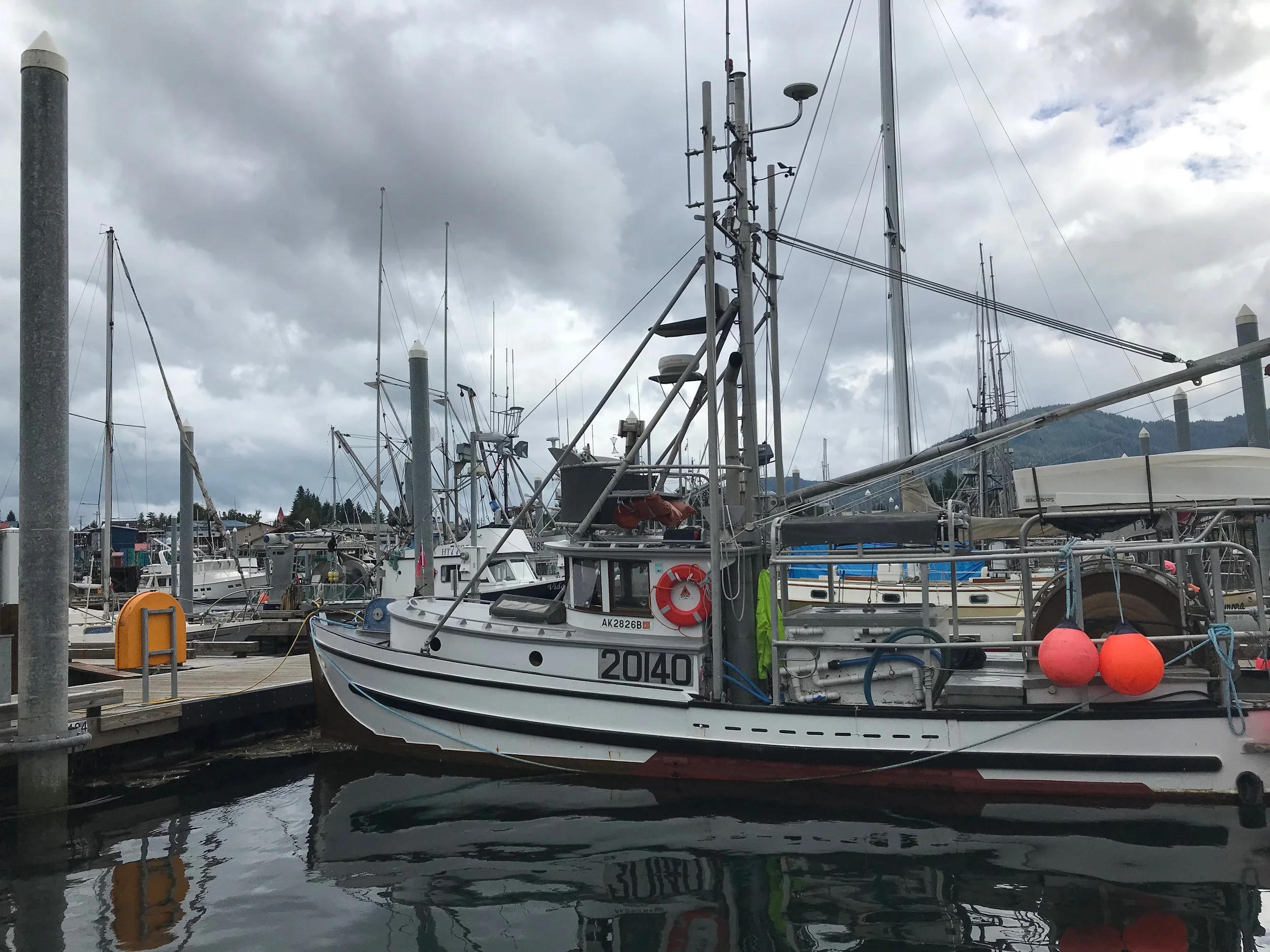
Even the most extravagant light falls across something practical: a net, a wheelhouse, a wet dock, the steel frame of a boat preparing to leave again.
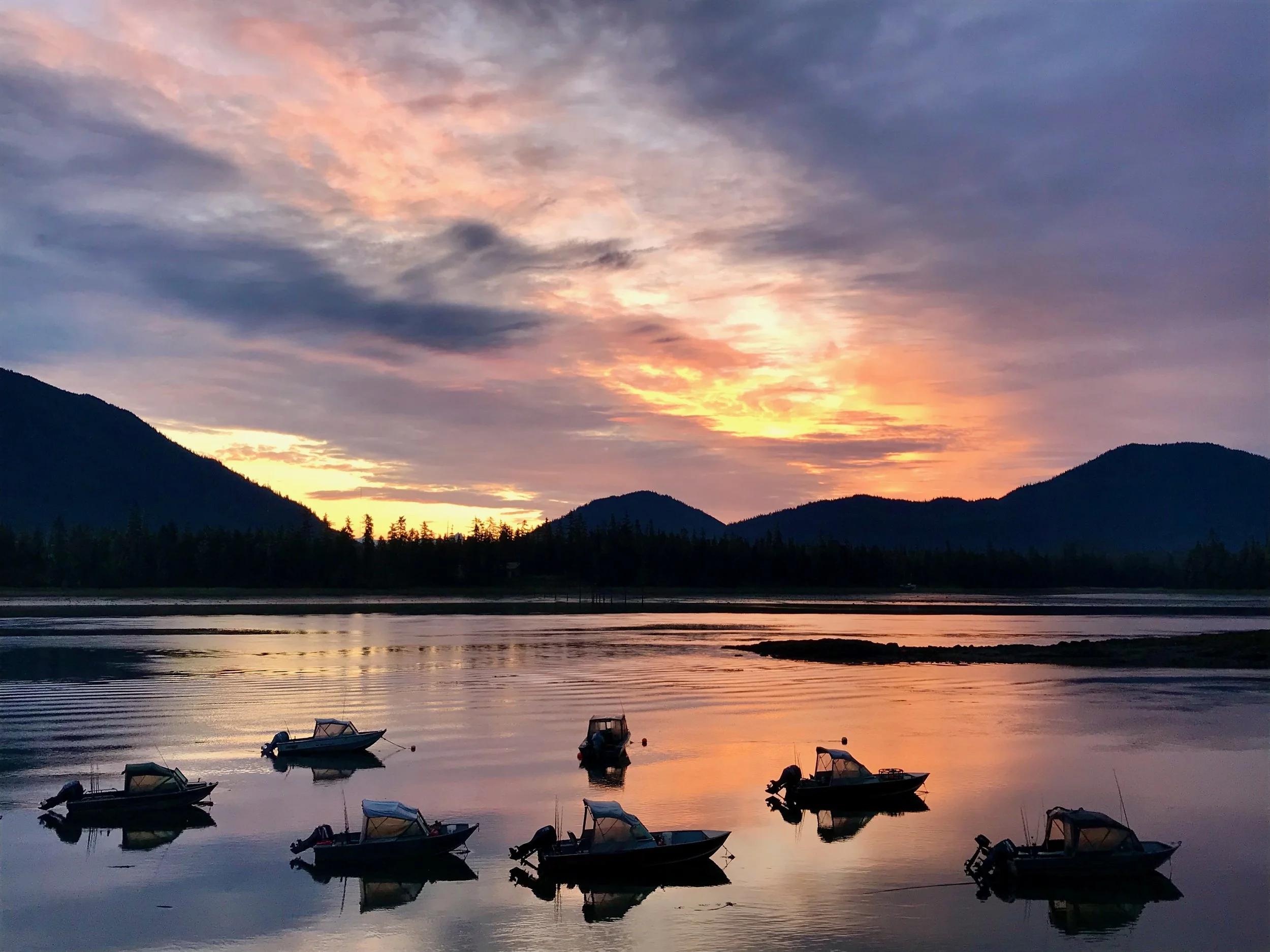
At sunset, the harbor becomes theatrical. Clouds open above the mountains. The water turns copper, silver or deep blue. Fishing vessels stand in silhouette, transformed for a few minutes into elegant black shapes against the sky.
But the boats are not there to complete the picture.
That distinction matters.
Many coastal towns keep the symbols of fishing long after the industry itself has been pushed aside. Old warehouses become restaurants. Working docks become promenades. Boats remain, but increasingly as decoration.
Petersburg has not yet hidden the work that made it.
The waterfront is still crowded with evidence: lines coiled for use, equipment stacked where it is needed, vessels marked by weather and repetition. The harbor is beautiful because it is alive, not because it has been polished free of labor.
That is what gives the town its visual force. The working and the beautiful occupy the same frame.
A shrimp lifted into the evening light brings another level of beauty; its translucent body glowing orange against the sun, delicate and strange. A large halibut held outside the lodge can become both record and ritual. A dock dog waits beside a fishing boat as though it has its own shift to keep.
None of these images exists outside the town’s practical life. They are beautiful because they belong to it.

Dependence, not nostalgia
It would be easy to turn Petersburg into a story about simplicity.
A small town. A working harbor. One of everything. People connected to the same industry and the same water.
But coherence is not the same as ease.
When much of a town still traces back to the harbor, the consequences of weather, season and catch do not remain confined to the docks. They travel outward: into paychecks, store traffic, dinner tables and decisions about what comes next.
The same dependence that gives Petersburg its identity also gives the water authority.
A clear morning can become a difficult afternoon. Boats leave into conditions that do not look picturesque from the wheelhouse. Work begins before the town appears awake and continues long after the harbor has become beautiful again.
The landscape is not only scenery. It sets terms.
This is why Petersburg should not be treated as a preserved version of an older Alaska. The town is not frozen in time. It is engaged in the present-tense work of remaining what it has long been: a community shaped by fishing, while the economic and environmental pressures around that work continue to change.
Its identity feels coherent not because change has stopped, but because the relationship between place and work is still visible.
Just beyond town
The human scale of Petersburg becomes clearest when you move only a short distance beyond it.
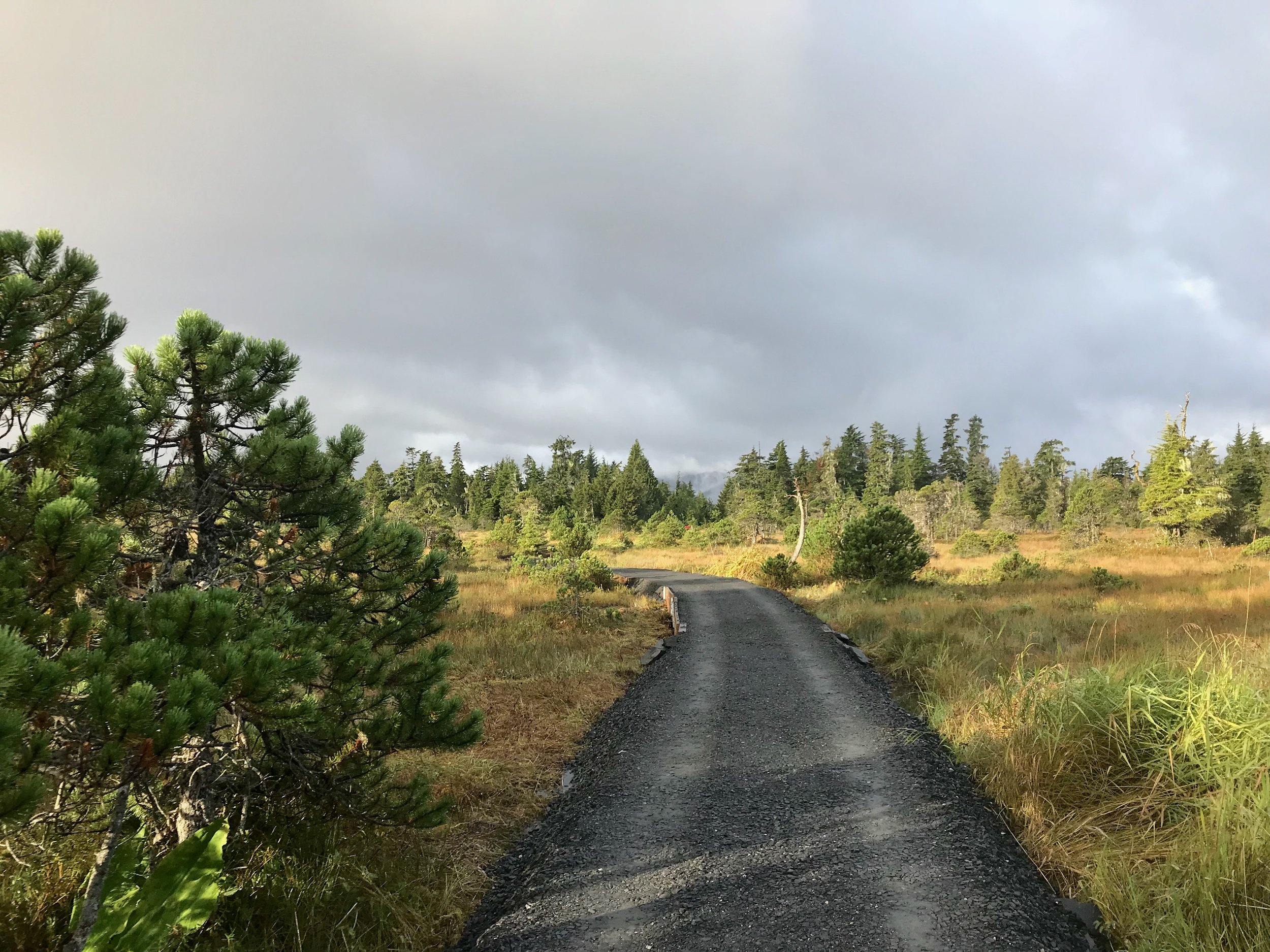
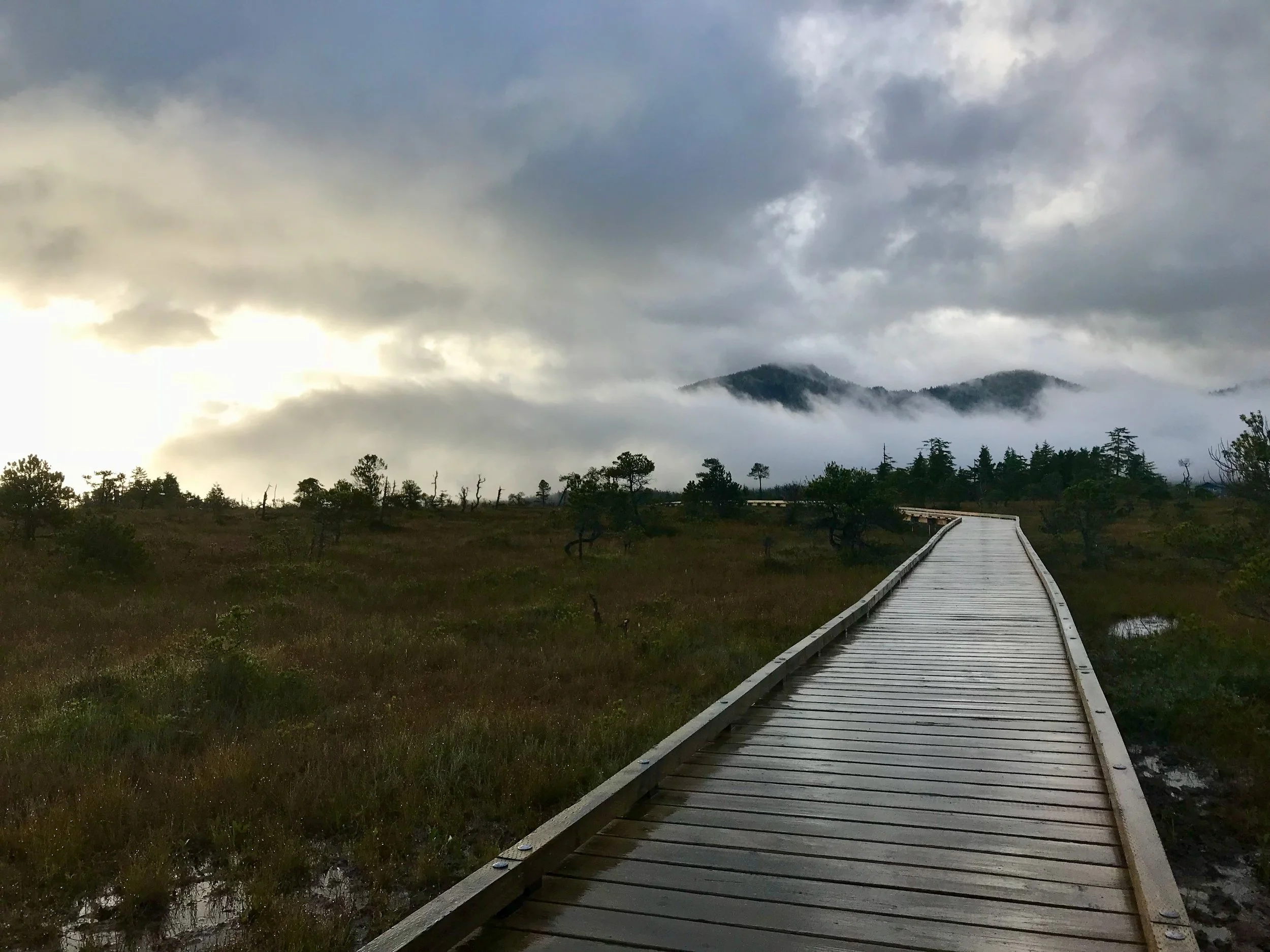
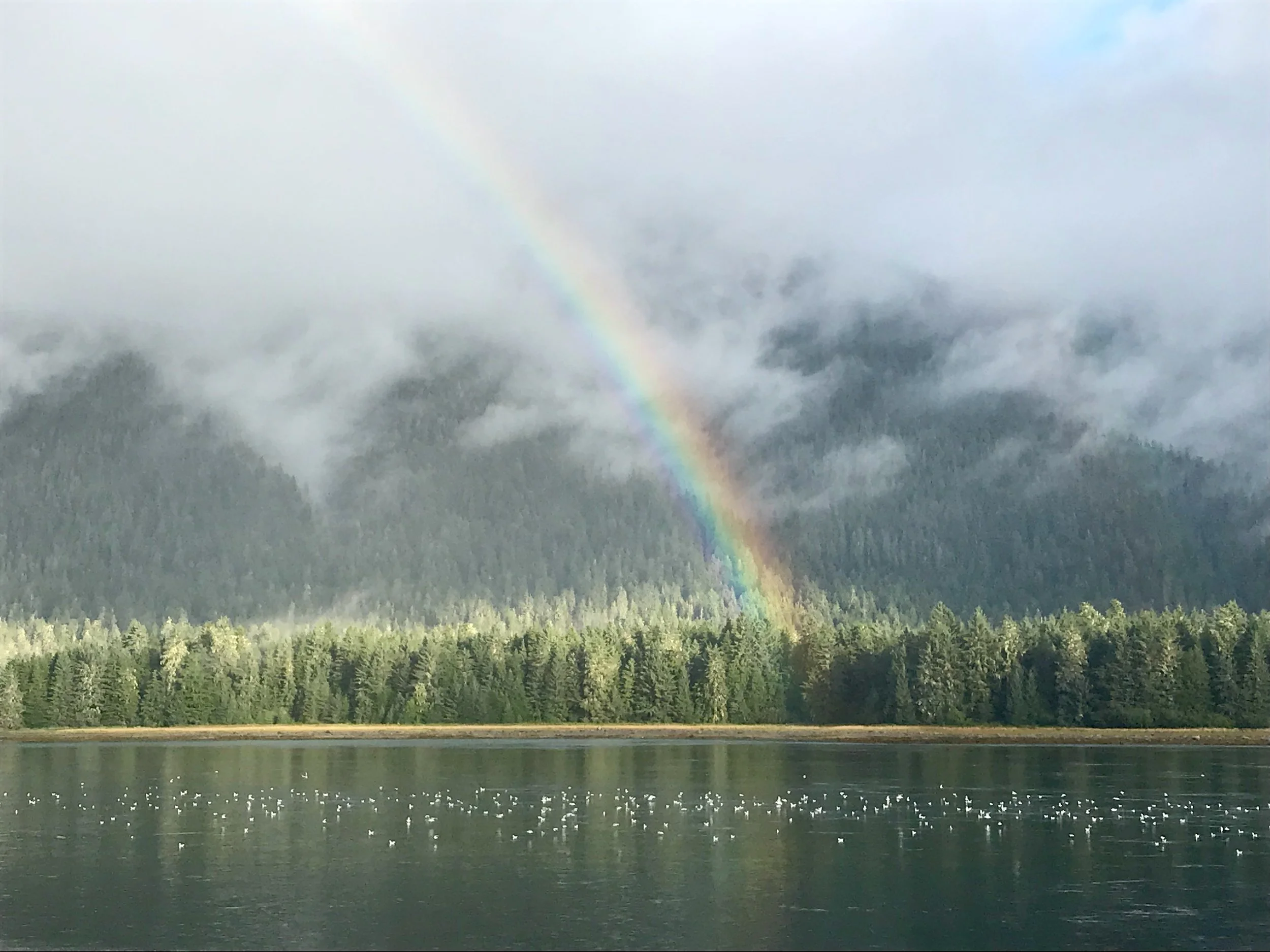
Road gives way to muskeg. A narrow boardwalk crosses open wetland beneath clouds that seem to press down over the mountains. Rain gathers in the grass. A rainbow appears against a wall of mist and forest, then fades before the light has fully changed.
On the water, kayaks look almost impossibly small against the green mountains and long, cold reaches of the channel. A person in a yellow life jacket becomes the only bright mark in an immense field of gray, green and glacial blue.
Petersburg is compact, but nothing around it is.
The town occupies only a narrow margin between forest, mountain and sea. Its streets, storefronts and routines feel more concentrated because the surrounding landscape is so vast.
There is little gradual transition between community and wilderness. One moment you are near the harbor; soon after, the road is empty, the muskeg opens and weather begins erasing the mountains.
The smallness of Petersburg is not weakness against this scale. It is a form of adaptation.
The town has built what it needs and placed it close to the water.
Still facing the water
By evening, the harbor can become still again.
The last light settles across the boats. Reflections return between the pilings. From shore, the working waterfront once again looks quiet enough to misunderstand.
Somewhere, a boat is coming home. Somewhere else, another is preparing to leave.
The stores will close. People will gather in the same few places. News from the harbor will move through town, becoming conversation by dinner and common knowledge by morning.
Petersburg is often called a fishing town, but the phrase can sound too decorative—like a sign hung over a waterfront restaurant.
Here, it remains literal.
The town faces the water because its work faces the water. Its days begin there. Its risks travel outward from there. Much of what sustains the community still returns through the harbor.
Petersburg’s charm is real, but it is not the whole story.
The deeper beauty is that the town still knows what it is built to do.
Keep Exploring Petersburg
See the working harbor, quiet roads, muskeg trails and waterfront details that make Petersburg one of Southeast Alaska’s most distinctive communities.