Six Days Including Glacier Bay: What It's Really Like to Explore Alaska's Wildest National Park by Private Boat
There are places that become dreams long before they become destinations.
For years, Glacier Bay was one of those places for me.
Living in Juneau, I had heard countless stories from people who had spent a day there on a cruise ship. Friends would describe towering walls of blue ice, humpback whales surfacing beside the boat, and a silence that somehow felt larger than the mountains themselves.
Every season someone would return saying the same thing:
"You have to go."
The funny thing is that living nearby doesn't necessarily make Glacier Bay easy to experience.
Private boat permits are limited. The weather has to cooperate. You need the right boat, the right crew, and enough time to make the trip worthwhile. Year after year I found myself waiting for the opportunity that never quite came together.
This summer, it finally did.
A friend of mine owns a 70-foot boat, and together we began planning a six-day adventure into Glacier Bay National Park. We secured permits for both boats, gathered a small group of friends, provisioned enough food and water for nearly a week, and pointed the bow northwest toward one of Alaska's most extraordinary places.
This isn't a guide to Glacier Bay.
It's the story of what six days actually felt like.
Glacier Bay at a Glance
-
We did this trip with 3 boats:
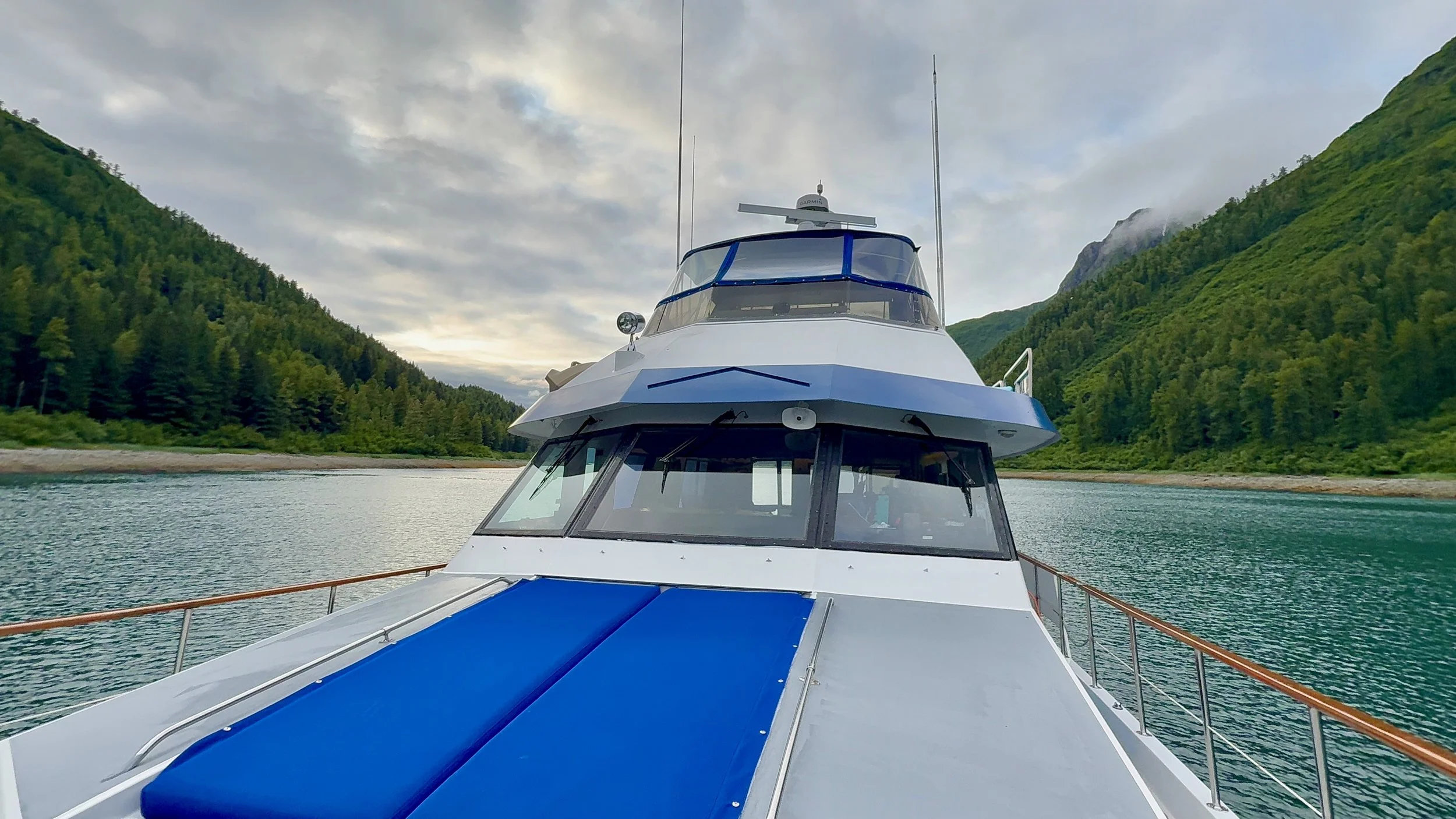
70 Ft Alaskan Odyssey
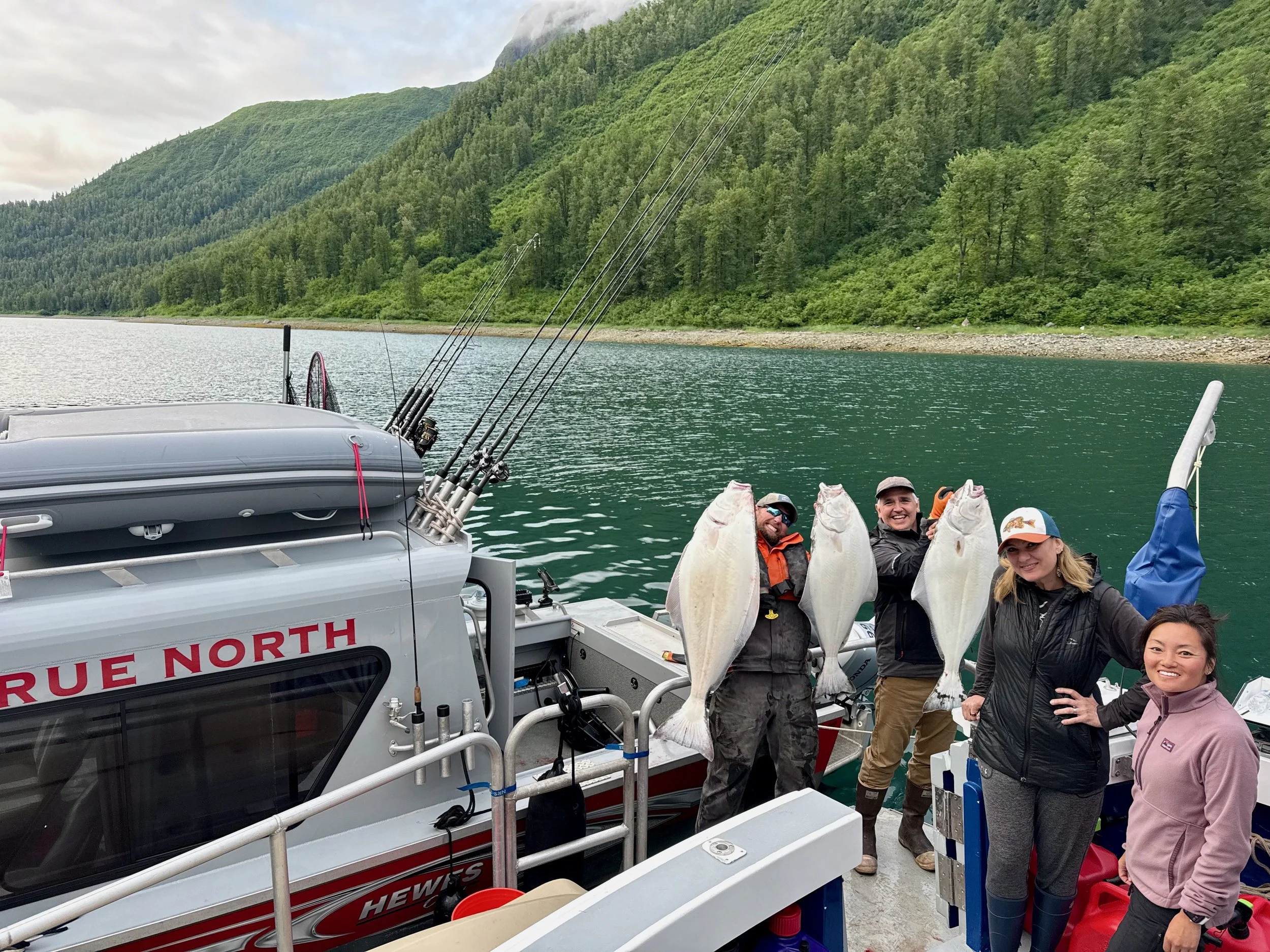
24 Ft Hewes Craft (main fishing vessel)
Jet Boat (for cruising up streams)
-
There were 7 of us; 2 of the 7 were boat captains.
-
We planned for 7 days (6 nights) and ended with 6 days (5 nights)
-
Both Boats (Alaskan Odyssey and the Hewescraft) had Glacier Bay Permits for a 4 day span
-
We left the docks knowing our general location but left room for shifts due to weather or exploration activities. Here’s where we stayed: Harris Harbor, Swanson Harbor, Tyndall Cove, Sundew Cove, Berg Bay, Neka Bay.
Where We Stayed
Night 0: Harris Harbor
Night 1: Swanson Harbor
Night 2: Tyndall Cove
Night 3: Sundew Cove
Night 4: Berg Bay
Night 5: Neka Bay
Before You Go
Permits
Both vessels required Glacier Bay Permits that covered the entire length of stay in Glacier Bay. Earlier in the season, we applied for the permits and we were granted them so we had a predetermined set of dates for when we could get there. The permits are fairly easy to apply for but each vessel driver / captain needs to check in at the Bartlett Cove National Park Service front desk and do a training. During this training, you learn about the whale waters that are off limits, different islands that are closed down, and areas of Glacier Bay. Even if you’re not the main captain of the vessel, the training is worth your time because you learn so much about the area.
Boat Information
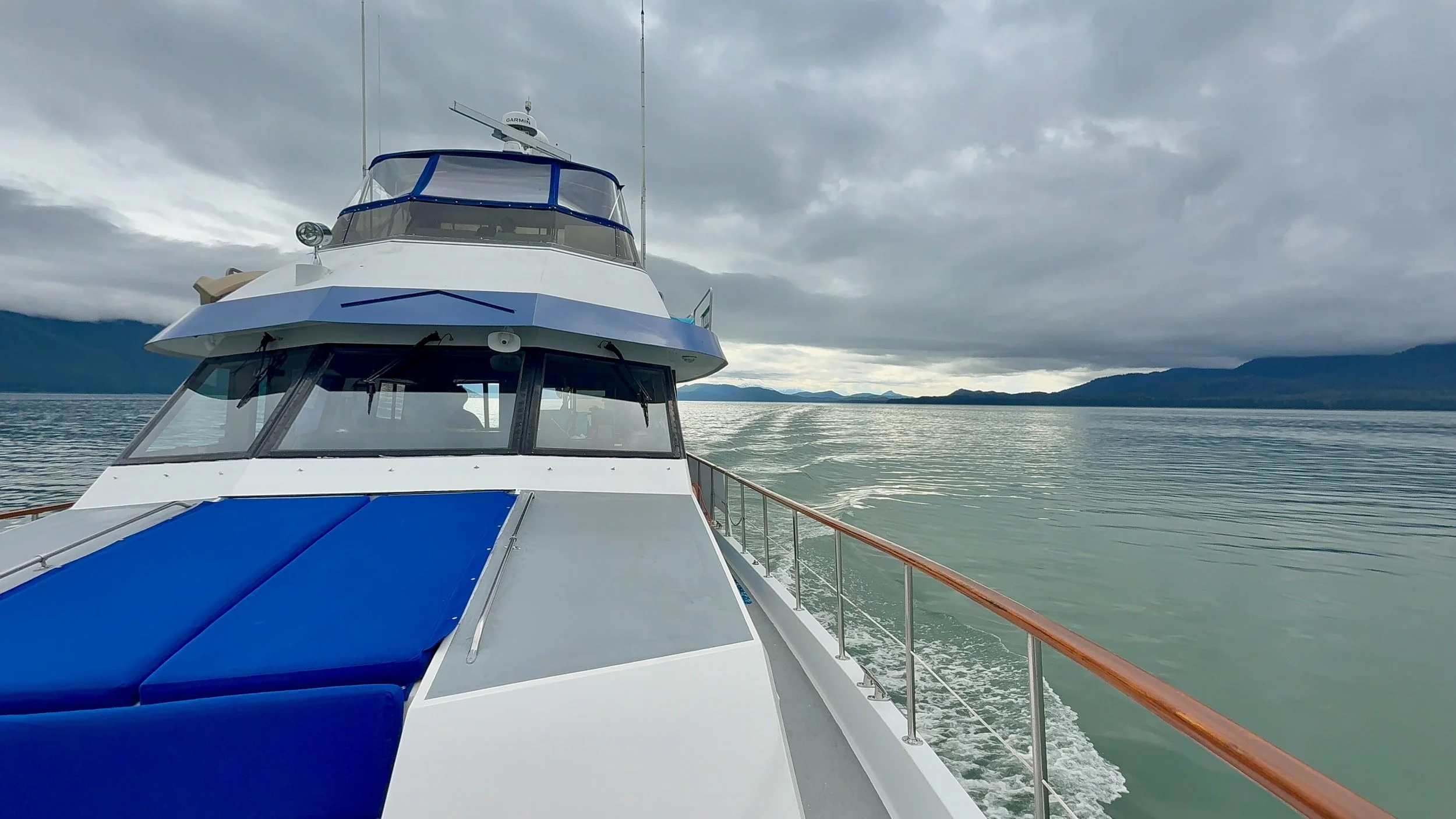
The Alaskan Odyssey (70ft boat): This boat served as our primary living quarters. It has 4 berths that each fit 2 people, a decent sized galley (kitchen) with full sized appliances (including a dishwasher), a grill on the back (which came in quite handy), and a couple of different gathering spaces. It also carried a jet boat on top which enabled us to explore streams.
Boat size: 70ft
Fuel capacity: 1600 Gallon Tank (Diesel)
Water capacity: 200 Gallons
Sleeping arrangements: 4 berths (double occ)
The True North (21ft Hewescraft with an extended transom to 24ft): This boat served as our primary fishing vessel. It could move quickly (faster than the 70ft boat) and enabled further runs to different places within Glacier Bay.
Boat size: 24ft Hewescraft
Fuel capacity: 90 Gallon Tank (Unleaded)
Water capacity: 0
Sleeping arrangements: 0 for this trip
What We Packed
Sample of items we packed:
Rain gear
Layers
Rubber boots
Camera gear
Binoculars
Dry bags
Fishing gear
Food
Water
Motion sickness supplies
Day One: Provisioning, Logistics, and the Excitement of Finally Leaving
Like most adventures in Alaska, the trip started with logistics.
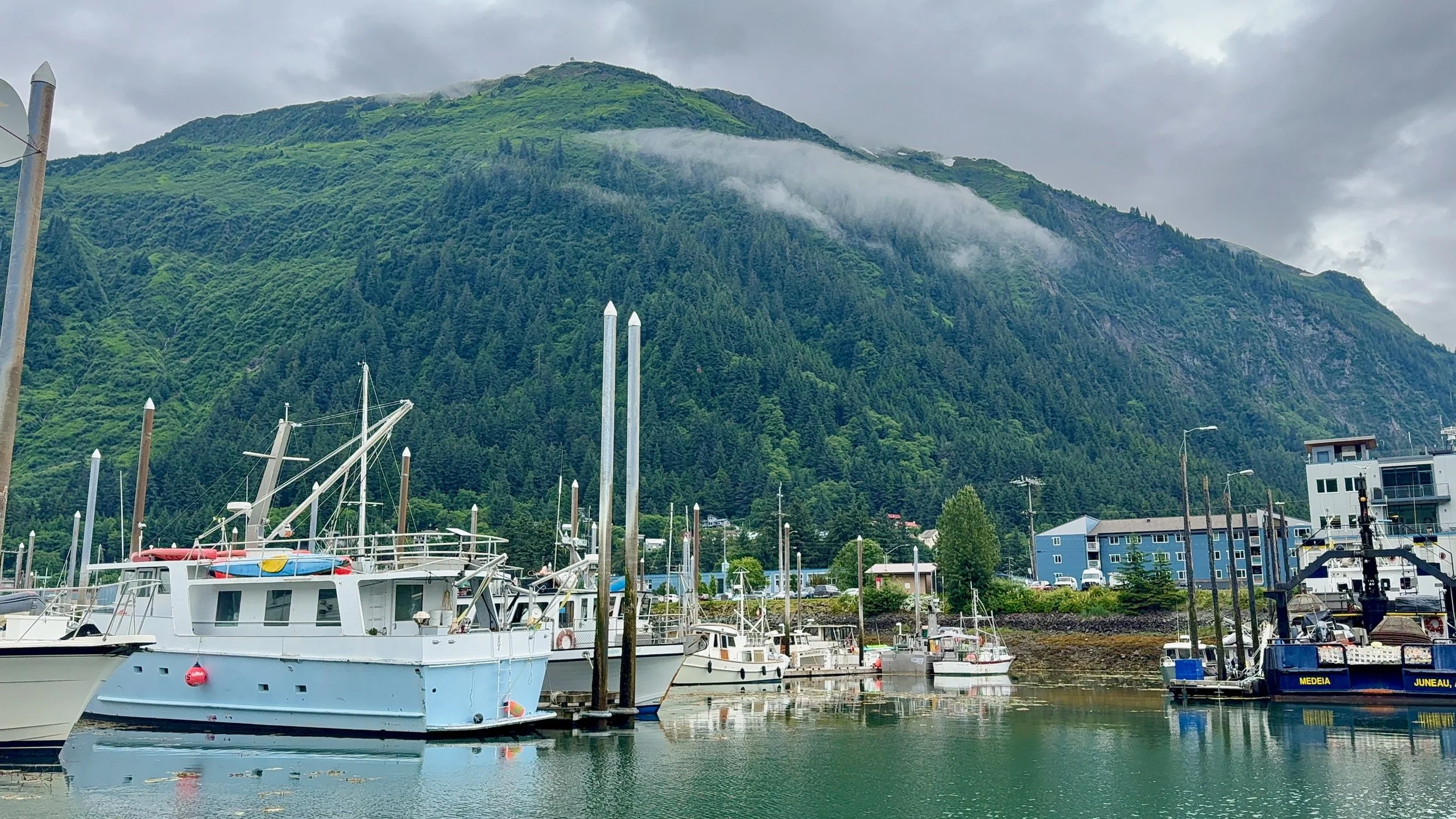
People were flying into Juneau throughout the day, so there were airport pickups to coordinate before anyone ever stepped aboard the boat. At the same time, we still had to provision nearly a week's worth of meals.
I think I made three separate grocery runs that day.
When you're heading somewhere with no grocery stores, no marinas, and no easy way to restock, you quickly realize it's better to have too much food than not enough. The same goes for water. We planned for six days but packed with the possibility of seven.
By evening, everyone had arrived.
We celebrated the beginning of the trip with dinner at The Hangar before spending our first night aboard the boat in Harris Harbor. The adventure hadn't really started yet, but the anticipation was already building.
Tomorrow we'd finally cast off.
Day Two: Swanson Harbor, Kayaks, and Two Brown Bears
The next morning our group split between two boats.
The smaller boat headed out to fish while I stayed aboard the larger boat as we made our way around Douglas Island toward Swanson Harbor.
There wasn't any rush.
One of my favorite parts of traveling by boat is that getting somewhere becomes part of the experience. We watched humpback whales along the way, soaked in the sunshine, and simply enjoyed moving through Southeast Alaska at a slower pace.
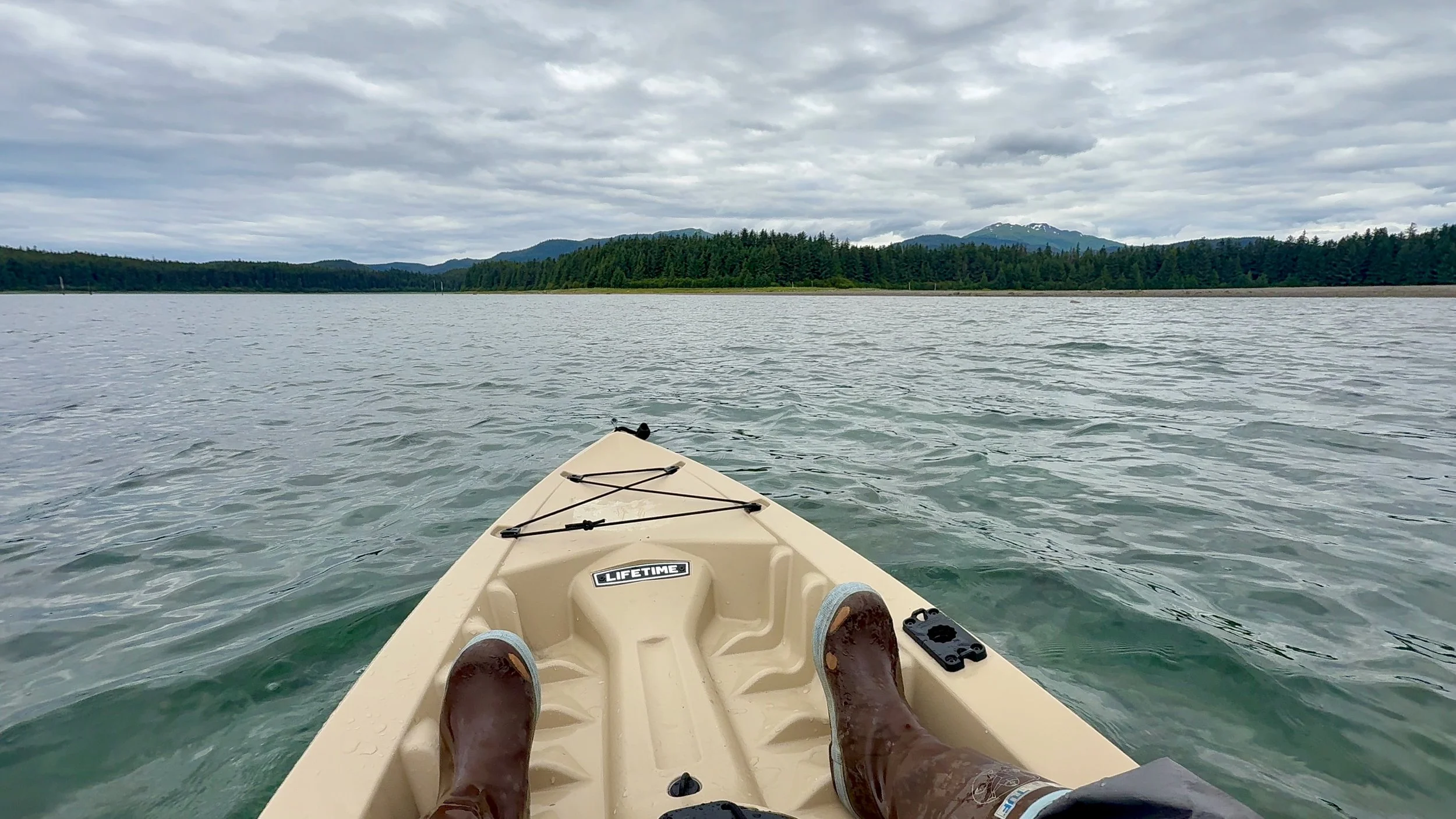
After tying up to the floating dock in Swanson Harbor, we launched two kayaks to explore.
The shoreline was covered with mussels, dramatic rock formations, and thick forests that seemed to fall straight into the ocean. The current was stronger than we expected, and the wind picked up enough that we decided not to venture too far.
It turned out we didn't need to.
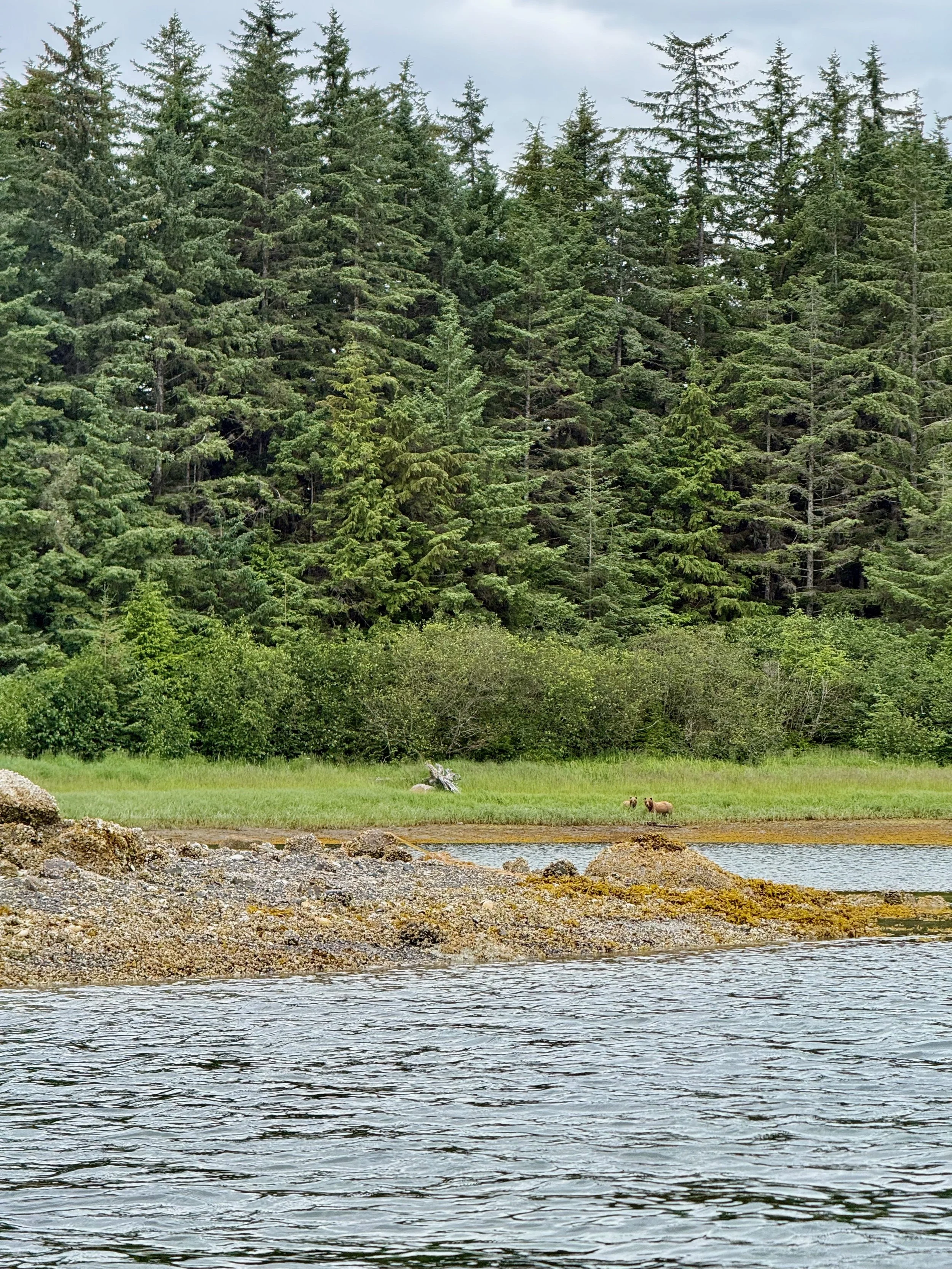
As we rounded one bend, two brown bears appeared along the shoreline.
One looked like a younger bear, perhaps a two-year-old cub, while the larger bear calmly continued feeding nearby. They glanced in our direction before returning to the grasses growing near the tide line.
We stayed well back, quietly watched for several minutes, and then paddled away.
It was exactly the kind of wildlife encounter you hope for: close enough to appreciate, distant enough to remain respectful.
That evening ended with fresh crab, stories from the day, and our first night anchored in the quiet of Southeast Alaska.
Day Three: Gustavus and the Gateway to Glacier Bay
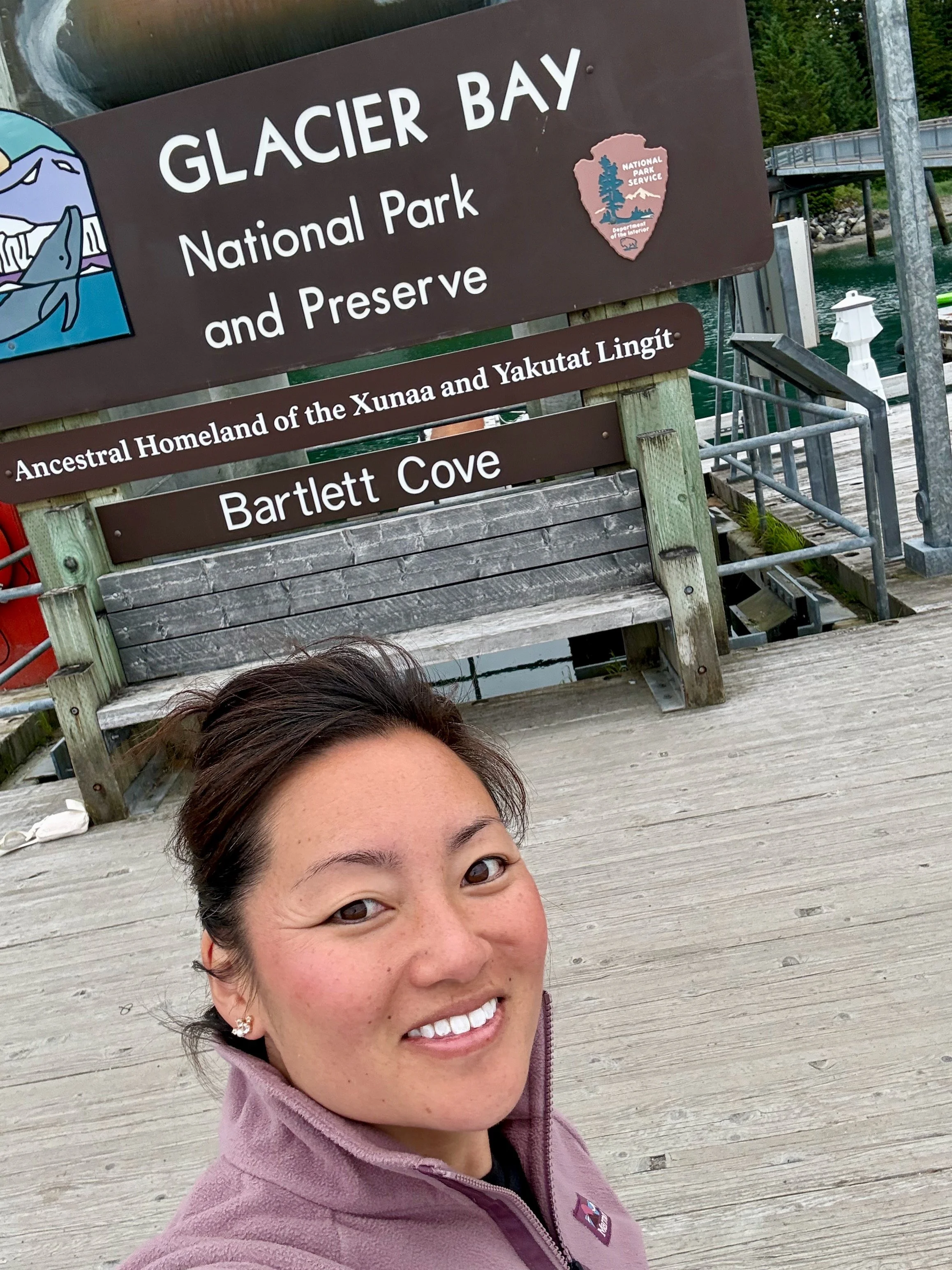
The run from Swanson Harbor to Gustavus took roughly three hours.
For anyone traveling into Glacier Bay by private boat, Gustavus is an important stop. It's the last opportunity to fill fuel tanks, top off fresh water, and prepare before heading deeper into the national park.
Both captains also attended the required National Park Service orientation.
The briefing isn't just a formality. Glacier Bay has detailed regulations covering wildlife protection, seasonal closures, speed restrictions, and boating practices that help preserve one of the world's most remarkable marine ecosystems.
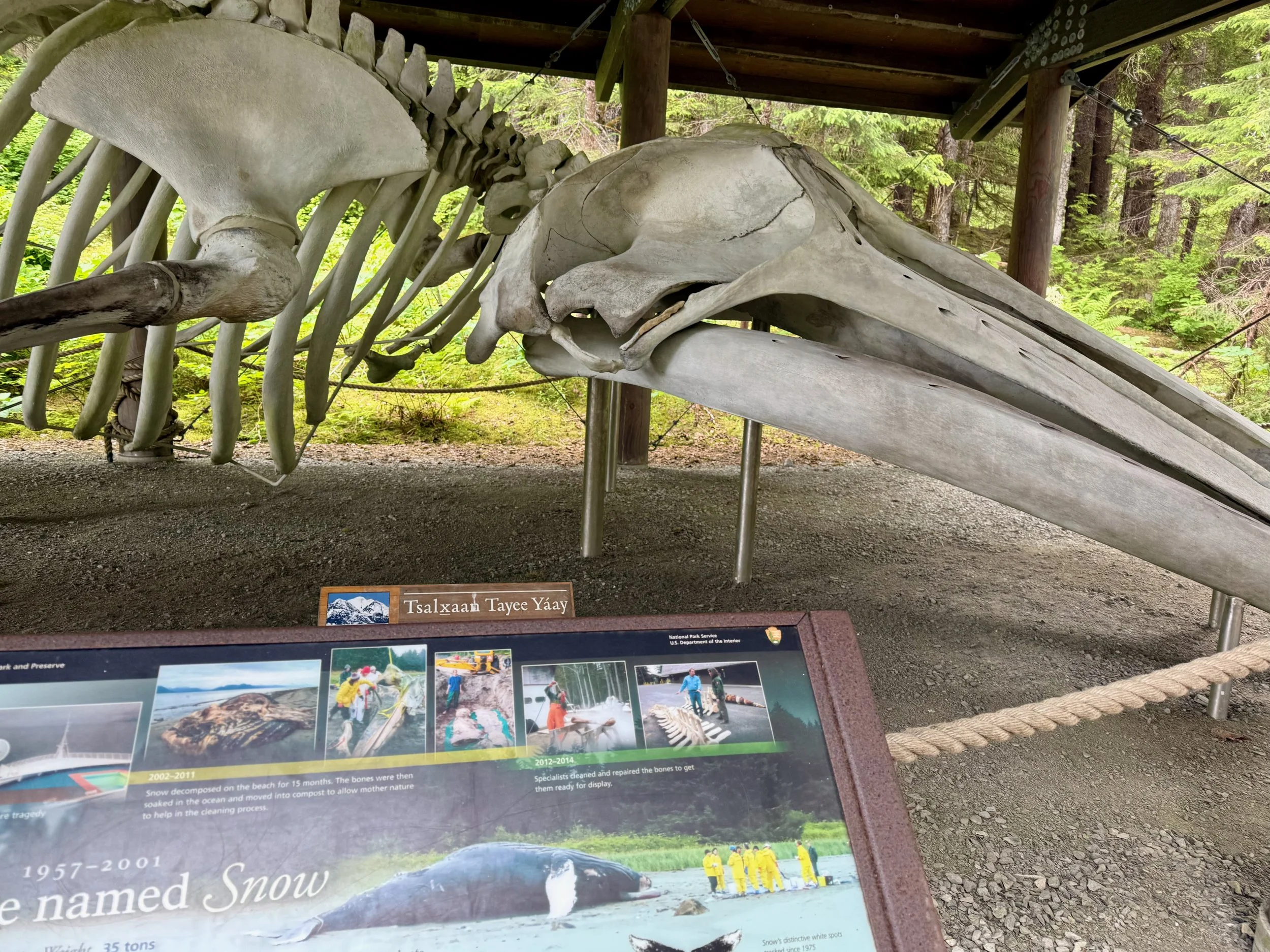
With our preparations complete, we visited Snow, the whale skeleton displayed near Glacier Bay Lodge.
Standing beneath it is one of those moments that instantly recalibrates your understanding of how enormous these animals truly are.
We also spent some time exploring Glacier Bay Lodge.
The lodge sits only a short shuttle ride from the airport and offers another way to experience the park through guided day cruises and kayak rentals. If you're not visiting by private boat, it's an option worth considering.
Later that afternoon the smaller boat went fishing while the larger boat found a quiet cove where we settled in for the evening.
We hadn't seen glaciers yet.
But somehow that didn't matter.
The journey into Glacier Bay had finally begun.
Day Four: Glacier Ice, Otters, and Margerie Glacier
This was the day I had imagined for years.
We boarded the smaller boat and headed nearly forty miles farther into Glacier Bay National Park.
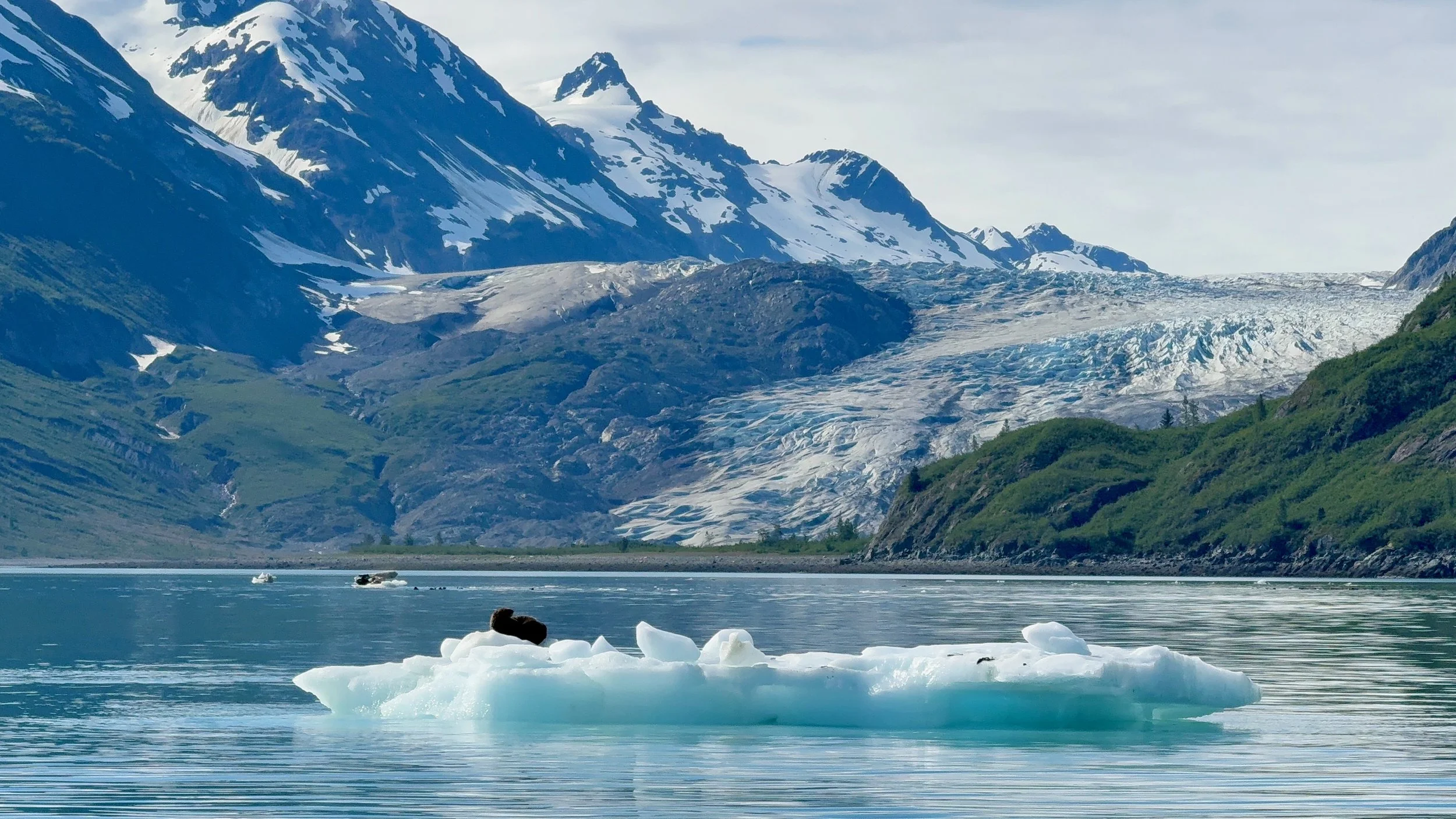
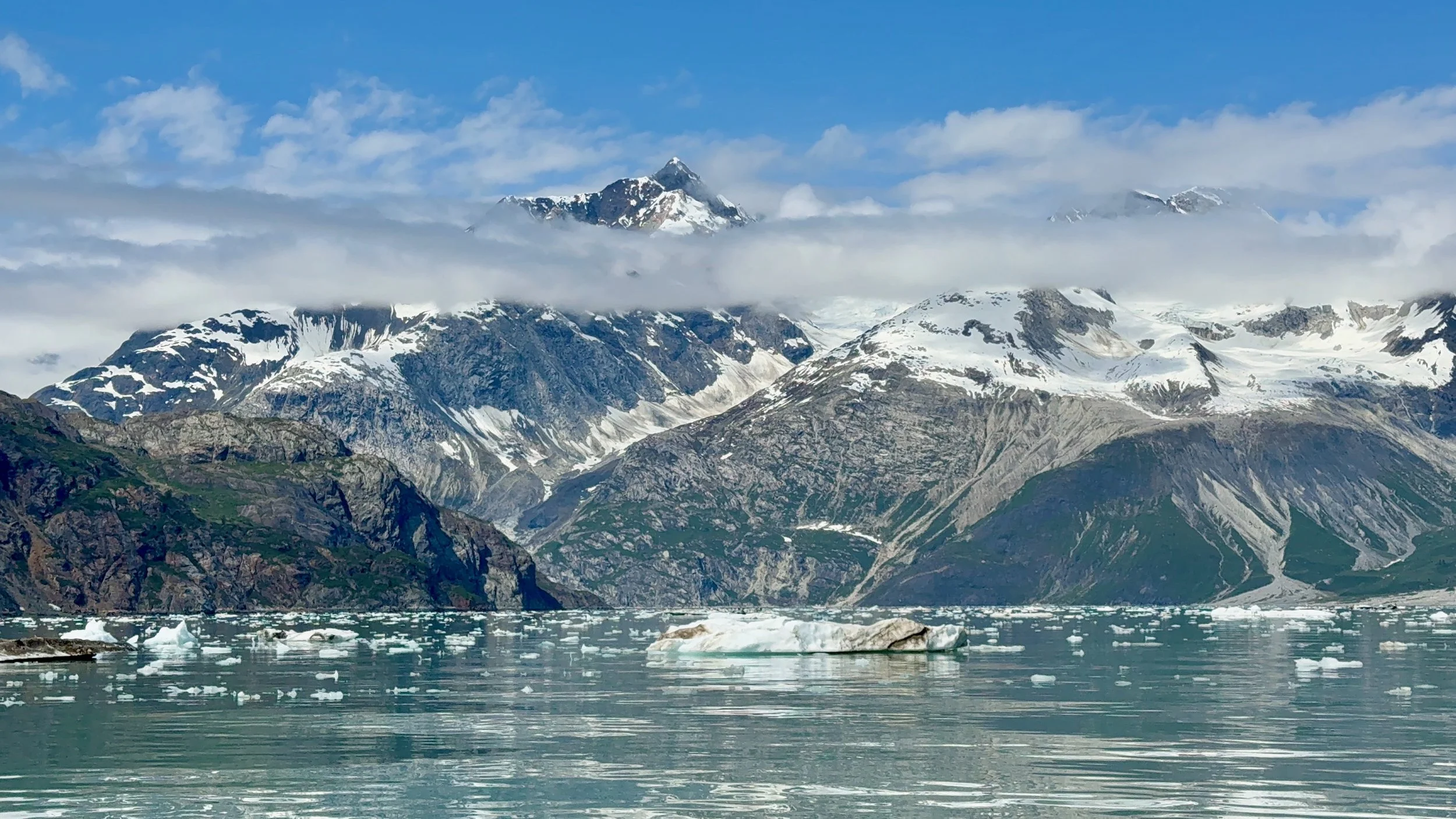
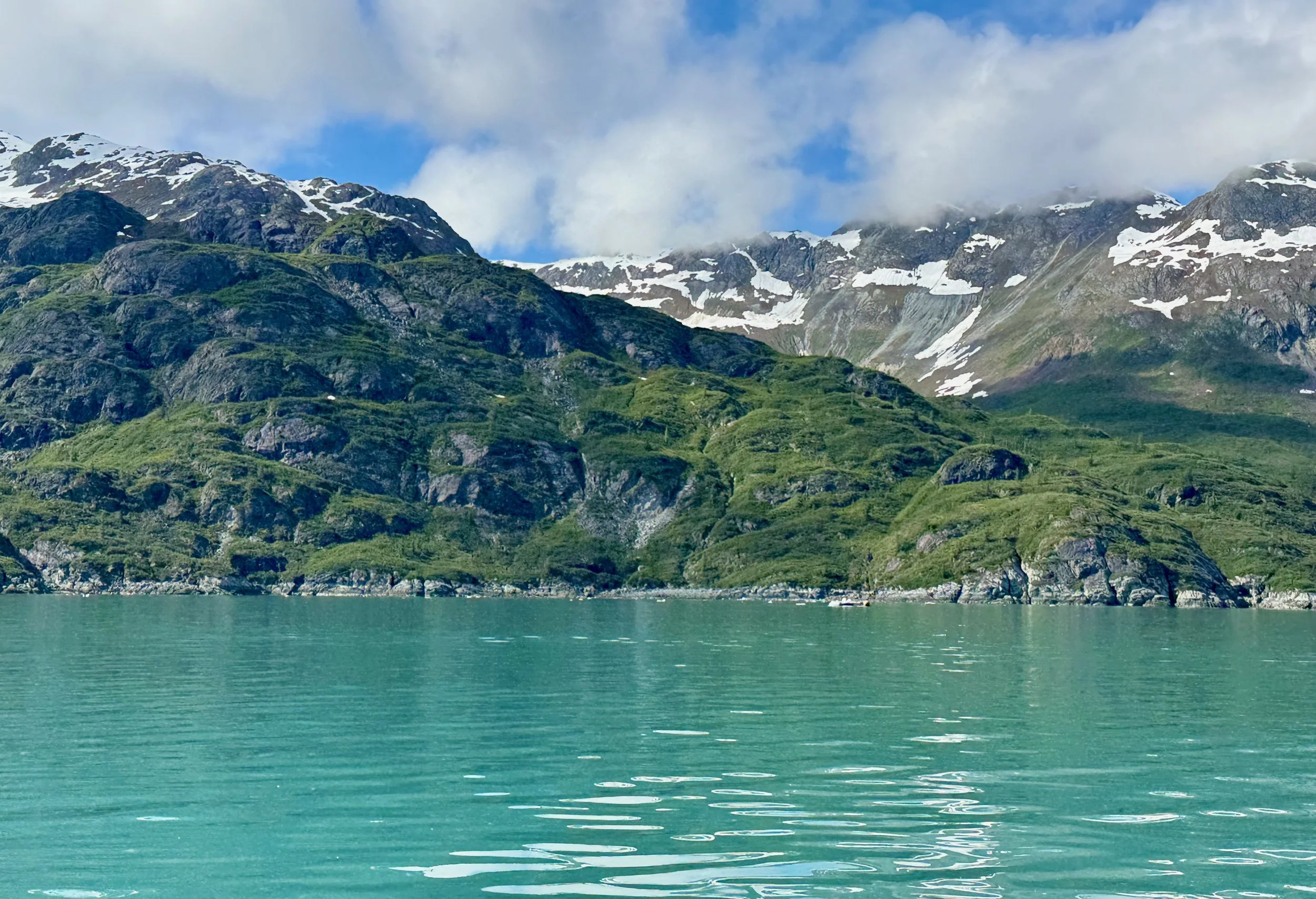
As we passed Reid Glacier, the scenery became even more dramatic. Mountains surrounded us from every direction while floating chunks of glacial ice drifted quietly across the water.
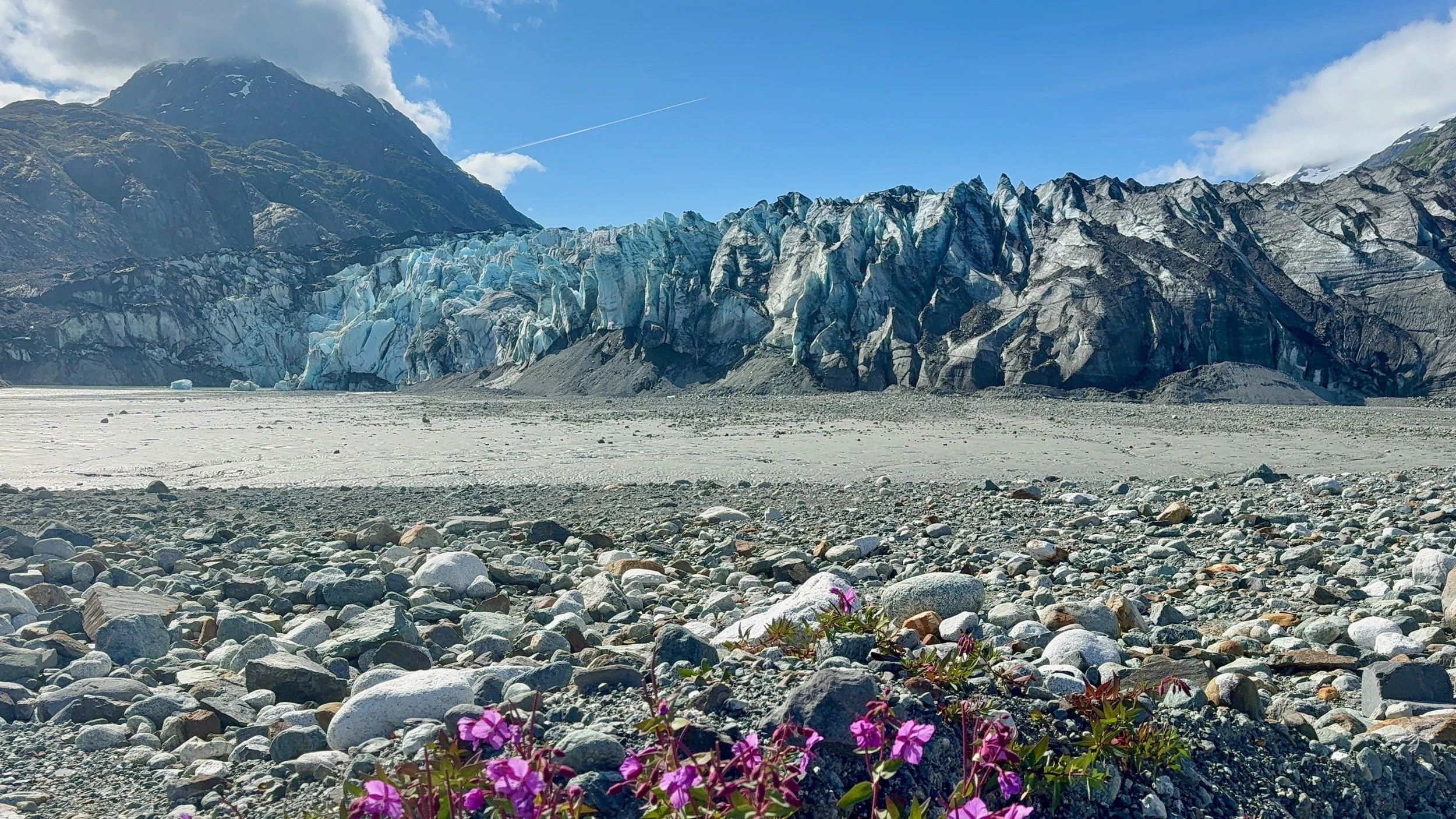
Our destination was Lamplugh Glacier.
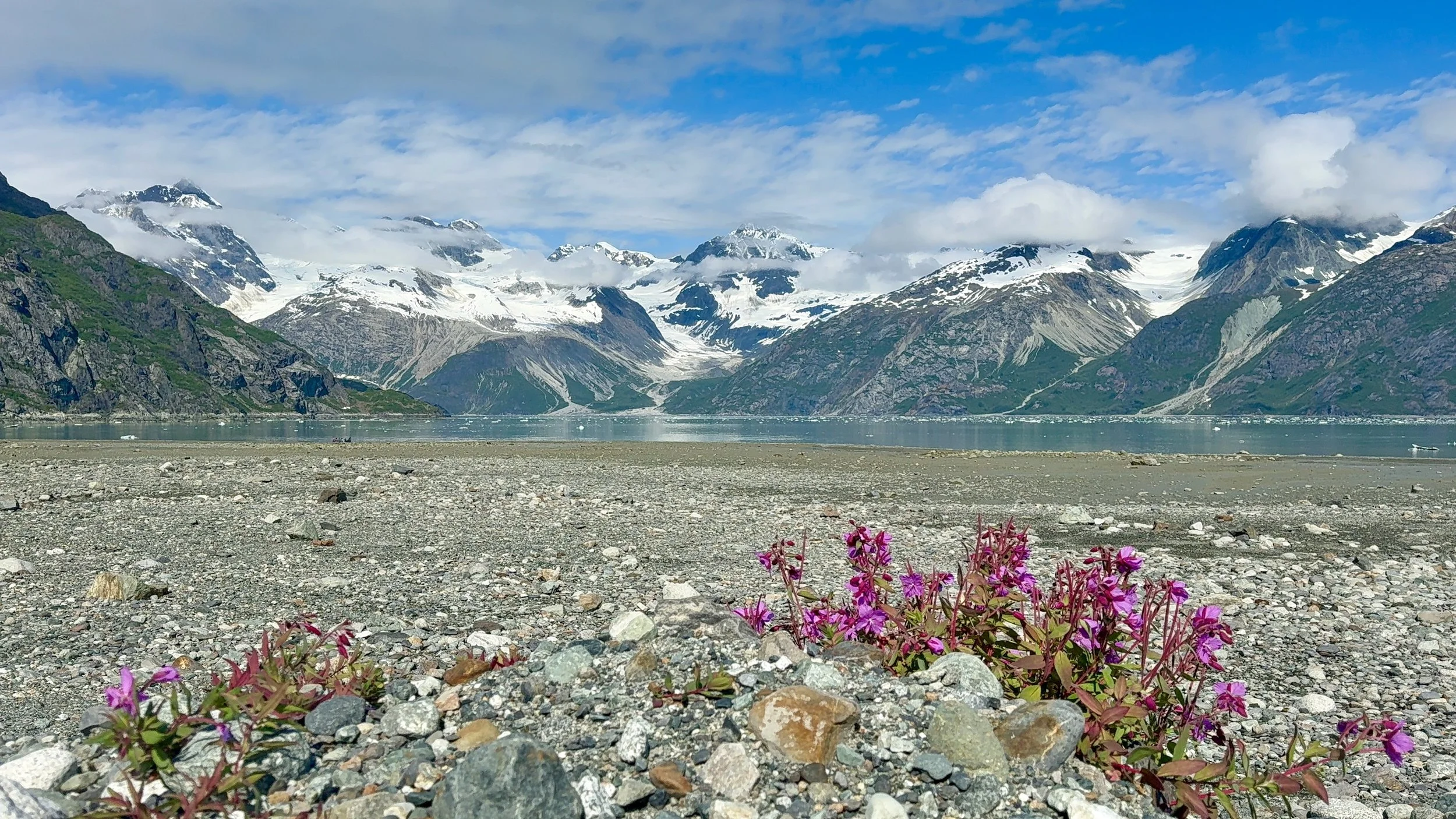
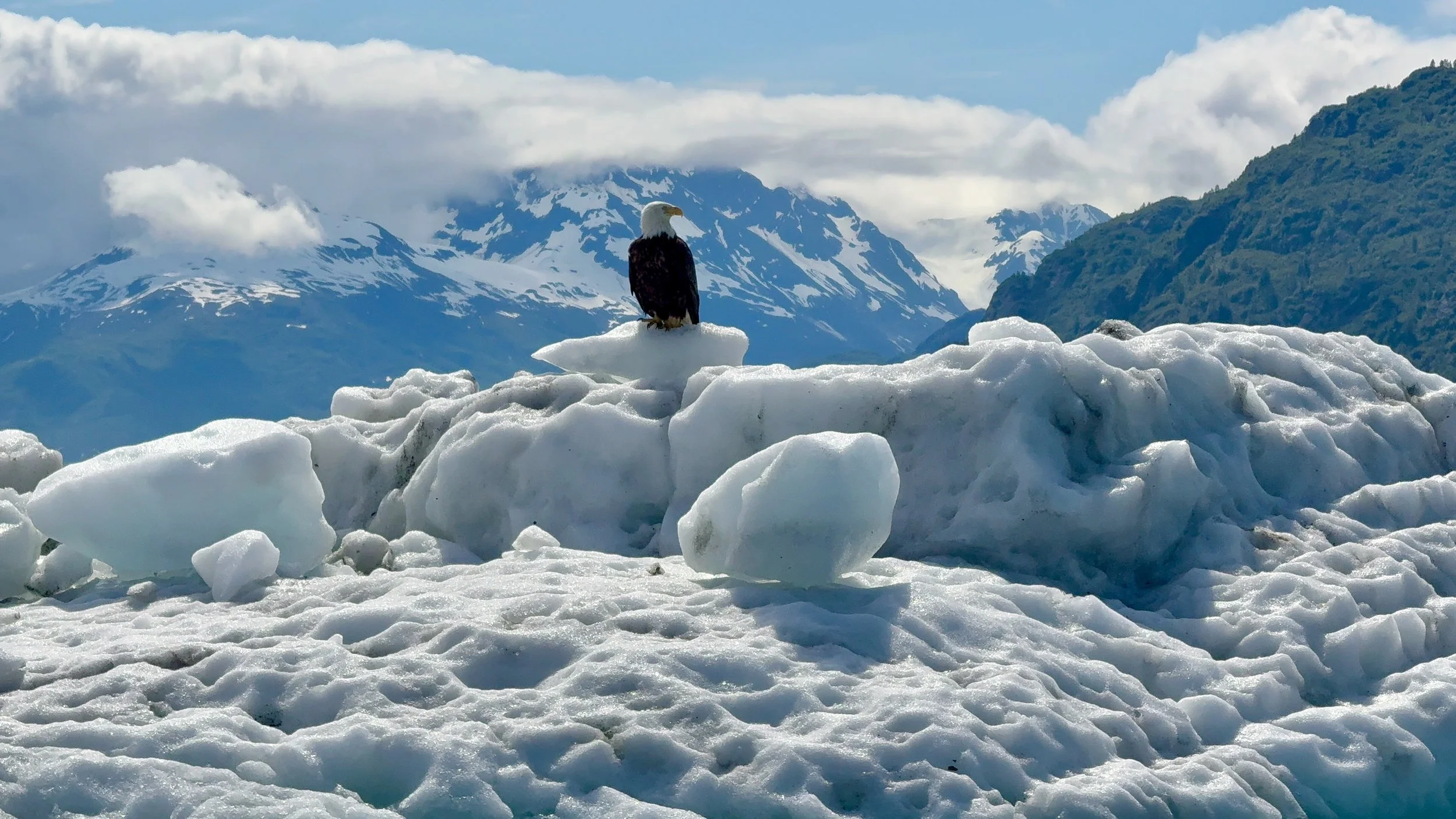
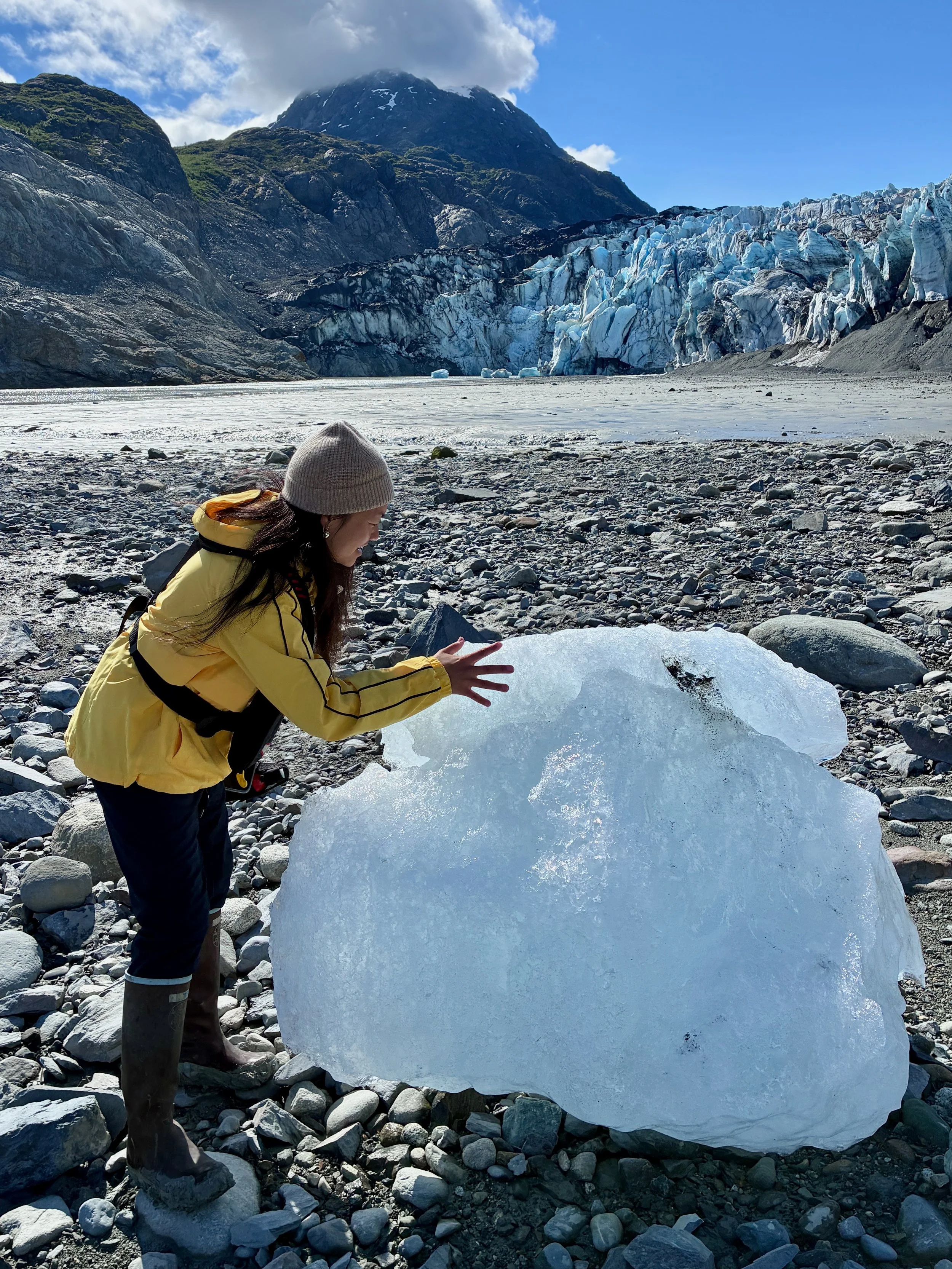
We had intentionally timed our arrival with a very low tide, allowing many of the ice chunks to settle onto shore. That meant we could safely step onto the beach, walk among centuries-old glacier ice, and simply absorb where we were.
One of the biggest surprises?
Fireweed somehow growing among glacial ice.
Nature has a way of finding impossible places to thrive.
Wildlife was everywhere.
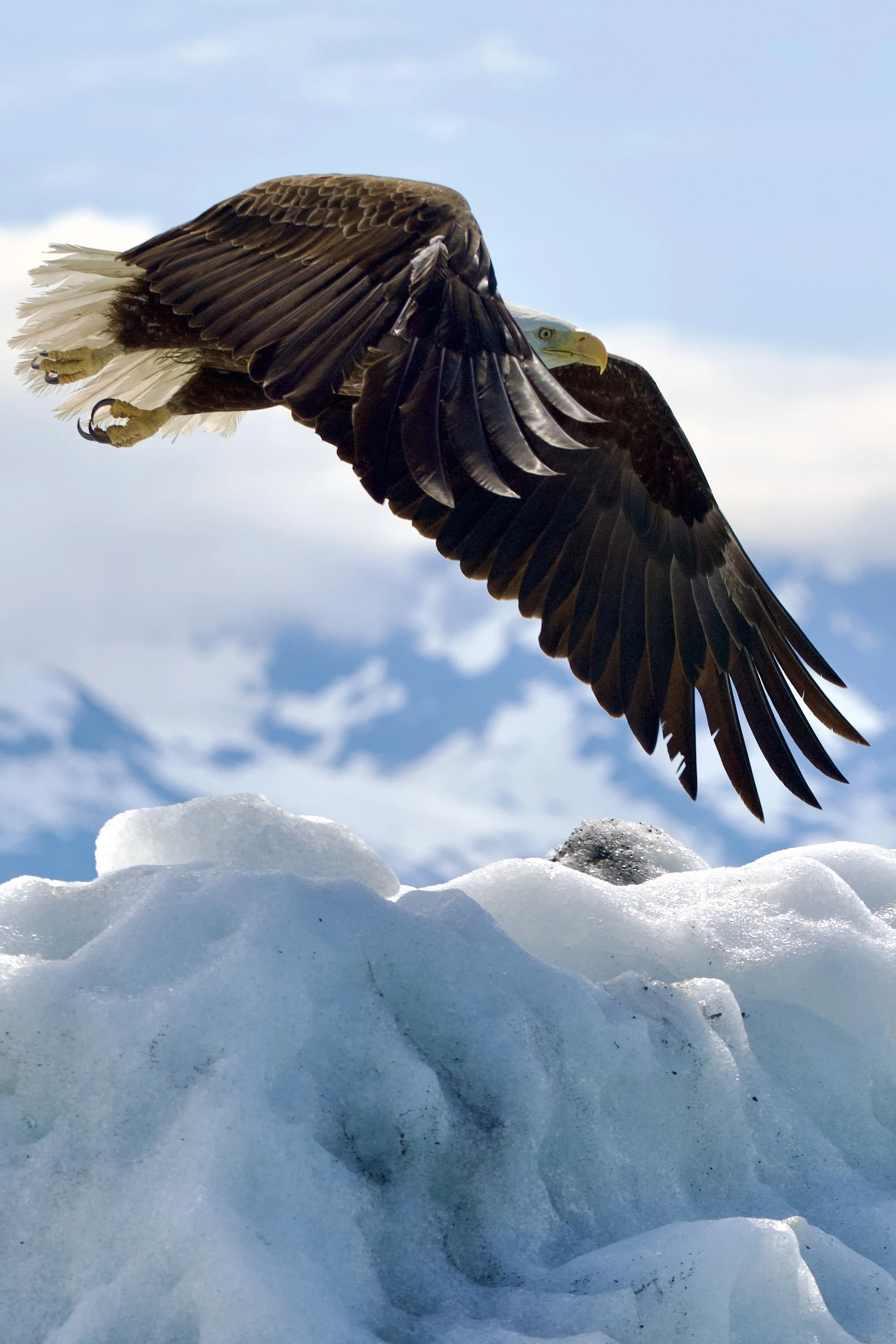
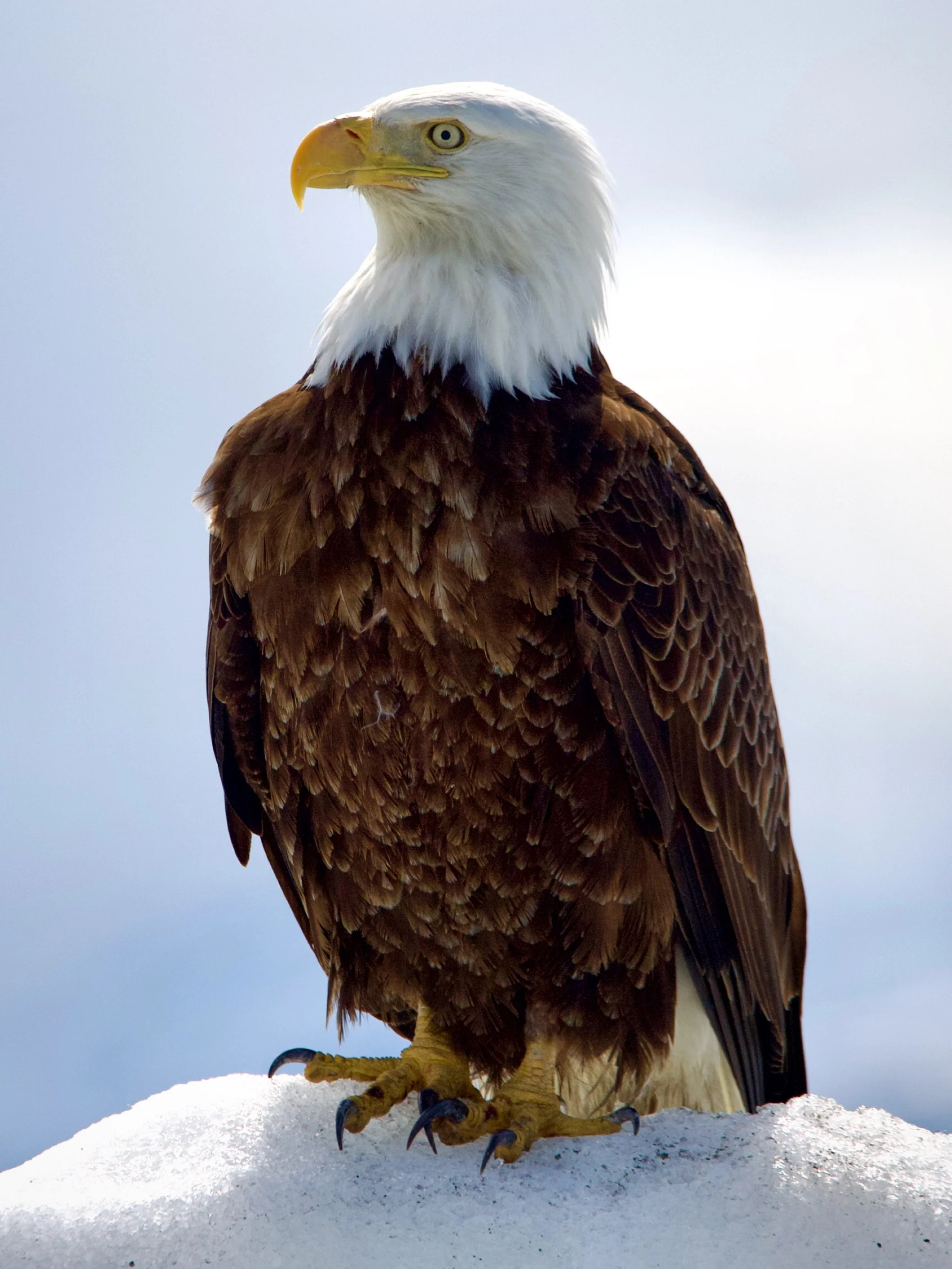
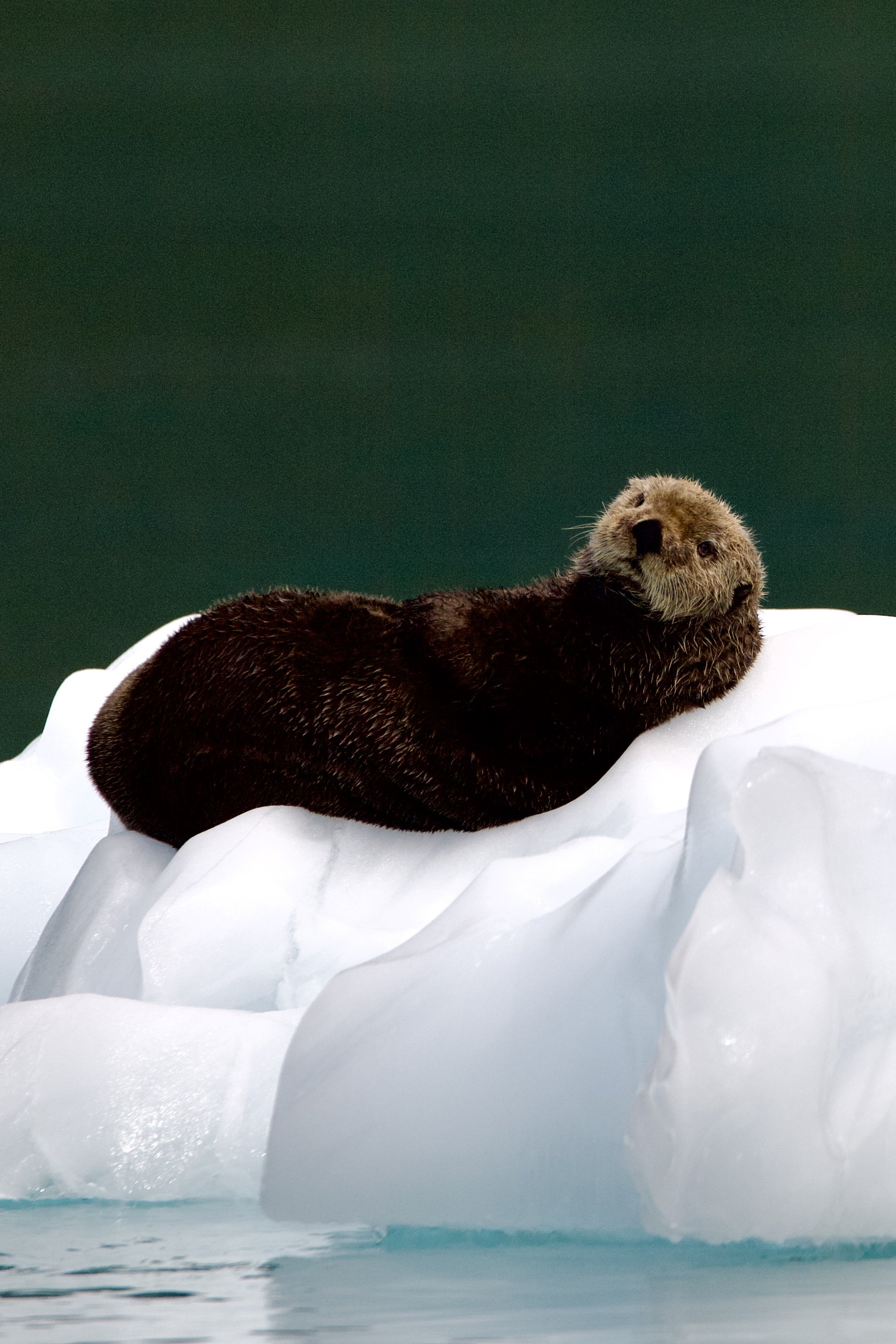
Sea otters floated on brilliant blue ice as if they owned it. Until this trip I had only associated floating ice with harbor seals, so seeing otters stretched across the ice became one of my favorite memories.
We spotted humpback whales in the distance, bald eagles overhead, and countless seabirds moving through the bay.
Eventually we reached Margerie Glacier.
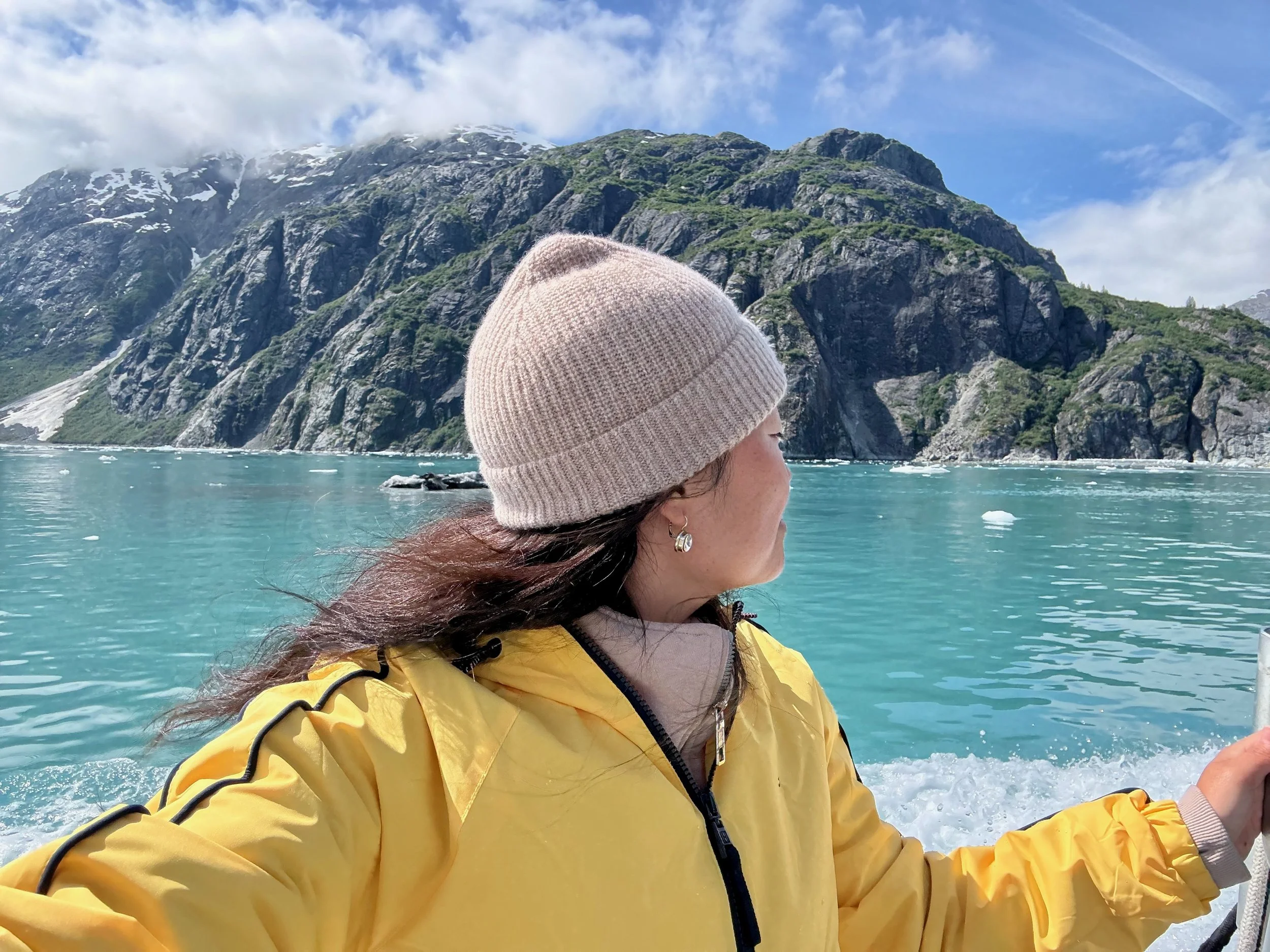
This is the glacier many cruise passengers see during their Glacier Bay visit, but watching it from a much smaller boat felt remarkably intimate. We drifted quietly nearby as the glacier cracked, groaned, and occasionally sent pieces of ice crashing into the water.
Blue ice floated all around us like scattered gemstones.
No photograph quite captures that color.
Later that afternoon we found a fishing spot, caught several halibut, returned to the larger boat, enjoyed hot showers, shared photos over Wi-Fi, and ended another unforgettable day together.
Day Five: Orcas, Breaching Humpback Whales, and Difficult Fishing
Breakfast had barely started before someone shouted from outside.
"Orcas!"
A second later someone else yelled,
"No... humpbacks!"
As everyone hurried to the railings we realized both were true.
A pod of orcas moved through the distance while humpback whales lunge-fed nearby.
Not a bad way to begin the morning.
Fishing proved challenging that day because the tidal exchange was enormous. Glacier Bay regularly experiences impressive tides, and during this stretch we were fishing around one of the lowest tides of the month. The current moved the boat quickly, making it difficult to keep lines where we wanted them.
Even so, the wildlife never stopped.
We watched humpbacks breach repeatedly throughout the day.
Sea otters floated nearby, including several mothers carrying tiny pups.
Mist drifted across the mountains while light rain came and went, creating exactly the kind of moody Alaska scenery I love most.
I hooked several enormous halibut that simply refused to come to the surface.
Sometimes that's fishing.
We ended the evening grilling dinner aboard the boat before settling in for another peaceful night.
Day Six: Halibut, Hoonah, and Exploring the Neka River
The next morning couldn't have been more different.
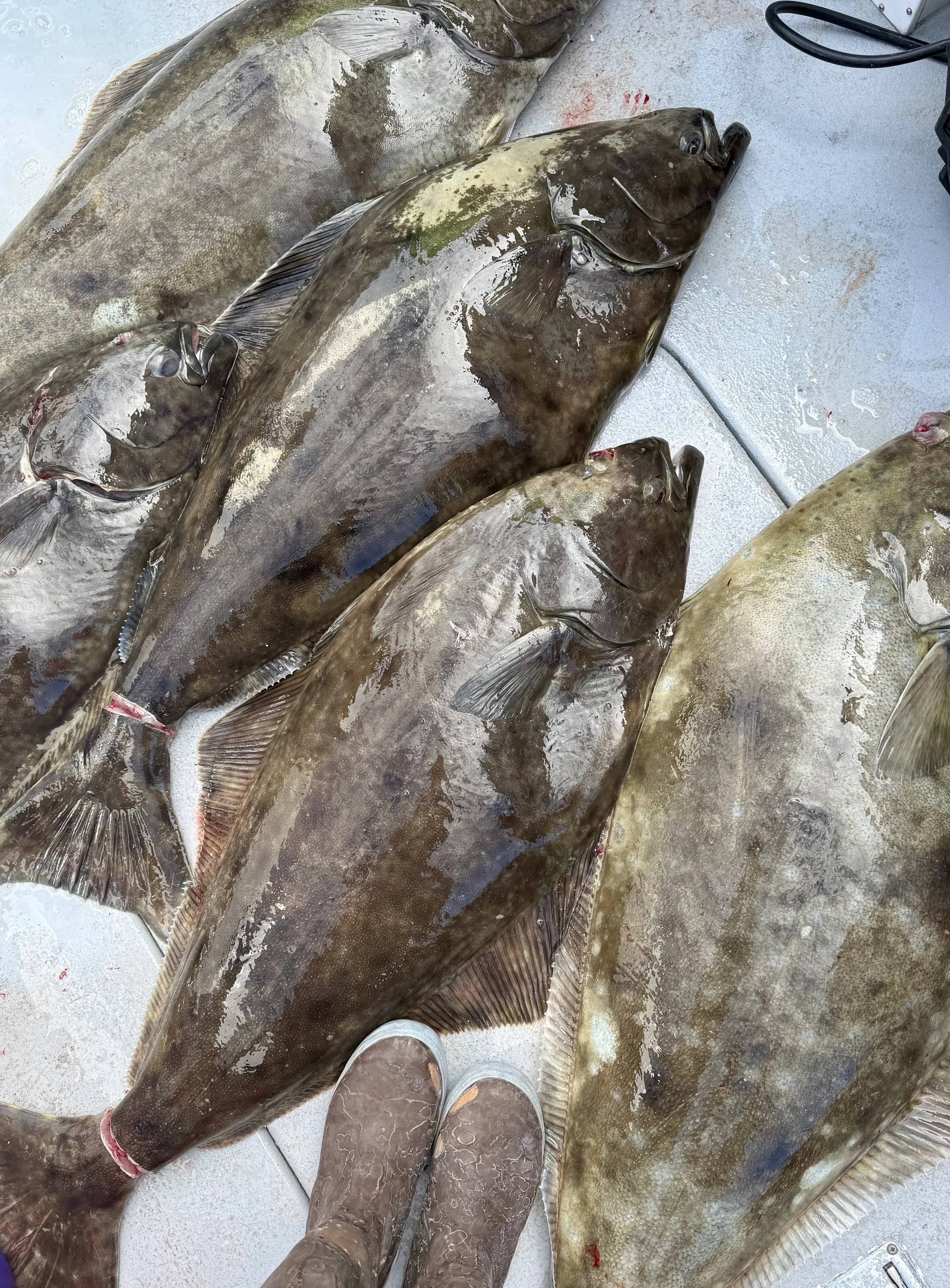
Almost immediately after dropping anchor, Zac lowered his line and hooked a massive halibut.
Within minutes everyone else had lines in the water.
The fish just kept coming.
Some weighed forty pounds.
Others pushed closer to sixty.
It was one of those fishing days that people remember for years.
Once we wrapped up, we tied back onto the larger boat and began making our way toward Hoonah as our Glacier Bay permit came to an end.
After refueling, we spent some time walking through the actual community of Hoonah, not just Icy Strait Point-style tourism, but the grocery store, local brewery, small businesses, and places that serve the people who live there year-round.
I always enjoy seeing the communities beyond the cruise ship experience.
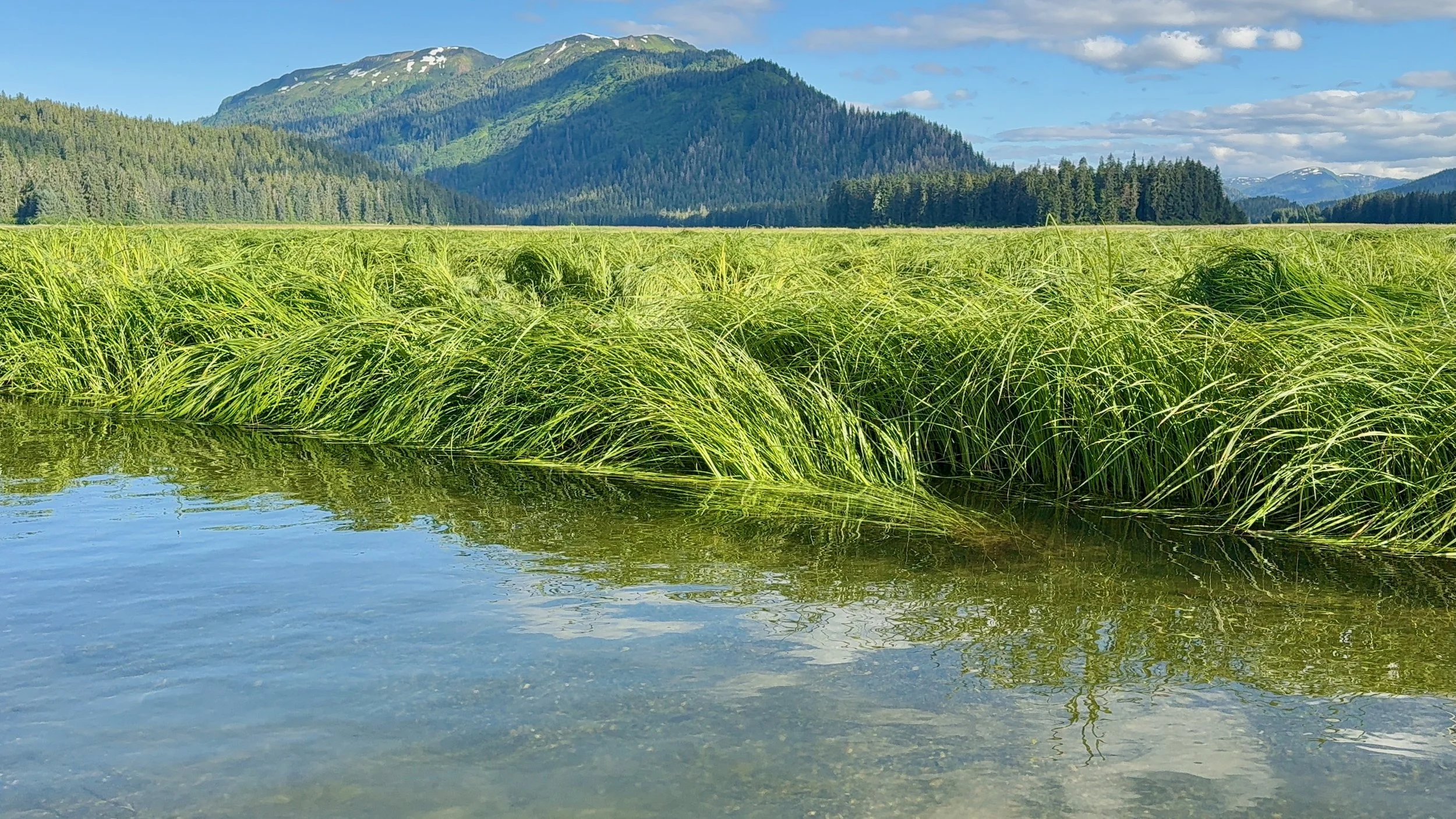
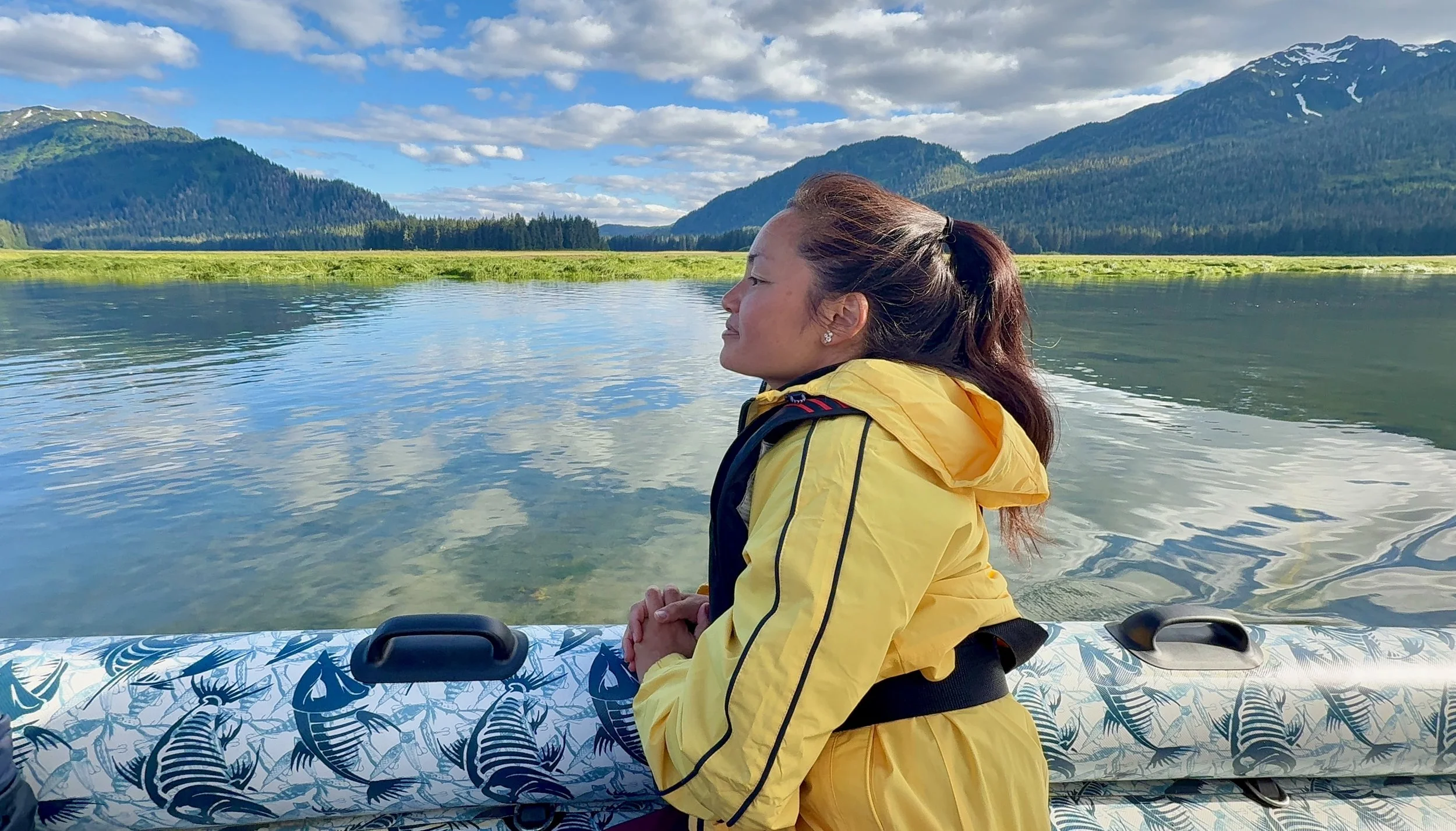
Later that afternoon we continued to Neka Bay before jumping into a jet boat to explore farther up the Neka River.
The shallow-draft boat carried us through winding channels bordered by tall grasses while salmon moved through the river below us.
We stopped occasionally to cast for Dolly Varden and pink salmon before drifting quietly downstream.
By the time dinner was finished that evening, everyone was exhausted in the best possible way.
Day Seven: Our Return, Home Again
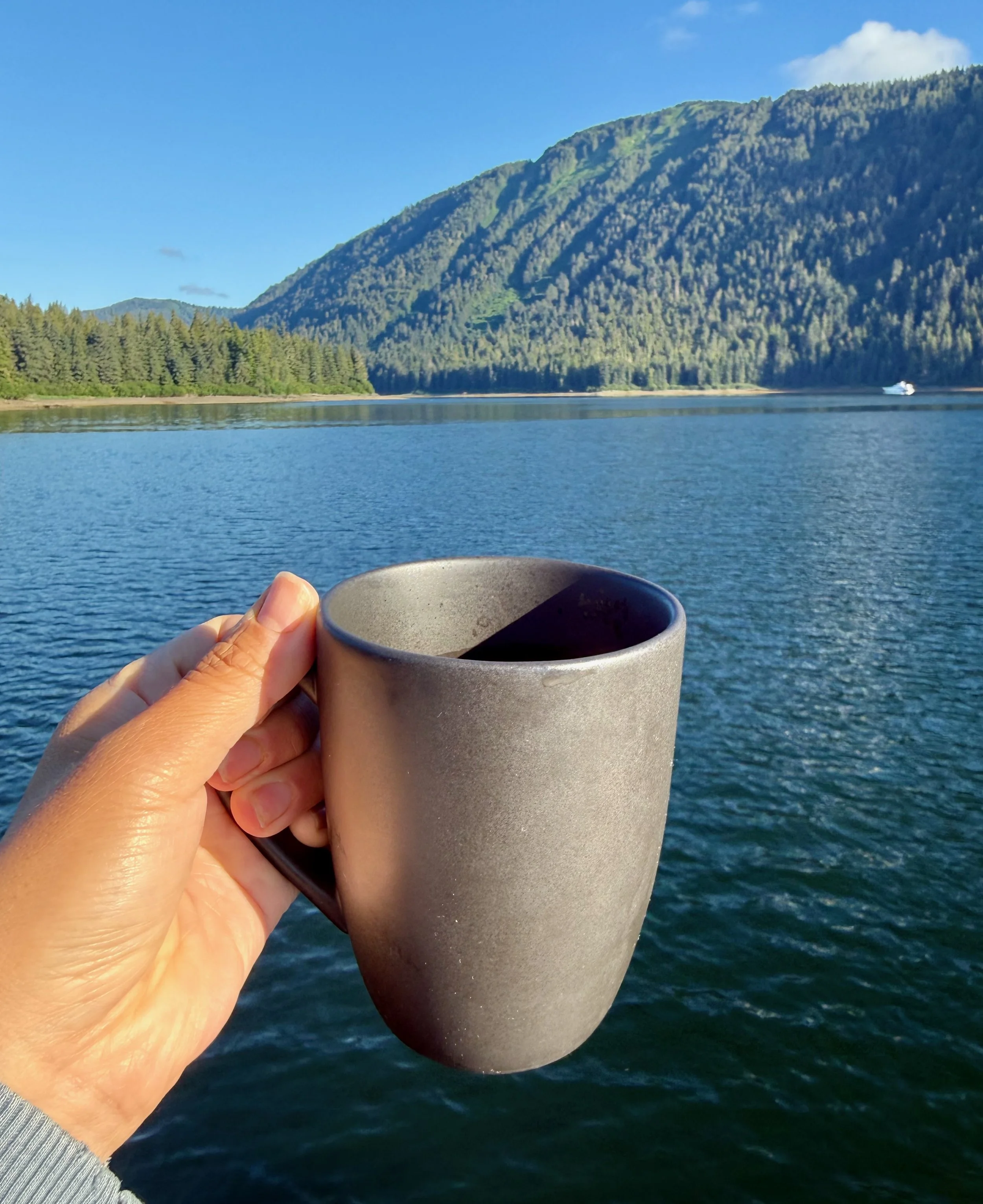
The trip home was quieter.
Coffee on the top deck.
Sunshine.
A few more humpback whales in Stephens Passage.
No one seemed in much of a hurry.
Eventually we returned to Auke Bay where reality arrived all at once.
Fuel cans.
Coolers.
Laundry.
Fish processing.
Unloading six days' worth of gear somehow felt harder than loading it.
The following day we slowed down completely.
We visited Mendenhall Glacier.
Walked through downtown Juneau.
Finished the afternoon at Alaskan Brewing Company.
After nearly a week surrounded by glaciers, whales, quiet anchorages, and wildlife, ordinary life felt strangely loud.
What I'd Do Differently
Overall, this was the perfect first trip to Glacier Bay National Park. I could not have asked for better weather or better experiences. Like anything, you learn more as you go. A few thoughts on what I would do differently next time:
I would spend more time exploring the glacier ice and the glacier area. I felt a bit rushed - I could have absolutely used another day just enjoying the majesty of the area.
I would spend more time photographing wildlife. Most if not all of the shots that I got were opportunistic. I could have used a day focused on the breaching whales and really just glassing, waiting to see what wildlife passed by.
I would probably have stayed the night in front of Reid Glacier. To fall asleep watching and gazing at the glacier and waking up to it would have been ‘chef’s kiss’ absolutely amazing.
Final Thoughts
Looking back, I realized my favorite memories weren't just the glaciers.
They were coffee on the top deck before anyone else woke up.
Watching two brown bears from a kayak.
Finding sea otters resting on floating glacial ice.
Hearing humpback whales before I could see them.
Sharing dinners after long days outside.
Glacier Bay has a way of changing your internal pace.
The days become measured by tides instead of clocks. Conversations stretch longer. Wildlife decides your schedule. You begin paying attention to things you normally rush past.
It took me years to finally make this trip happen.
Now that I've experienced Glacier Bay this way, I already know one thing:
I'll spend the rest of my life looking for an excuse to return.
Planning your own Alaska glacier experience?
Most travelers will experience Alaska’s glaciers very differently than we did. Compare which Alaska experiences are worth booking and which are better explored independently.